joreth: (dance)
Bringing me back to my high school theatre days, where I learned tap as a drama geek. Tap is intricately linked to the history and evolution of jazz music, which means that it's also intertwined with the history of swing dancing, a current love of mine.  All dance is related in a twisty, convoluted, branchy evolutionary web much like actual evolutionary biology (although with multiple root points rather than one-ish), and all dance is related to music.

Because tap and jazz were the very first styles of dance that I learned, this is why I say that being a dancer is to be a musician.  We are part of the music, making music, affecting the music.   We weave in and out of the music like any other instrument.

And tap dancing is a study in racism and privilege that parallels the same study in jazz music - first the development by discriminated peoples and the blending of cultures, then cultural appropriation, then being discarded when no longer novel or when too "pure" for the white middle and upper classes to connect to.


joreth: (being wise)

Misanthropic humanism (n): When you know ppl suck but still get pissed when they're mistreated, exploited, oppressed, & deceived. #Atheism ~ @TheGodlessMama


"Wishing everyone on the road would die in a fire and also have affordable health care and the right to use any toilet they want." ~ Rachel Primeaux Jordan

Finally found my philosophical worldview label.
joreth: (feminism)
Found a couple of new identity words that I like, but I don't think they feel right on me. (All words written in the feminized form because the post is referencing a feminist movement regarding the labels).

I posted back on Cinco de Mayo the differences between certain labels for people of Mexican descent, and how I preferred "chicana" over "Latina", as a reclaimed, formerly derogatory word that emphasizes the dual nature of being of mixed ethnicity and living in the US as well as the association with activism.

A few years ago I learned about "chingona" and "maldita". As far as I can tell, "chingona" derives from the verb "chingar", which is "to fuck" and is considered vulgar - a swear word. But more than just "a fucker", a "chingona" is colloquial for basically "a fucking badass" and is also a derogatory slur that some are attempting to reclaim, particularly the feminine version that I'm referencing in this post.

A "maldita" is a step beyond "fucking badass", somehow. The literal translation is "damned" or "cursed" or "accursed", but the colloquial use as an identity label is like a chingona on steroids? They are kinda like Spanish words for "thug", with similar classist and racist undertones and a similar embracing of the term by some.

These are words that I would have vehemently rejected when I was a teen, back when I also rejected "chicana" because of the class implications of "gangbanger", "thug", "good for nothing", "low class", etc. I wasn't one of *those* Mexican-Americans. I spoke proper English and I had a proper education and I lived in the suburbs and I eschewed gang violence and tattoos (and used words like "eschewed").

I live very far from the gang violence I grew up on the peripheries of back in the '80s today. Now I live in poverty, often in a house that would have fit right in with the ghettos I turned my nose up at. I still eschew gang violence and I still speak with a "blank" American accent (slipping into a Southern drawl every now and then).

But many people have been blurring the lines between "thug" and "activist", and many of them have been reclaiming words that are normally used to condemn and dismiss them. Like "chicana". I feel that my temporal distance from the California gangs of the '80s and my observations of how civil unrest is sometimes deliberately masked by oppressors to resemble general "thuggery" has given me a new perspective and newfound respect for the title "chicana".

With my memories of the gangs and my distance from my Spanish-speaking culture, I don't feel that I can claim "maldita" and "chingona" for myself, nor that I fully understand all the subtle cultural nuances of the terms. But I like that I learned about them and I like that they exist. I think they'll be rolling around in the back of my mind for a while.

https://web.archive.org/web/20170417034346/https://soyxingona.com/about-me/what-is-a-xingona// - "A Xingona is a woman who is on her game. Basically she has skills that no one else has strived for only by first hand experience. Xingonas aren’t brought down by bias, machismo, prides, and over-rated ego. She gets shit done because she can and she will."

https://alvaradofrazier.com/2012/07/14/frida-kahlo-chingona-artist - "The term 'Chingona' is a Spanglish term, slang, for a bad ass, wise woman, powerful, individualist, self-activated, a woman who lives a life for their own approval, self-empowered, a strong woman..."

https://www.huffpost.com/entry/how-i-define-my-chingona-fire_b_5887de69e4b0a53ed60c6a35 - "Chingona: noun. 1. a Spanish slang term meaning 'bad ass woman'. Although the word 'chingona' is a Spanish term, it is not limited to Latinas. A chingona is any woman who chooses to live life on her own terms. PERIOD. She is the scholar AND the hoe. At the same damn time. OR she is neither. The point is: she gets to choose. And whatever choice she makes, is the right one."
joreth: (Default)
https://web.archive.org/web/20200812000957/https://powderroom.kinja.com/mixed-and-mixed-up-1611452213
"Place me in a room full of people from the island and yeah, I look white by comparison, but put me in a room full of my mother's side of the family or my wife's and suddenly I look quite dark.  It's not how we identify that matters, but how people identify us – and most people aren't going to look at us and say "Oh, you're mixed, a bit of both."  They'll pick which seems farther from them..."
To most people, I look white.   My grandparents were immigrants and didn't speak English.  But they insisted on assimilation, so my mom and her siblings learned English in school and my mom doesn't even have an accent anymore. Her siblings still do, but they stayed in Texas and married other Latine people.
My mom, however, married a white man (who doesn't speak the language).  She never spoke Spanish at home, so I never learned it until I took it in high school.  And then, I learned Castilian Spanish, like, from Spain.  My high school Spanish teacher was an Olympic athlete who immigrated from Spain after he retired from sports.  We learned proper grammar and pronunciation and how to read.  After 4 years, I STILL couldn't speak to my little Mexican abuela (grandmother).

My dad's father refused to attend his son's wedding to my mother, because he was marrying "a spic".  He didn't want all her Mexican-American relatives to show up and park their cars along his nice, suburban street because the neighbors would "think the Mexican Mafia is in town".  He lived in a suburb of Los Angeles - not exactly an area bursting with white purity and because of that, a really hostile history with race relations (ask me about the zoot suit riots sometime, no it's not just a song).

Eventually my mom and grandfather reconciled and she learned to call him "dad" (the way everyone on both sides of the family call all in-laws).  But I never forgave him for that.

Later, my sister got pregnant by a boy who was half-black - a neighbor who lived across the street from my cousin's house, around the corner from my grandfather, and a boy we had grown up with our whole lives.  This same grandfather who didn't attend my parents' wedding, refused to look, speak about, or acknowledge in any way, my nibling when he was born.  The infant, and later toddler, waddled all over his house when my sister came to visit him, and as far as my grandfather was concerned, there *was* no baby in his house.  Because the kid was a quarter black.  And yes, he said this, I'm not guessing.

After a couple of years, my sister actually moved down to LA to live with the father's parents (across the street from our cousins, around the corner from dear old gramps).  So she was there *all the time*.  My nibling was the sweetest, most even-tempered, caring and compassionate kid I've ever met.  He was so concerned for everyone else's happiness.  Eventually he melted my grandfather's heart and my grandfather came to love him too, just as he came to love my mom.  So my sister forgave him.  It was "just his way", he was "just born in a different time".

Bullshit, so was my grandmother and she wasn't an asshole.

Anyway, my point is that to most people I look white.  So I am the recipient of a lot of white privilege, which I see as a burden but the fact is that my life is easier than others in some ways.  But I am not white to everyone.  I chose to leave the public school system for high school and attend a very prestigious private school.  It was the first time I was surrounded by a sea of blonde hair and blue eyes.  There were other minorities there, but I definitely stuck out with my so-dark hair and then-tanned skin.

I am treated as white by the people of my own heritage, a heritage I was kept from in the interests of my mother's family's survival - an outcast in my own culture - and I am treated as a minority by some white folks even though my upbringing and experiences are closer to theirs than any other.

I am treated however is most convenient for the other people to view me.  Lately, with my pale skin from never going outdoors in this thrice-damned hellhole of a state, it is more convenient for people to treat me as white, meaning that other white people talk to me as if I'm "one of them", i.e., a racist fuck too.  I hear all the shit white people say when they think there are no POC around to judge them.

I used to be proud to talk about my Scottish heritage, but not in many years.  These days, I'd rather wear the Mexican-American label, even though I have been disconnected from my culture throughout my life, because I want more people to consider how arbitrary their racist judgments are, and I want them to look me in the face and understand that I am one of those people they just made a joke about.
"Being mixed means, more so than for any other racial group, how we identify is out of our hands.  We get identities put upon us, and it's only by coincidence that those identities match our own.  Society doesn't make it easy to not fit in a single box, and if there are two boxes to choose from, we get pressured to choose one.  Our monoracial brothers, sisters, mothers, fathers all police us to some extent."

"I knew it was because I wasn't white, but being mixed meant I was white, in a way.  It meant that despite being every bit as culturally white as my white friends, I had this Latino baggage hanging over my head and seeped into my skin which did nothing but cause trouble.  It meant that no matter how white I was, I wasn't white enough.  I was always going to be ambiguously brown".

"I don't speak Spanish like a gringo – one of my dear friends has told me that I definitely don't exhibit the issues most white Americans seem to have with the language.  But I don't speak like anyone actually does.  My Spanish is the Spanish of a student of Spanish, not a native speaker, and my accent is mishmash of various accents which sometimes leaves my consonants indistinct and my emphasis slightly off."

"And I realized I stood in a multidimensional web of hierarchies where I was privileged in some ways and disadvantaged in others.

Feminism, socialism, anti-racism, fighting for queer rights – these things are inseparable for me.  They all tie together.  And it's being mixed which opened the door for me to see the Gordian knot of oppression rather than just the few strands which pertain to me directly."
joreth: (boxed in)
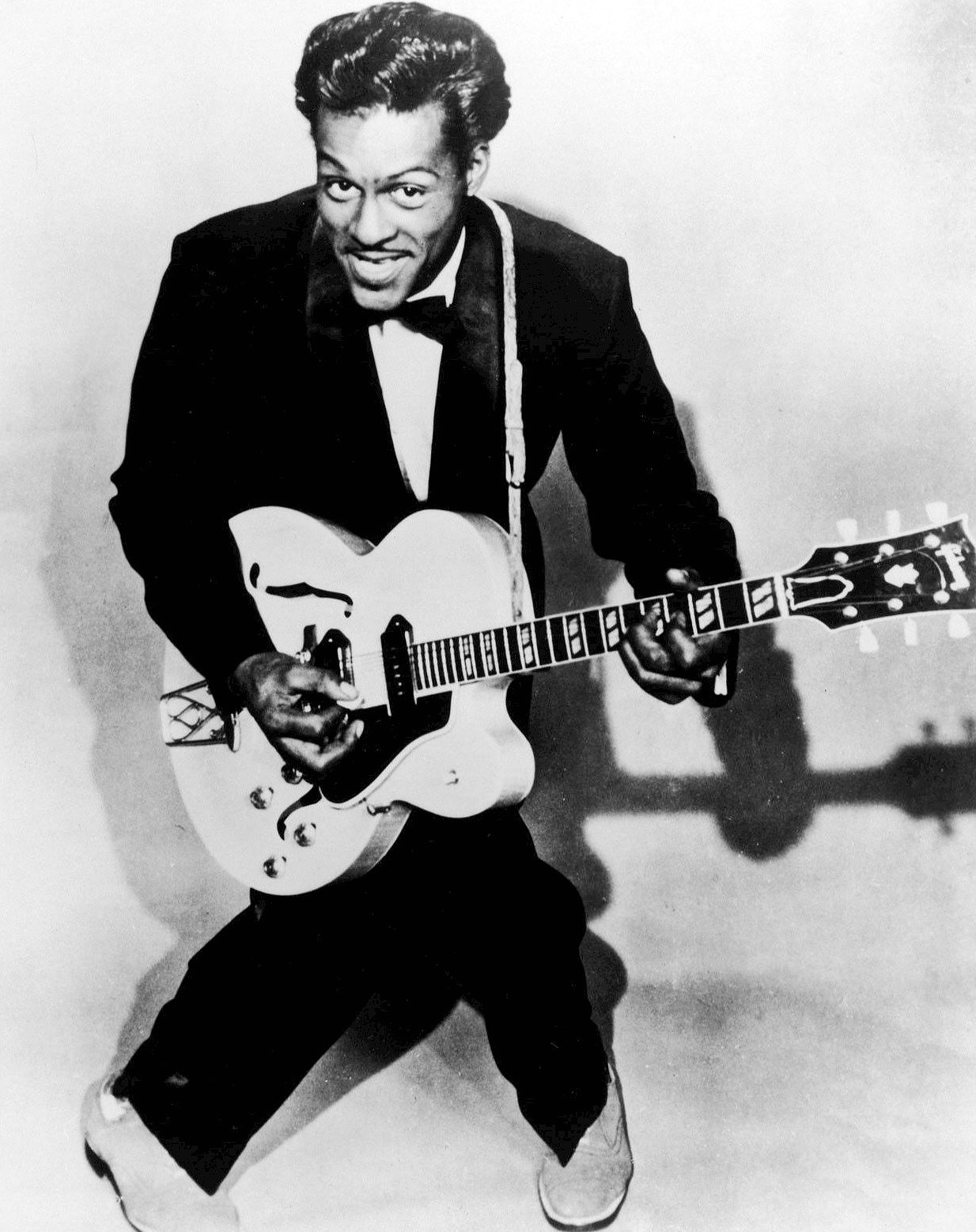
When Chuck Berry died in March of 2017, I wrote this post as a memorial both to him and to the ongoing struggle of cultural appropriation and erasure. It would be more fitting to turn it into a blog post in March of any year, on the anniversary of his death, but I know me - if I waited until next March, I would forget to post it.

So I'm sharing it now because I'd rather share this bit of history and pop culture deconstruction at a random time, than to forget it entirely:

Fun Fact: Chuck Berry got famous for his song Johnny B. Goode (among others). He originally wrote it as autobiographical and penned the lyrics to say "Oh my, but that little colored boy could play" as a reference to his own amazing skill as a youth but changed it to "Oh my, but that little country boy could play" so that the song would get air time on the radio.

Another Fun Fact: Berry also wrote it in the key of B-flat, because big band and jazz music that featured horns preferred music in B-flat and E-flat. But in the movie, Back To The Future, when Marty McFly plays the song at the Under The Sea dance, he says "this is a blues riff in B..." The song that we hear in the movie is not actually played in B even though the character says it is, it's played in B-flat. But that's a really unusual key for guitarists in the '80s and for pianists who were the big names and major competitors in the music biz at the time Berry exploded on the scene.

The character of Marty McFly was an '80s guitarist. At that point in time, Rock & Roll had moved away from its jazz and blues influences, and therefore away from songs played in B-flat. So the character wouldn't have been used to playing in that key and would have likely preferred the key of B.

The song Johnny B. Goode is a classic example of the microaggression erasure of the black contribution to the history of Rock & Roll. People like to point to black musicians and say "see? We let them entertain us! We like their music!" but then we have to erase little details.

We're happy to give artists like Chuck Berry credit now, but who among us knew about the original lyrics that had to be whitewashed before anyone would even distribute his music? Everyone knew he was a colored man singing the song, but he couldn't sing about his experience as a colored man, he had to sing about a "country boy" in order to get white audiences to listen, and he had to get white audiences to listen in order to get radio time and record contracts.

And we also conveniently forget that Rock & Roll literally started in the Negro communities with jazz and blues and African rhythms because we whitewashed that too with simple little things such as changing the generally accepted keys for music based on *white* musician's instruments. Even though Berry was a guitarist, he came from a jazz and blues background, so of course he wrote his music from that influence.

But white musicians who favored piano and guitar and who lacked the horns of the big band era wrote music that was more comfortable for their instruments. And so, gradually, songs in the key of B-flat and E-flat lost favor to the point that a white kid in the '80s playing classic Rock & Roll music would have played the songs in the key of B even though it wasn't originally written that way.

This was a deliberate choice that the writers of the screenplay made, and they made it *for these reasons*. The screenwriters weren't necessarily erasing any of this history - they were acknowledging that it had already been erased by making the line of dialog say "blues riff in B" even though it wasn't.

And they taught the actor, Michael J. Fox, how to play the song in the key of B. So, we are not hearing Michael J. Fox's music, we're hearing the studio musicians Mark Campbell singing and Tim May's guitar *in the key of B-flat* because that's what sounds better and more like the original, but when we watch the scene, Fox is really playing the guitar, and he's playing it in the '80s key of B. Because the screenwriters understood the history and evolution of music.
joreth: (boxed in)
Had a dream that woke me up one morning. I dreamt that I was crashing at a friend's house out of town (as I have been known to do when I work out of town and am on my own for lodging, to save money). I don't know who the "friends" were supposed to be, but y'know, dream.

So I was sleeping over at a friend's house and I had to go pee, so I got out of bed and went into the bathroom. While in there one "friend" came home and started talking to the other "friend".

Through the door, I heard "it was totally racist, but, like, not white to black people, the other direction."

So I yelled through the door "there's no such thing as reverse racism, that's not how this works!"

I got out of the bathroom and made my way back to my room so pissed off that I had a "friend" who would still make that claim, especially because, in my dream-addled brain, this "friend" was supposed to be one of my rational, progressive friends. So, in the dream, I started gearing up for a confrontation and formulating my usual soundbites about systemic, institutional discrimination vs. personal rudeness, etc.

And I got so mad and worked up over it that this is what woke me up.

So there I was that morning, pissed off at an imaginary friend for being racist. Welcome to my brain.
joreth: (::headdesk::)
When Florida or other southern natives ask me how I like living here -

Me:  I hate it here.  I hate the weather, I hate the culture, I hate the politics, I hate the income level, and I hate the people.  I have some friends out here who are exceptions to the rule, that's why we're friends, but generally speaking, this place is conservative, intolerant, and backwards.

Them:  How can you say that?  This is Orlando!  We have Disney with all the gay people!  And all kinds of black people and don't forget the Puerto Ricans!

Me:  That's what I'm talking about.  I grew up in the Pacific Northwest, with influences from San Francisco, LA, Portland, and Seattle.   And even *those* places have their problems.  But compared to them, this is a small town with delusions of grandeur, complete with the small-town thinking that goes with it.

People who grow up in truly diverse environments would never think that Disney is "diverse" just because it's OK to be out as gay and employed by them, or think that it's diverse or tolerant just because there are people of color physically present.  That statements like that are uttered are exactly why this place is too backwards for me.

Them:  ...

Them:  Well, I guess if you're from San Francisco...

Me:  Yeah, that's what I mean.

#RealLifeConversationsIHave #Repeatedly
joreth: (boxed in)
There have been a lot of rumblings in my various communities about the lack of accessibility for basically everyone other than straight white educated cismen. One popular option that a lot of people are choosing to take these days (and I wholeheartedly support them) is to look at the speaker lineup, and if they are the only POC or woman or disabled person or whatever on the lineup, then to decline the invitation to speak.

Another option is to do the same thing as a guest. A third / fourth option is to do the same thing *as* straight, white, cismen and to do it publicly as a way to give up your seat for someone who is not (especially if your "seat" is on a panel or podium discussing accessibility issues).

As I said, I support this choice completely. However, the consequence of all POC and women and disabled people et. al. refusing to participate is that these events *remain* white, straight, male, and able-bodied.

So, if we are a member of an underrepresented demographic, and we get invited (or accepted) to speak at an event where the speaker lineup has less diversity than we'd like, and we have the spoons or the matches or the hit points for it, and our lecture topics work this way, I'd like to propose doing more of this in addition to our boycotts.

Give our lectures and workshops and panels in ways that absolutely do not benefit the people who are not us but that do benefit the people we are trying to make these events more accessible for.

This will not be applicable to everyone who speaks. It's most easily demonstrated with something like hearing loss because accommodating people with hearing difficulties tends to be *inconvenient* for people who can hear, whereas many other forms of accommodation benefit everyone or most people even those who do not *need* the accommodation.

One of the things that I do is, in my Simple Steps workshop, where we take dancing exercises and learn how to apply them as actual communication tools, we deliberately arrange this hands-on workshop so that men have to touch other men.  Everyone other than straight cismen is socialized to allow some form of physical contact (often whether it's wanted or not), but straight cismen get to indulge in their homophobia because of the homophobic culture.

So we do not accommodate them.  They are forced out of their comfort zone in our workshop.

Obviously, this has limitations.  People who have mental health issues regarding physical contact will find our workshop difficult for them. We made a choice to focus on this one issue, and the nature of the workshop is to be hands-on and interactive.  But the same goes for the ASL speaker in the original meme here - people who have eyesight problems would have had difficulty in his lecture too.

Another thing that I do is I make many of the events I host to be either child-friendly or low-cost / free (or both) because poverty is one of my pet SJ issues.  I am not a fan of children.  But I make as many of my events child-friendly because I know how expensive child-care is and how difficult it can be to participate in a community when everything costs money and time and there are children at home.  Children running around an event is inconvenient to many adults.  But without childcare options, poor people (and mostly women) are left out. 

I will be considering some of my more popular lectures and workshops to see if I can adapt them to make them less convenient for various target audiences, to illustrate this point.  If there is a way to make your lectures more accommodating to the people you are representing while simultaneously making it less accommodating to the non-representative audience, please consider this act of civil rebellion in lieu of just not participating at all.

If we want separate spaces, that's one thing, but if we're asking for more inclusivity, some of us have to be the ones to barge through the door. Otherwise, the room will remain monochrome because we've all decided that forcing the door open is too much effort.

No photo description available.

Event Organizer: We're sorry, there won't be interpreters at the event where you are presenting about Deaf things, sign language, and interpreting.
 
Me: No problem, I'll present in ASL without interpretation. Hearing people will have to get by.

EO: Ummm ...

I presented for 25 minutes, and opened with a couple of slides in written English that explained the situation. Told them to stay, so that they could "learn a lesson they didn't come here for." They all did.
joreth: (being wise)

While it's not usually a good idea to hijack a thread talking about oppression of one class for another, this one explicitly asked the question if another class experienced anything similar.  Since oppression is about one group of people benefiting off other classes, the tools of oppression are often similar from one class to another.  A lot of what is done to women to keep us "in our place" is also done to people of color to keep them in "their place".  And intersectionality is when several axis of oppression cross and the tools are used doubly or triply to keep people in "their place" because they belong to multiple classes that all get held down.

Don't tell people to smile (unless you're a photographer and it's your job to get happy pictures).  Nobody exists to look pleasantly at you.  Nobody needs to gain your approval for existing in public or in the space they occupy (unless it's legitimately your personal, private space).

Y'all think you can read emotions on people, but you can't.  There are some great studies out there that show we are absolutely terrible at reading other people's emotions.  Not smiling does not equal "angry" or "sad".  Not smiling is merely an absence of emoting happiness, it is not the *opposite* of happiness.  You need other cues for emoting non-happiness emotions.

But, as atheists have been trying to explain forever, the absence of a thing does not mean the presence of the opposite thing.
 
And even if it did, it's none of your fucking business anyway.
joreth: (Dobert Demons of Stupidity)
Had to explain to someone the other night that the fact that "what happened to my ancestors doesn't affect me today" is exactly an example of that white privilege he claims not to have.  I pointed out to him that black people today, in Orlando, are poor and have poor health, because of deliberate racist decisions made by the city in housing zoning, railroad building, and freeway construction.  Their outcomes today are directly affected by what happened to their grandparents.

The fact that his white ancestors probably kidnapped George Washington (a story he seriously told me as evidence of how hard his ancestors had it in the past) and were outcasts during the Civil War and yet he suffers no setbacks from that because he "works hard to get what he has" is EXACTLY that "privilege" that the coworker he shut down was talking about.

My parents were refused food service and housing because they were a mixed marriage.  They still managed to be lower-middle class in the '80s, but how much further could they have gone if racism wasn't a thing?  If my dad could have used his forestry degree instead of working in a machine shop to support his family?  If my mother wasn't relegated to "secretary" job positions?  Where would I be today if sexism and racism didn't exist and didn't hold back my parents?

Maybe I'd be in the same place, I dunno.  The economy was completely fucked by the Boomers, so maybe I still would have chosen this career and still been thrown into poverty because of a gig economy.  But maybe I wouldn't be.  And maybe I, personally, would have but statistically people with my heritage would have *on average* better outcomes because their own parents and grandparents were not denied housing, jobs, or subsidies.

When your grandparents are funneled into ghettos, and then your parents are given crap education because schools are funded by property taxes, who then have shit jobs so that you grow up malnourished and without the opportunity for skills or clothing to impress employers, what happened to your ancestors very much affects your present day.

When your great great grandparents were paid for the slaves they lost, and when they were hired right off the boat because they were white and already spoke English, and when they were given the opportunity for free or low-cost land that other people were not afforded, so that each generation after them started with a walk to first base, what happened to your ancestors also very much affects your present day.

And the fact that you can look at some individual hardships that some 3x-removed uncle once suffered and say "see? My family had some shit too, but I don't let it affect me, I just work hard and earn my stuff"! and not see how that's actually reinforcing my own point, that's exactly what privilege is.
joreth: (boxed in)
For all that I complain about Bewitched, there is one episode that I really like.

Of course, I still have to watch it in the context of the era, because it does some things that, today, I would not find acceptable.  But the message really does have good intentions.  This episode is actually so important that it was prefaced with a personal message from Elizabeth Montgomery.  She addressed the camera directly at the top of the episode about the importance of the message and how strongly she (and the advertiser) feels about it.

In this episode, Tabitha has a best friend stay the night.  She wishes her best friend was really her sister because she doesn't much care for having a little brother.  So Samantha tells her that having her friend sleep over is like having a temporary sister.  The little girl arrives.  She's black, and her father works with Darrin at the advertising company.  Tabitha gets into it with another girl at the park over whether or not she can be sisters with someone of a different color.

Darrin's company is wooing a new client, who believes in making sure anyone he hires for anything has the type of home-life that he approves of before hiring them.  So this guy shows up at the Stephens' house unannounced and Lisa opens the door.  The client misunderstands who Lisa is, with some help from a child's way of not quite explaining things.  He gets the impression that Darrin is married to a black woman and this is their other daughter (he already knows about Tabitha and Adam).

Later, the two girls talk about how they wish they could be really sisters.  Tabitha accidentally changes Lisa's skin and hair color.  She changes her back, but then changes herself to match Lisa.  So we have literal blackface on this show, which made me very uncomfortable.  But Lisa points out that their parents would be upset if their children are the wrong color, so Tabitha goes back to her own color.  Then both girls are sad that they don't look alike anymore, and therefore can't be sisters.  So Tabitha accidentally gives them contrasting spots - she has black-skin-color spots and Lisa has white-skin-color spots.  And then she can't take them off because, subconsciously, both girls really want to be sisters.

The rules of this universe are that one witch cannot undo any spell that another witch casts (otherwise that would solve all of the show's plot devices before they start).  So Samantha can't get rid of the spots as long as Tabitha really doesn't want to.  So she has to do some digging to find out why Tabitha doesn't want to.

The girls talk about the racism they experienced from the other girl in the park and how they really want to be sisters.  So Samantha tells them:

"Sisters are girls who share something.  Usually the same parents but if you share other things - good feelings, friendship, love, well that makes you sisters in another way."  She insists that they can be sisters if they want to, no matter what skin color they have.

This convinces Tabitha that they can safely get rid of the spots and still have the connection they want.

Meanwhile, the Stephens are hosting the office Christmas party downstairs and Lisa's parents arrive to pick her up from her slumber party the night before (the father had to go out of town to secure another client, so the Stephens were basically babysitting for a couple of days).

Earlier in the day, the client fired the advertising agency because of Darrin's "mixed marriage", but he didn't put it clearly enough for anyone to understand that this was the reason.  Just that he didn't approve of Darrin, and since nobody knew that he had come over and spoke to Lisa, nobody knew what it was he didn't approve of.

In an attempt to woo him back, Darrin's boss invited the client to the Christmas Party at the Stephens' house.  Apparently (this all happened off-screen), the client was "curious" enough to accept.  So he shows up immediately after Lisa's parents do, while Lisa's dad stepped away with their boss to talk about the new contract he just acquired for the company, leaving Lisa's mom standing in the hall with Darrin, when the client rings the doorbell.

Mistaking Lisa's mom for Darrin's wife, he opens his big ol' bigoted mouth to say how brave he thinks they are and how maybe someday what they're doing will become acceptable.  And yes, he phrased it like that, implying not only that it wasn't currently acceptable, but that he didn't think it ought to be, only that maybe someday in the future it might be.

He offers Lisa's mom a little black baby doll for her daughter for Christmas, and Darrin is handed a white baby doll for Tabitha, and then says he didn't know which side of the family that Adam took after so he decided to play it safe with a stuffed ... panda bear.  Yeah, picture that for a moment, if you don't immediately get it.

Then he runs off for eggnog before either parent can react.  Lisa's mom has no idea what just happened, but Darrin (having just been taken off the account at this client's insistence because of being "unsuitable" or whatever) figures out that the client must think that they're married and this is why he was fired from the account.

Meanwhile, Samantha gets the kids straightened out and Darrin's boss, Larry, has a chat with the client.  Now that who is married to whom and which child belongs to whom is understood, the client wants Darrin back on the team.  As it finally dawns on Larry the reason for the client's decisions, he steps back for a moment, while the client puffs up with pride at being such an understanding, forgiving sort of man.

Larry steps back into the conversation and tells him, in no uncertain terms, that he doesn't want his account because he doesn't want to work with a man like this.  Overhearing this conversation, and shocked and pleased at Larry's character, Darrin tells Samantha that, in the spirit of Christmas and given the circumstances, if she sees an opening where her witchcraft would help, she has free reign.

Shocked, the client goes on the defensive and even says "but some of my best friends are Negroes!"  So Samantha wiggles her nose, and suddenly the client is seeing everyone at the party with black skin.

So, again, literal blackface that made me uncomfortable, but for a purpose they felt was helpful back in the '60s.

The client freaks out because, well, regardless of anyone's racist beliefs, if everyone around you suddenly changed skin color in front of your eyes, you'd probably freak out too.  So he leaves.

The next morning, the Stephens' and Lisa's family are all opening Christmas presents together around the tree.  The doorbell rings and it's the client.  He asks Darrin to take his account and offers an apology:

"I found out I'm a racist.  Not the obvious, out in the open kind of a racist, not me, no, I was a sneaky racist.  I was so sneaky, I didn't even know it myself."

Usually, particularly in older shows, when they cover the topic of racism, there's only one kind of racist - the mean ones who actively discriminate, but never any real violence.  It's like, on these shows, racists don't lynch people because "we're past that now", but they're visibly angry and say mean things, and usually have some kind of power to prevent people from doing something, like entering a building or patronizing an establishment.

These shows offer a caricature of a racist, to make them easy to identify as racist but not *actually* truly offensive.  And I kinda get it - they have 23 minutes to make a point, so they're going to do it in as clear a way as possible that will get past the very conservative censors.

This is the only episode of any TV show that I can personally recall seeing where they addressed the fact that racism comes in other forms.  They showed a man who believes he is a "good guy" whose racism is more subtle and uses more microaggressions rather than outright violence or hatred.  And they showed him humbled and ashamed as he struggled with the realization that he was not as good a guy as he thought he was.

And the producers and actors thought this was such an important message that they took the time to break the 4th wall and tell the audience how strongly they felt about this message.  Even the advertiser got in on it.  Which is a pretty big deal.  Had they simply showed the episode, boycotts would have been called for whichever commercials were aired at the time, and the producers would have had to do some kind of damage control to keep advertising clients and soothe viewers.

But, instead, Oscar-Meyer put their logo right behind Elizabeth Montgomery in her preface, and her speech included their name among those who felt the subject of their episode was important and who stands behind it.  I'm sure boycotts were probably still called for, but the producers, the network, and the advertiser all got out in front of it and took responsibility for their stance.

So, as someone with light brown skin, which has lightened enough with my years out of the sun that nobody can even tell my chicana heritage by looking, I can't say that the blackface in this episode is justified under the "it was the era" excuse or not.

I will instead say that *if* the blackface can be excused for the era, and *if* the viewer can sit through the discomfort of modern sensibilities seeing it, I am rather proud of the show for making the attempt they did to address racism, and in particular that there are different types of racism and that all types are unacceptable.

I have a love-hate relationship with this show.  I have seen most of the episodes before over the years, but I am watching the entire series now as part of my experiment to compare and contrast TV romantic couples over the decades and moral lessons of their relationships.

Watching this show now, after having developed the particular viewpoint I have on feminism and romantic relationship ethics, I am sitting in a strange place where I still manage to enjoy the show while simultaneously hating every character in it.  As a character-driven media consumer, this is a weird place for me to be in.  But I will say that the show is giving me lots of fodder for rants.

So far, this show is at the bottom of the list for me in ethical romantic partnerships.  I somehow manage to still enjoy watching it, but I don't recommend it.  I think everyone in this show is a terrible example of a person and the lessons learned at the end of each episode are not the lessons I feel should be the takeaways.  People are punished for bad behaviour, but not for the reasons I think they should be.

This episode is the exception.  Darrin doesn't go on any of his anti-witchcraft rants and doesn't try to hamstring Samantha and none of the other relatives jump in to interfere in their relationship and remove anyone's agency.  In this one instance, Darrin is right to be concerned about the effect of witchcraft - namely getting found out and doing harm to someone else with the inexperienced child's wish-craft.

This episode focused entirely on an actual, real harm to society, and both the botched and corrective witchcraft was the solution.  And the harm it highlighted was a subtle, insidious form that is not easily recognized because of the lies and misdirections we are taught about said harm, intended to confuse us and muddy the issue.

So, for once, I applaud Bewitched for going in the right direction.  It could be done so much better today, with a more sophisticated touch on the subject, but given the era, I'm actually kind of surprised at how well it *did* do.


joreth: (being wise)
I know that Black Lives Matter is getting the most press among the ethnic groups fighting for equal rights these days, and that the history of oppression of black people is horrific and different from the oppression of other POC in the US...

but there are other groups of people who experience racism in the US, including violence, internment, discrimination, microaggressions, and even internalized racism when people use the same tactics against each other as are used against them.

This is not an either/or issue.  This is a yes-and issue.  As each international incident flies past the headlines, the groups associated with that incident see a spike in both violent and casual racism, and our current US administration only encourages it each time.  But then when another "incident" happens, that group's oppression gets forgotten as we focus on the next group du jour, while the blatant and subtle and internalized tactics of bigotry continue unchecked because we're not looking at that group anymore.

Intersectionality is complex and difficult.  In our race to be The Most Woke Progressive, when defending one group, we can't afford to ignore how our defense affects the other groups.  While each group has its own unique background and sometimes differing needs, that doesn't give us the right to ignore the toes of one group while standing up for another.
joreth: (being wise)
OK, so you know how Rey in Star Wars is not a Mary Sue because she has exactly as much (if not more) background to justify her connection and skill with the force as Luke did in the first trilogy?  And, like, how NONE of SW really makes a whole lot of sense, it's basically just a spaghetti western in space with literal white-hat good guys and black-hat bad guys and a pretty contrived plot? (Remember, I'm a huge SW fan, I'm just not blind to the flaws in my fandoms)

So you can't think Rey is a Mary Sue unless you think that of pretty much every (male) character in the entire universe, because she is consistent with the utterly fantastical (and by that, I mean "unbelievable) universe that is Star Wars - you can't think that about Rey w/o thinking of that for everyone else without that viewpoint being basically misogyny?

So, yeah, you can't think that the tech in Black Panther is "unbelievable" or "too advanced" unless you think that about the entire MCU, because totally unrealistic tech is completely the MCU's M.O.

To think that it's somehow suddenly unbelievable now that the people whose culture evolved for thousands of years literally around and on top of the super secret super amazing metal were not capable of developing that tech while Captain America in the '40s had fucking death rays can only come from embedded racism.

This doesn't mean you hate black people. It means you have some assumptions about what it means to be black (and African) that were deliberately created and fostered by white slavers and colonizers generations ago to do exactly what these kinds of thoughts just did - think that black people are less advanced, less "evolved" than any other people.
joreth: (Default)
valarhalla -

Fun Fact: Tenochtitlan fell in 1521. From 1603 onwards, large numbers of honest-to-god fricking Japanese Samurai came to Mexico from Japan to work as guardsmen and mercenaries.

Ergo, it would be 100% historically accurate to write a story starring a quartet consisting of the child or grandchild of Aztec Noblemen, an escaped African slave, a Spanish Jew fleeing the Inquisition (which was relaxed in Mexico in 1606, for a time) and a Katana-wielding Samurai in Colonial Mexico.

Also a whole bunch of Chinese characters BECAUSE MEXICO CITY HAD A CHINATOWN WITHIN TEN YEARS OF THE FALL OF THE AZTEC EMPIRE.
I am going to use this to go off on a tangent about racism and Mexicans.

I have posted several times before about how I am treated as white, which means that racist white people say racist white shit to me, assuming that I'm "one of them" and not realizing that I'm chicana.

I've also posted about the casta system, which stratified racism to a whole new level of granularity in Mexico that the US only wishes it could be as racist. It literally took elementary school geneology (because we didn't have genetic studies back then) and separated *each generation* of mixed ethnicity into *its own caste*. So, depending on how many generations back your full-blooded indigenous or African ancestors went (parents, grandparents, only 1 parent, only 1 grandparent, etc.), that is what marked you for your appropriate caste.

On top of that, the white colonizer's solution to the "brown people problem" in the New Land was "breed them out". As a result, the population of Mexico is basically ALL MIXED.

A genetic study of Mexico a few years ago showed that pretty much everyone has a mix of African, indigenous Mexican, and Spanish (white) in them. The study showed that pretty much everyone had indigenous and African genes from their matrilineal lines and European genes from their patrilineal lines, confirming the "breed them out" policy.

Even before genetics confirmed this, the population of Mexico knew this to be true and made it part of their political platform during the last revolution, overthrowing the casta system and uniting everyone together politically (not that it really did unite everyone in practice - there is still some ugly racism there).

I don't "look Mexican" for two reasons:

1) I am the product of assimilation. This is what a mere 2 generations of assimilation looks like. Middle and upper class Mexican immigrants tend to be in favor of assimilation and my Mexican grandparents were middle class. "Mexican" is legally classified as "Caucasian" in the US, which means that we have access to certain areas of privilege that other POC don't.

So middle and upper class Mexican immigrants see assimilation as a path towards upward class mobility, away from their lower class "immigrant" status. If you have the right accent, the right education, the right clothing, and the right political leanings (and light enough skin helps, which is also mostly inherited through class, thanks to the casta system), the US is the land of opportunity for Mexicans.

My grandparents did not speak English. My mother learned English in school. By the time I was born, she had married a white man who did not speak Spanish, and so Spanish was not spoken in my home. I have probably the whitest American accent possible - a cross between "valley girl" and "rural redneck Californian". Add to that my light skin and my cultural exposure to mostly white interests so that I know little of my own heritage first-hand, and I "pass" as white.

2) Mexico is one of the most diverse nations in the world, thanks to colonization. There are African-Mexicans and Chinese-Mexicans and Japanese-Mexicans and Euro-Mexicans and Filipino-Mexicans and everyone else.

I don't "look Mexican" because the US has been bombarding us for generations with popular media that show "Mexican" as the poor brown thugs living in the barrio with the chinos and tank-tops and flannel shirts buttoned only at the top and colored handkerchiefs signaling their gang affiliation and feisty abuelas wielding their sandals and wooden spoons in the air and spicy Latinas with too much eyeliner, short skirts and shorter tempers.

When the truth of the matter is that Mexico is a very diverse nation with every skin color in existence. It is neither the land of the drug runners and prostitutes, nor the noble jungle tribesmen and wise, wrinkled old tias sitting outside their huts. At least, no more so than the US is the Wild Wild West.

Mexico is a melting post where people came because it was the land of opportunity for them, or they came because it was the land of opportunity for someone else and they had no choice in the matter. There might be fewer Swedes and Norwegians there than, say, Minnesota, but it is still a culturally and ethnically diverse nation.

So I don't look like the stereotype of a Mexican that the US has been frightening all good little white middle class children with for generations. I look like the type of Mexican who is part of a vast, diverse heritage, made up of people from around the world, some of whom were native to the soil, some of whom traveled there to seek their fortune, some of whom fled there to avoid their fate, some of whom were brought there against their will, and who all blended together to create a new future for the land now known as Mexico.

Tags

August 2024

S M T W T F S
    123
45678910
11121314 151617
18192021222324
25262728293031

Syndicate

RSS Atom

Banners