joreth: (polyamory)
https://www.instagram.com/p/BVOHz8YhnWU/Answering that last question about casual sex without feelings verbalized something that I felt but hadn't quite brought to the forefront of my brain yet.

I have always been confused by people who ask things like how to have casual sex without developing feelings. And I think it's because they're coming at it from literally the opposite direction as I do.

I don't have casual sex and then try to make my feelings match. I have casual sex BECAUSE CASUAL ARE MY FEELINGS.

They're choosing the structure and then trying to shoehorn the feelings in to match the structure.

I'm looking at my feelings and going "what structure works best with these feelings?" and then I have that kind of relationship.

And it occurs to me that this is exactly the same problem as the Unicorn Hunters and like every poly newbie ever. They're all picking a structure first and then interviewing people for a job position that requires a mandatory suite of emotions.

Whether it's casual sex or emotionally intimate partnerships, I have the feelings first, and then pick the structure to match. If a person is simply not prone to high sexual attraction / low emotional attachment, then by having the feelings first and choosing a matching structure, they will, just by the "signal flow" if you will, rarely or never have casual sex.

If a person tends to have high sexual attraction for people without a strong emotional attachment, and they have the feelings first and pick the structure to match, then they will just naturally have lots of casual sex without "catching feelings".

But if a person picks the structure first, and either they pick a structure that runs contrary to their natural tendencies of sexual attraction vs. emotional attachment or they are the sort of person that is capable of a variety of mixtures of those two things, then they try to fit people into the structure, they are likely to wind up having the "wrong" feelings for the type of relationships they are in.

And then, if that person has any sense of entitlement or lack of respect for their partners' agency, they are likely to use that relationship structure to coerce their partners into something they don't want.

This is being girlfriendzoned. This is when someone sabotages condoms to get someone pregnant to keep them around. This is when they dismiss the other person's feelings with "you knew the rules when you signed up". This is cowboying and cuckooing.

We, as a culture, pick our relationship structures first and then try to fit people in them. We do this with friends, with intimate partnerships, and with fuckbuddies.

Don't do that.

Feel your feelings, and then pick the relationship structure to match. If you don't have casual-sex-feelings, then don't get into a casual sex relationship. That's how this works. It doesn't work by getting into a casual sex relationship first and then trying to prevent yourself from developing feelings other than casual-sex-feelings.

I don't worry about "catching feelings" for my casual sex partners because the whole reason they are casual sex partners is because the feelings I have for them are casual-sex-feelings. I'm not going to "catch feelings" because I already HAVE feelings. The feelings I have are casual sex ones. I have high sexual attraction + low emotional connection feelings. That's why it's a casual sex relationship.

This doesn't mean that my feelings absolutely won't change over time, but that's a different discussion. All relationships metamorphose over time. My point is that the reason why people have such a hard time with the concept of casual sex and how to handle "catching feelings" is the same reason why certain types of poly people try to prescript their relationships into equilateral triads or whatever - they pick the structure first and then try to find people to fit.

You will have much more success in all your relationships if you have your feelings first and then pick the relationship to match. And "casual-sex-feelings" are valid feelings. There is no need to prevent "catching feelings" in the event of a casual sex relationship if the feelings you have are the ones that match.

Image at www.instagram.com/p/BVOHz8YhnWU/
joreth: (polyamory)
www.quora.com/How-do-I-decrease-jealousy-to-a-minimum-when-in-an-open-relationschip/answer/Joreth-Innkeeper

Q. How do you personally deal with jealousy in your open relationship?

A.
The same way I deal with any negative emotion - by introspecting and talking it out until I find the root cause, and then I address the root cause.

Honestly, it’s like people think jealousy is some magical mystery compulsion that comes over people from out of nowhere and totally takes them over like a brain-eating parasite or something.

Jealousy is just an emotion. So is anger. So is sadness. It’s not magic, it’s not a curse, it’s not a parasite or a disease, it’s just an emotion. We have emotions, we deal with them. Monogamy never prevented anyone from feeling jealousy either, I just don’t try to control my partners when I feel something negative. I look at it head-on and actually solve the problem.
joreth: (boxed in)
I just read a thing that said "abusers are good at making your anger seem worse than their abuse."  And I thought "yes! They do!"

But then I thought a little more about my last abusive ex.  See, he would do this thing, where he would try to control his partners' behaviour, and they would do a thing that resisted that control, and then he would get angry at their resistance and call it "abuse" and accuse them of hurting him, of not caring about how their actions affected him, of destroying the relationship, etc.

If anyone accused him of "overreacting" or of blowing things out of proportion or of doing anything at all that was "too much", he threw it right back at them that they weren't allowing him to have his feelings (because all feelings are "valid", yo).  He was VERY good at making it seem as though his victims were making his anger seem worse than the so-called "abuse" his victims were doing to him when they resisted his control of them.

I still remember the day one of them called me up in tears, hyperventilating, totally freaking out because she may or may not have broken some fucking rule they had, depending on how the rule was interpreted, and she was upset not because of what he might do in retaliation for breaking the rules, but because she thought she was a horrible, thoughtless person for 1) breaking the rule and 2) not knowing if the rule had been broken because she didn't get clarification on this point.

I made a blog post a while back where I used actual quotes from one of our email exchanges post-breakup where I told him that I did not want him to contact me again except to apologize for one very specific act he had done during the breakup, and he responded quite indignantly about how he didn't "consent" to me placing "limitations" on the conditions under which he was allowed to speak to me.

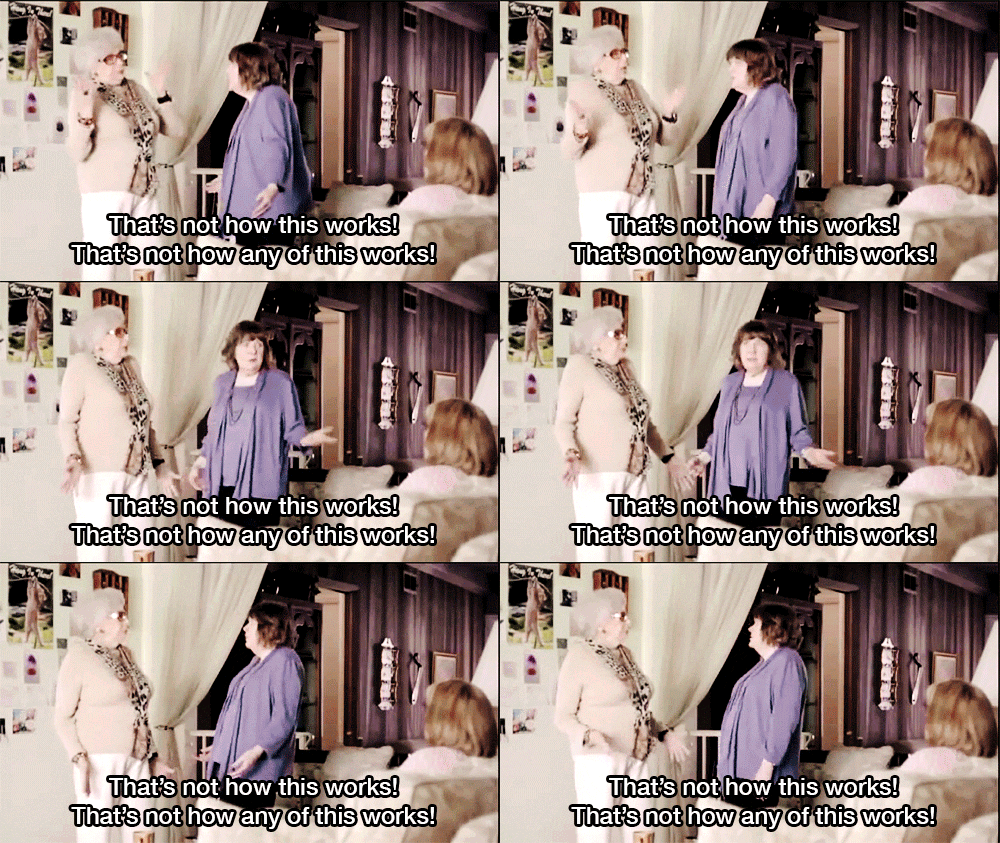
Dude, that's not how this works. That's not how any of this works.


So, I realized that it's not so much that abusers do particular things like making your anger seem worse than their abuse.  Because someone skilled in abusive tactics will make it seem like YOU are making THEIR anger seem worse than YOUR "abuse" of them, when in reality, their anger is part of the abuse.

And also, as I've learned, we all have abusive tactics that we have learned just through exposure to it throughout our lives, from our families and our culture.  So when we are mistreated, we ALL reach into our own bags of tricks, and some of the responses we pull out can be pretty shitty too.

So sometimes (in my experience, basically all the time), it can be really difficult to tell who is the abuser and who is the victim, even if you apply the axioms "follow the lines of power and see who has the locus of control" and "the one who is trying to run away is probably not the abuser".  In this same relationship example, we all thought that the victim was the abuser at first because she was the one doing what seemed like controlling things.  You see, he was also deeply fearful of losing the relationship.  Abusers are in real pain and feeling real fear.  What makes them abusers is how they deal with that pain and fear.

So, to prevent her from ever getting up the courage to leave him, he would play on her fear of losing the family group, which would fuck her shit up, thinking that she could lose everything at any given moment, and it would trigger her anxiety about being "left out".  To relieve her feelings of being left out, she would request that no sex happen among anyone unless the door was left open in an implicit invitation for her to join, even if she didn't want to join.

To me, that seemed incredibly controlling.  But he was desperately afraid of losing his relationship with her and he desperately needed to make this a whole group thing with no individuality or independent-ness, so he made it seem like he was "acquiescing" to her demand to control the sex he was allowed to have, even though "everyone subsumes their identity into the group relationship and we are all one Borg, resistance is futile" was exactly what he was going for.

I'll be honest - the reason why I had a hard time believing that she was being abused is because I had a history with her as a metamour through another partner, and she tried to control our relationship then too.  So it seemed totally in character to me that she was being controlling, even though it was contrary to every value she *spoke* for.

But her controlling behaviour was a *reaction* to HIS controlling behaviour, just as it was the last time (she had just gotten out of a relationship with an abusive metamour and used controlling tactics as a survival technique).  Most of us develop toxic coping mechanisms to prolonged exposure to abuse.  He provoked it by preying on her fear of being alone, left out, of losing the family group.  And then, when things escalated to a level where I could more clearly see who was pushing whom, he strung her along by making it seem as though she were the one dismissing his anger to make it seem worse than her "abuse" of him.

So, it's not that abusers do any particular thing or particular tactic.  It's that abusers flip the script.  They take whatever tools you give them, whatever scripts that society gives them, whatever is available, and they flip it to make it seem like their victim is the "bad guy".  Some abusers are sophisticated about it and it can be really hard to tell that this is what they're doing.  Others, like a particular villain in a TV show I'm watching right now, are really fucking obvious about it (#ProTip - if someone says "the whole world is against you / doesn't believe in you / is holding you back, and I'm the only one who accepts you / believes in you / trusts you / encourages you / is not holding you back", then they're being abusive, just FYI).

This is why I am not a fan of Non-Violent Communication.  It's a ridiculously easy tool to convert into an abusive weapon, and we ALL have abusive tendencies - yes, even you, dear reader, you are not above this shit - so I've never seen NVC used in a healthy way.

And I don't need anyone to tell me "but I use it all the time!" 1)  I'm sure there is someone out there somewhere for whom it has never been warped into a tool of abuse - statistics guarantees that this must be true somewhere - and the fact that someone like this exists is not the point; and 2) I just got done pointing out that we all have abusive tendencies, so in this rant, I am dubious of anyone's claim that they have never misused a communication tool because I believe we all have, either knowingly or unknowingly, simply because we are all fucked up and I'm not letting you off the hook for this.

I'm digressing.  The point is not NVC specifically.  The point is that abusers flip the script.  The point is for them to make you question your reality, to question "who is the bad guy here?" and to come up with the wrong answer.  And they will use whatever script they have access to in order to flip it.

So, an abuser may make your anger at them seem worse than their abuse of you.  But they may also make it seem as though YOU are making their anger at you seem worse than your resistance to their control of you.  Sometimes anger is the correct and necessary reaction.  When someone is trying to control you, your anger is appropriate.  Anger is my primary defense mechanism, so let me tell you how hard it is for me to admit this next part...  But sometimes anger is also a weapon, and you are totally correct to resist their anger at you, because their anger *is part of their abuse* and their efforts to make it seem like you're the one minimizing their anger *is part of the abuse*.

And I don't have an answer for you.  I don't have a checklist for you.  I don't have a listicle for how to make it easier to tell which is which.  We can follow the lines of power (if they control your income, if they are your superior or supervisor in business, if they own the place where you live, if they influence who your friends are, etc.) and we can try to tease out who is running away and who is doing the chasing.

But those have limitations.  Many abuse victims do not try to run away for a long time.  Many of them are only *capable* of being abused because they're desperate to hold onto this relationship so they submit to the abuse out of fear.  Or out of grooming - where they get the victim to submit to a small violation, and then the next larger violation is excused because it's so close to the first one the victim let through, and how can you let one go and not the other, you hypocrite?

And many people gain power over a romantic partner in ways that are invisible to outsiders.  How many of you ask your friends the details of their economic situation?  How many of you know who controls the income?  When romantic partners are business partners, can you really tell, from the outside, that a division of labor based on skills doesn't have an element of power built in, such as one person controlling the money?

 How many of you have witnessed those private conversations where one person steered another away from building intimate friendships with people the first person didn't approve of, and they did so subtly, without overt threats?

How many of you can *really* tell the difference, from the outside, between "that person makes me uncomfortable, so if you are friends with them, I will have to not be around them, but it's totally without expectation or obligation and your choice to be friends with them is OK with me" vs. "that person makes me uncomfortable, so if you are friends with them, I will have to not be around them, but it's totally without expectation or obligation and your choice to be friends with them is OK with me, except I know how desperate you are to please me so that even mentioning this will make you choose the option I prefer even though I have said it was OK to choose the other option because we both know it's not really OK to choose the other option"?

In fact, how many of you can really tell the difference between those two things even from the inside, when you're right in the middle of it?  From either side?  The human brain is not logical or rational, it is a justification engine.  We are very good at justifying all kinds of things to ourselves and others.

And abusers are particularly good at this.  Which means that, since our brains are optimized for it, we are all capable of abuse.  Abusers flip the script - whichever script we have, an abuser will turn it around to justify their control of their victim.  And even they might not realize that they're doing this, because of that justification engine thing.

But they will take whatever is handed to them and use it to control.  If that means they use your desire to seem "fair" and "impartial", if that means they use the "all feelings are valid" principle, if that means they ride the coattails of the #MeToo movement, if that means they flip the gender script, if that means they *use* the gender script, if that means they use social justice language like my ex, if that means they use their social capital, if that means they use your good faith - whatever it means for them, that's what they'll do to come out looking like the "good guy", or if they can manage it, like the "victim" themselves.

Abusers flip the script.  Even if they have to use "flipping the script" to flip the script, as long as it makes you question who is the abuser and who is the victim, they're doing it right.
joreth: (Default)
Tips from a life-long introvert & adult sufferer of periodic suicidal depression for those of you new to being stuck inside for long periods of time:
  • You may be washing your hands more often, but don't forget to shower too! Lots of people might think this is gross, but when you add the anxiety and the isolation on top of the novelty of not being required to dress up or interact with other humans, actually showering can start to slip down on the priority list.

    This is a big problem for people suffering from depression, and you might be new to the experience of depression. But being a shut-in might give you some new feelings, like lack of motivation and apathy. So make sure to shower.

  • Groom yourselves. Don't just shower and comb your hair, but actually TAKE CARE of your appearance. Every few days, get dolled up as if you had a date or a very important business function. I don't mean to get *dressed* up, although you could if you want to. I mean to be deliberate and conscious about your appearance and take extra steps.

    If you're a full-out kinda person, then break out the makeup kit and hair products. If you're a little lower maintenance, then moisturize your face, buff your nails, comb your hair with a mirror, etc.

    Shave or trim. I realize that not everyone shaves face or body hair, and some people don't even trim, but if this is something that you do when you're putting in extra care for a fancy or important event, then do it every couple of days now too.

    Pick out an outfit. It doesn't have to be fancy, it should just be something that you thought about and *picked out*, not just grabbed whatever was on top in your drawer.

    These kinds of deliberate choices are super important during a depression. They help combat feelings of apathy and helplessness and they help bolster your sense of identity. *What* you do isn't as important as the fact that you are making conscious and deliberate choices *to do it*.

    If you are normally a "fuck you, I don't care what I look like" / "fuck the patriarchy, I won't buy into all the bullshit rules for my appearance" / "down with consumerism and capitalism, I refuse to get sucked into appearances-matter-to-line-your-pockets!" sort of person, this is still important to do.

    It's not about meeting some arbitrary standard. It's about practicing making choices in who you are and expressing it through your appearance and in grooming and hygiene.

    So pick whatever standard you want, as long as it takes some effort on your part. Pick the highest standard among your various standards for various circumstances, or pick some standard that is totally not you at all just to see what it's like to get up that way for fun. The point is - break your daily routine and put some effort into yourself.

  • Time to get over your fears of the phone! Traditional phone calls or video conferencing or whatever allows you to interact with another person in real time without coming in contact with them. Y'all already know about text-based mediums, but now we are losing our in-person socialization so we need a temporary substitute for this. Start calling your loved ones when you would otherwise have spent time with them in person.

    Cook a meal and then Facetime with them while you both eat something. Make a cup of tea and Skype with someone. Put your bluetooth earbuds in while you work out in your living room and your workout buddy works out in theirs. Leave a video chat running on your computer while you clean the house. Run a Google Hangout with video for half a dozen of your friends on one device while running a Netflix Party with those same friends on your laptop.

  • Leave the house. For most of us, we are not under a strict quarantine, we are under self-isolation recommendations. That means don't congregate. You can still go for a solo bike ride. Take a walk around the block and combine it with a phone call to a loved one. You don't need to come in contact with people every time you leave the house, so leave the house for a little bit every day. Even if that means just going into your yard.

  • Start a new hobby or pick up an old hobby. Gardening right now is probably an excellent new hobby, as it can be done solo, it gets you outdoors, and you can do it while talking on the phone to people. Then, you'll need to shower and clean up afterwards. 2 for 1! Working out - same thing.

    Teach yourself how to knit from YouTube videos. Try your hand at jewelry-making. Start painting your spare room like you've been talking about for years. If you ever wanted to start writing your first novel or memoirs, now may be the perfect time to get started.

    If you are fortunate enough to be able to self-isolate with a loved one and neither of you are sick, you can pick up some hobbies that work best with other people, like dancing (even solo dancing can be easier to learn with someone else learning alongside of you). Again, YouTube can help, even though I usually recommend in-person lessons as superior to watching a video. But you can start taking those lessons in a few months when all this blows over. You can get a head start with YouTube.

    Sign up for The Great Courses. This is an online program that gives you access to all kinds of learning opportunities, including actual accredited classes. Learn something new!

  • Structure your day. Look, I get it. I sleep in late, I take about an hour to actually get out of bed once I'm awake, and I get sucked into the internet. This may seem like a luxurious benefit to the new self-isolation restrictions. But not having some kind of structure can lead to aimlessness, which leads to apathy. You don't need militaristic precision in your schedule, just pick some kind of structure.

    Set timers and only faff about online until the timer goes off and then start your hobby. Set a timer for meals so that you don't forget them and start eating at random times. Do your new workout routine first thing in the morning to get your day started. Cozy up with a cup of tea and your onsie and Facetime for a goodnight chat with a loved one separated by the travel bans, and set a timer so that you don't end up staying up all night and messing up your schedule the next day.

    Set aside time for goofing off or being impulsive or not having a plan. You don't need to do this, but a lot of my "spontaneous" friends chafe at the mere thought of having a schedule. But humans really do function better (both emotionally and as part of a cooperative society) when they have some kind of structure in their lives. So leave yourself some time for your spontaneous impulsivity while adhering to *some kind* of structure that still allows you to be productive and stave off depression and apathy. And those of you who have trouble with spontaneity could take this opportunity to learn more about it and stretch your creativity muscles.

  • Elsewhere, I suggested Netflix Party. I've been using this for years, and nobody seems to have ever heard of it, and then all of a sudden, major internet outlets are recommending it. This is a Chrome plugin that allows several people to watch the same Netflix video at the same time. Everyone needs to install the NP plugin and everyone needs to be able to login to Netflix wherever they are. And then everyone needs to have access to the same movie (this is relevant if you want to have a NP with people in other countries - not all videos are available streaming in all countries).

    Then one person starts the Party, selects whether they want solo control of the video or to share control with the other viewers, and invites people to the party by sharing the link that NP provides. Everyone else clicks on the link and you're all now watching the same video that's synced up to everyone else's screen. There is a chat sidebar if you want to chat, but I like to have a second device sitting next to my laptop running a video chat app so that I can see and hear the people I'm in the Party with. I wear earbuds with a microphone for the video chat device, and then headphones on top of them that are connected to the laptop. This gives me good sound quality on both devices and prevents audio feedback.

    I'm still trying out other programs to watch synchronized video through platforms other than Netflix.
I can't stress enough how important it is to stay physical - and I don't mean just moving around.  I mean to care for this bag of meat that we live in.  Exercise and grooming to the best of your ability is still important even though we're (hopefully) not going out and partying right now.  It's good for your physical health as well as your mental and emotional health.

So enjoy being able to work from home and cuddle with your furbabies and see your kids all day and wear comfortable clothing and not care about impossible cultural standards if this is a benefit to the current crisis for you.  Absolutely take advantage of it while you can.  Just be aware that these are the same things that contribute to other sorts of challenges like depression and chronic illness.  So while they're fun when they're novel, we still need to be doing the other things too. 

Keep moving, feeding, and cleaning your body, and keep (or start) caring about your appearance - again, not to meet externally imposed standards, but to keep in touch with the vessel that we are housed in and to keep the connection between the state of this vessel and the state of our mind strong and healthy.  It's like maintaining your car - you might not care if your car looks like shit because appearances don't matter to you, but peeling paint and exposed metal and dents in the frame impact the functioning of your vehicle and, if not maintained, will increase the speed of deterioration.

It's not about appearances, it's about *functioning*.  Appearances are also functional.  Grooming is important.  Being physically active (to the best of your ability) is important.  Keeping busy is important.  Socializing is important.  Learning is important.  You can get through this self-isolation period.  If my entire generation (GenX) could survive as latchkey kids, y'all can make it through the next few months.

joreth: (boxed in)
People often talk about "last thoughts" - the people they think about right before someone dies (or thinks they're going to die).  I hear this most often in movies, not so much in real conversations.

But it seems to be a big deal - some character is about to die, and they think of someone special and realize that they wasted their life and they never told that person that they loved them, or something.  This is supposed to be a big revelation - something you won't discover until it's too late, so you better live your life now in such a way that you won't have this regret on your deathbed.

It recently occurred to me that I have had enough near-death experiences to be able to answer this question.  Between multiple car accidents (including the one where I rolled my car down a hill when I was 17), being chased by bears and mountain lions, and nearly falling a few times, I actually know what my "final" thoughts are.

Every time I think I'm going to die, I think of my parents, and how much my death would hurt them.  And my biggest regret is that I very likely won't be able to either tell them at the moment so that they can prepare, or that I would have to go before them at all.

I've been thinking about this for some time now, and I really want to share with them that I *always* think of them when I fear for my life, but I haven't figured out a way to say it without causing them the pain that would come from having to even consider their oldest child dying before they do.

So I'm saying it here.  Whatever it means to be someone's "final thoughts", I know what mine are because I've had several ... opportunities ... to have what I thought would be "final thoughts", and each time my thoughts were of the same people - my parents and the pain that my death would cause them.

I hope they know how much I love them, and that everyone I love knows how much I love them. And one of these days, I'll figure out how to tell them this.

#DoNotNeedAdviceForThisConversation #MorbidThoughts #ButWeNeedToFaceTheDarkSideOfLifeSoWeCanPrepareForIt #IHaveStaredIntoTheVoid
joreth: (strong)
I have some somewhat younger, but still not "kids"-younger, coworkers at my retail store.  One of them is even an assistant manager, so she's above me in the hierarchy.

Often, some kind of subject comes up, in which I can say something like "oh, I've done that", or "I know how to do that", or "I used to have a job doing that", or whatever.  My coworkers, the manager in particular, boggle at how many different kinds of things I've done in my life.  She frequently asks me "is there *anything* you *haven't* done?!"  She says so with obvious envy and has expressed a desire to have accomplished more in her life so far.

So I tell her, which is what I want to tell everyone, that if there is something you always wanted to do (and you have no near-impossible barrier such as medical condition or lack of funds), just go out and do it.

The reason why I have "done it all" is because, every time I need another job, I take a job in an industry I've never tried before.  I've been officially working since I was 12 years old (like, taking-out-taxes kind of job), and unofficially working since I was physically strong enough to push a lawn-mower (but still too short to see over it - I had to hold my hands above my head and peer through the handle).

Then, when I say that an activity sounds like fun, I either do it, or I admit out loud that I'd like to but I'm not willing to make it a priority.

Do you know how many people tell me how exciting learning how to dance sounds, and how they'd love to get all dressed up and go out more often?  Do you know how many of them actually do it when I present them with opportunities literally daily to fit into their schedule and I offer free dance lessons and to go shopping with them to help them find appropriate shoes and attire?

I'll tell you, the numbers aren't even overlapping Venn Diagrams.  I've had one, count them ONE, partner who did not know how to dance, expressed an interest, and actually committed to learning, not just attended *a class* with me once and then gave up because of "time conflicts".

Unfortunately, we were not together long enough after that for him to become really proficient and I no longer speak to him so I don't know if he kept it up after the breakup.  So, even counting him as a partner who "stuck with it" is being generous.  And if I can't even get partners to learn to do a thing they express an interest in, that should tell you my success rate at getting anyone else to learn to do a thing.

(Also, I've only ever dated one person who was a dancer before meeting me, and we only danced 3 times in the 2 years we were together.  Franklin has learned how to dance since we started dating, but it wasn't because of me.  He resisted learning when I tried to teach him, so I gave up because I don't like to feel like I'm pressuring people and it took another decade and him moving across the country away from me to finally discover an interest in dance.)

So, here are my coworkers, with eyes wide and mouths open, awestruck at all the things I've done.  And I don't feel particularly accomplished - I've never traveled outside of the country, for instance (although that will finally change this summer), and for all the jobs I've held and skills I've acquired, I'm still poor as fuck.

But I decided as a child that I needed to learn things.  So I did.  And I decided as a young adult that I needed to face the things I was afraid of, so I do.   I take jobs that I have no experience in because they sound fun.  I created a social group to try new restaurants that we've never been to, just because.  I know far too many people who are afraid of food.

When someone says "I do a thing" and I think "that sounds like fun!", I make a point to try and do that thing with them (assuming they're the kind of passionate fan who likes to share their passions with friends).  Because of this, I have SO MANY interests and hobbies and things to do!  I can't even remember the last time I felt bored outside of being forced to be in a particular location where I couldn't access any of my interests (like at work with no internet).  I have vague memories of being a teen and older child who had long stretches of boredom.  I can't remember what that's like.

These days, my boredom is more about frustration that there are so many things to do but I can't get to them.

I recently pointed out some really long RV that I liked, and someone else said "wow, I can't drive something that big!".  And because of my reaction, I had to reflect on this a bit.  When he said "I can't drive that", everything in me just kind of froze, like he had started speaking a different language.  I couldn't process what he just said. What do you mean you can't drive it? You can drive a car. This is just a big car.

But before I said something out loud, I wondered at my inability to process what he said.  I realized that I drove a 40-foot school bus when I was in my twenties because it never occurred to me that I couldn't drive one.  I can drive a car. In fact, I can drive a manual transmission vehicle and most RVs are automatic transmission.  So the idea that I couldn't drive something simply because it's longer than my current vehicle ... does not compute.

So that's what I said to him - you can drive a car.  You can drive a van.  You can drive a vehicle up to 20 feet, so you can therefore also drive a vehicle up to 30 feet (the size of the RV I was commenting on), you just need to practice and learn it's longer size.

He was quite dubious.  And I realized how fortunate I am that it just doesn't occur to me that I can't do things unless I've actually tried it, or similar, and discovered that I can't do it.  I extrapolate - I can do this other thing, so of course I should be able to learn how to do this other thing that is like it, if I want to put in the effort to learn it.

I think a lot of people start out with the assumption that they can't do a thing, and that's what stops them.  I start out with the assumption that I *can* do a thing, so I need a good reason to be stopped from doing the thing.  Not being interested in trying it is one good reason.  Not having the money to do it is another.  Having a full plate of other awesome things is yet another.  But being afraid?  Assuming that I can't just because I never have?  Not good reasons.

So, there are occasionally times when I think "that sounds like fun!" but I don't make a point to try it.  But then, if I've expressed an interest in the thing out loud, I will immediately follow it up with something along the lines of "but I have so many other things I'm interested in, that I don't want to take the time to add another one, because I want to accomplish the tasks I have waiting for me from my other interests first."

Mostly, what I get from people is:

"I'd love to learn how to dance!"

"That's great! I'm happy to give some lessons, or here are a list of studios and events with cheap or free lessons."

"Oh, well, see, I don't have a lot of time, because I work 40 hours a week, and then there's that whole eating dinner thing at night, and the new episode of Game of Thrones is coming out!  So, sure, I'll go to a lesson.  Sometime.  Just let me know!"

"Well, how about a lesson right now?"

"Oh, uh, I dunno, I don't think I can right now, uh, hey, is someone calling my name?"

My point is that it's OK if you're not interested in a thing, or if you have other priorities.  Own that.  But if you are interested in things, and you feel any kind of envy over people who do interesting things, then you have to make a priority to go do interesting things.

Most of the time, people who seem interesting and exciting and who do lots of neat things don't have those neat things just fall into their laps. We make it a priority to go do those things.  If you want to be like those people, even just a little bit, you have to do what we do - go out and do things.  You have to challenge yourself, you have to do what frightens you, you have to just jump in and do it.

Nobody was good at any of the things we do the first time.  True, some of us had a little more natural talent than others, which made learning it less arduous.  But that's OK, I'm not talking about being *good* at things, I'm talking about *having experiences*.  We weren't good at things right away, and we were often nervous or frightened too.

And I'm still terrible at a lot of the things I do.  I'm like the worst bowler, for instance, but I still go bowling whenever I meet someone who likes it and is willing to prioritize going out and doing it.  Because it's not about being good at things, it's about having experiences.  I find a lot of things "fun" that I'm not particularly good at, so I make a point to find the "fun" part to be the important part, not the "good at" part.

But, the thing is, once you do a new thing, the next new thing is easier to do.  And the next new thing after that is even easier to do.

I learned how to rock climb on actual mountains in the Santa Cruz mountains when I was in high school.  I met a guy who I liked who was a rock climber with all his own gear.  So he took me to a good beginner rock that had rappel points installed at the top.  We walked up the backside of the rock, which had a nice but steep hiking trail.  He hooked me up into my harness, explained things to me, got me all safetyed in and attached to the point, and then said "go".

I stood on the edge of that rock and looked down.  It was terrifying. It was a sharp cliff edge and a straight rock face so that all I saw was the edge of rock and the ground many, many feet below me.

He said "no, you face backwards, stand with your heels hanging over the edge, hold onto your rope, and just lean back until you are horizontal to the ground.  Then you just ... jump."

It was the scariest thing I had ever done up to that point.  What do you mean, you just lean backwards over the edge of a cliff?!?  Are you fucking out of your mind?!  And then you jump?!!!?

"Yes, you jump straight 'up', which is actually sideways because you're horizontal.  You push off the side of the rock and away from it, letting some of the rope out as you go so that you kind of arc down.  You will swing back towards the rock, so then when your feet touch, you bend your knees to cushion the impact and prepare for the next jump, like your legs are spring coils.  Then you push off again, letting out more rope as you go so that you arc down a little further."

It took me a long time to trust my rope.  But I did.  I stood on the edge of that cliff, and I leaned backwards until I was horizontal to the ground, like a trick photography shot where someone is standing on the side of a building as if the side was the floor.  That leaning backwards part was the hardest part.  Once I was actually horizontal, the jumping part was much easier.

And then I learned the joy of flying.

My first rappel bounce was the most exhilarating experience I had ever had.  It was like a giant swing for grown-ups, in the most beautiful setting in the world.  I zoomed down that mountainside, learning my limits, feeling how much rope I should let out and how fast to achieve the perfect-to-me arc that gave me just the right amount of soaring and falling.

I felt like this was what I was meant to do.

This is my analogy for trying new things, not a story meant to convince you that all trying of new things results in fabulous, exciting, wonderful experiences.

It's scary to try new things.  It's like that first step of leaning backwards over a cliff - you don't know what's going to happen, you've never done this before so you have no reason to trust that your safety rope will hold you, and you don't know if you'll like it or if you'll fall to your death on the rocky ground below.

But after I touched down from my first rappel, I ran back up the backside of the mountain to do it again.  I hooked up to the point, I leaned over backwards, but this time, I knew that my rope would hold me.  It was still terrifying, but like a roller coaster that I knew I would survive.  So I leaned backwards much more comfortably and I much more quickly took my first jump out into the open space.

Once I tried a new thing and learned that I didn't die from it, the next time I tried a new thing was less terrifying.  Still frightening, but manageable.  I could deal with the nerves by telling myself that I had already done this and lived to tell the tale, and what a tale it was!  So worth it!  Maybe this time will be worth it too.

The more times I tried something new and didn't die from it, the easier it became to try new things after that, even though, by definition, they were things I had never tried so I couldn't know if I would like the experience or not.

There is still risk.  People still die from rock climbing and rappelling accidents, for instance.  I even met the guy who wrote a book, and then had a movie made about it, who had to cut off his own hand to escape being trapped by a boulder during a foolish solo hike and rock climbing trip.  This doesn't mean that either rock climbing or trying new things is always safe just because the last time I tried it, I didn't die.

But it means that being afraid is not a good enough reason to not try something that I otherwise want to do.

And there are some things that I think sound exciting but that I definitely do not want to try.  Sky diving, for instance - not my thing.  But I know lots of people who like it and I know I probably won't die from it.  But I'm not going to do it.  I own that.  I don't tell people that I want to try it, and then never commit to prioritizing it.

I also work in a craft store and I'm surrounded by all kinds of fun-looking projects that I will never get around to trying.  Again, I have lots of interests that I'm passionate about, so I am making a deliberate choice not to prioritize yet another new craft because I want to spend my time on the ones I have already started and love.  I own that too.

But if something sounds fun, and I have no medical or health reason or financial barrier to prevent me, and someone is standing right there offering me the benefit of their expertise, experience, and guidance into that world, I will take it.

And that's why I have coworkers in their mid-twenties who are shocked and amazed at all the things I have experienced in my life, who have said that they've only had this one job and no hobbies and feel like they have not accomplished anything in their own lives - I made a commitment *to myself* to have experiences, and they have not.  I made it a priority to try interesting things, so I have become an interesting person.  They have not made it a priority to try interesting things, so they feel that they are not interesting people.

This is a problem with a solution.

If it sounds interesting to you, try it.  No excuses (reasons, like health or money, sure, but no *excuses*).  Commit to leaning over that cliff.  Prioritize putting your heels out over the edge, holding onto that rope, and just pushing off.  It will get easier each successive time you try it, I promise.  Maybe only incrementally, but trying new things does get easier the more new things you try.
joreth: (boxed in)
A comment in a thread that I ought to archive somewhere. I know I've told this story before, but fuck if I can remember where it is now.

This is in response to Person A who is interested in Person B, but Person B is partnered and the partner pre-vetoes Person A. There is this idea that the person who just got vetoed should not have any bad feelings about it because they were never a partner to begin with, and any pre-existing partners should always get priority over people who aren't even partners yet at all.

I've heard this story a hundred times, and, as far as I'm concerned, all it does is serve to train people that their wants and needs are not important, so that when they do finally get into relationships, they are already accustomed to being doormats and can accept second-class citizenship in little bite-sized pieces until they are completely subsumed by an abusive relationship.

First, your wants don't matter because you're not even a partner. Next, your wants don't matter because you just barely started dating (the old "of course a new partner isn't equal to a spouse! You wouldn't sign over the mortgage to someone on a first date, would you?!" response). Then, your wants don't matter because, although you've been dating a while, you're still the "newer" partner. And, of course, your wants don't matter later because you signed up to be a "secondary", so even if you end up dating for a decade, you're still never as important as the "primary", who may actually be "newer" than you.

It's a slippery slope that is not a logical fallacy in this case because it's actually how this mindset plays out. So here is my commentary to that:


That whole "I'm not yet a partner, so it should be OK to prioritize an existing partner over someone who isn't a partner at all" can muddy the waters pretty well.  That's why I take it out of the immediate situation and look more at the patterns and the philosophy.  It's not about how he's treating me, it's about what he thinks is acceptable and what isn't.  He's not just putting *me* on hold in favor of an existing partner, he's putting *himself* on hold in favor of someone else.  He's voluntarily giving someone power over his autonomy *and he thinks that's OK*.

In addition, I have a bias that this particular method is not actually a successful one in terms of building security.  So he'd be doing all this agency-denying crap for no reason, because it doesn't solve whatever problem it's being used to solve.

To give an extreme example, take my abusive ex:

He had such massive insecurity that even the mere thought of his wife being interested in someone else would literally send him into a catatonic panic.  His method of dealing with this insecurity was to infringe on his wife's agency by not allowing her to do specific sexual acts until he desensitized himself to the idea.  He actually used PTSD treatment language, as if him self-diagnosing as PTSD justified this.

So, his wife started dating someone but she couldn't kiss this new boyfriend until her husband (my abusive ex) first visualized it without going catatonic.  Then she could kiss the new guy but only when her husband was present, until he could watch them kiss without going catatonic.  Finally, she was allowed to kiss her own boyfriend without an audience.

Then, he had to visualize her open-mouth kissing ... and go through the whole process again.  Then he had to visualize the new bf touching his wife's breasts over the clothing ... etc. etc.  They literally built an excel spreadsheet and ranked every single sexual act and sexual position to keep track of what she was allowed to do with her bf and whether she could do it without an audience or not.

The thing is that my abusive ex *did*, over time, get accustomed to each specific act.  So over time, the wife racked up a whole list of specific sex acts that she could do with her bf that didn't send her husband into a catatonic tailspin.

They saw this as "growth" and "improvement".

What they never understood is that the *process itself* was harmful because he *never* reached the point where he recognized that he was denying her agency or imposing on her autonomy.  They both just saw a growing list of specific things that didn't freak him out and said "see? It works? He's getting better! He's becoming more secure!"

But he *wasn't* because *every new thing* still freaked him out and he still had to go through the process every single time.  He never learned security. He learned that infringing on his wife's autonomy was justifiable.

I didn't see this pattern at the beginning because 1) he deliberately kept the details of this method from me when we started dating, and 2) I didn't want that kind of power over anyone and said so, and he insisted that our relationship would be different from the one he had with his wife, and it was ... until it wasn't.

Just by coincidence and the way my own libido works, I happened to not be interested in a new person for the next couple of years, so his wife's relationship with her boyfriend kept "growing", and I didn't have my own new partner to challenge him.  When I finally did develop an interest in someone new, he fell back on old patterns, as one tends to do when one is mired deep in fear.  He tried to insist that, not only he but our *entire network* needed to give approval to any new partner I had before I became sexual with that new partner.  Because the underlying premise never changed - that anyone should have the power to infringe on another person's agency.

That does *not* work for me.

So I resisted. In the ensuing argument, he revealed to me that he had grown interested in this other woman, let's call her Chloe.  Years ago, I had a partner who had tried dating Chloe.  It was a disaster.  She has some of the worst communication skills of anyone I've ever met.

In the early days of our relationship, when we were still getting to know each other and exploring and explaining how we each do things, I had mentioned that I cannot be metamours with her.  I would not tell anyone that they couldn't date her, but if someone that I was dating *did* date her, I could not date them anymore.

So, later, when he became interested in dating her, he chose not to date her in deference to me. He *used* this in our later arguments to convince me that I should defer to him with my new partner.  He insisted that, because he gave up a relationship for me, I should be willing to do the same thing.

I was *horrified* that he would have passed up a relationship that *he wanted*, without even talking to me about it, just because he thought I would say no.

He also brought up another partner that he *did* end up dating, whom I'll call Sierra, pointing out how he waited until he had my approval before dating her.  I told him at the time that I was not giving "approval", that he was free to date or or not as he saw fit.  I thought he understood that he could still choose to date her or not, and that just because I liked Sierra and had no problem with them dating, this was not my "approval", nor my "permission".  But he didn't understand that, because he brought up Sierra, and the fact that he only started dating her because I said it was OK, in this later argument.

So, during this argument, I got mad at him for giving me this power when I explicitly told him that I didn't want it. But especially now because he did this whole self-sacrifice thing without even telling me about it and expected his sacrifice to persuade me to make the same sacrifice in his favor.

Very little infuriates me in a relationship more than "I did this thing for you that you didn't know about and you don't want, so now you have to do the same thing for me!"


So, not only did this whole "put someone else off until security magically appears" not work, it was a sign of a pattern that wove itself very deep into how his relationships work.  The act of denying someone their agency to assuage one's own fears reinforces itself when the fears are temporarily relieved.  All this method does is teach people that denying one's agency is justifiable.  

And it doesn't just teach the people doing the agency-denying either.  It teaches us to accept it from others with small, incremental steps.  Kind of like how abuse works.
joreth: (feminism)
Some day, I hope to cease being surprised at how many people are REALLY offended at the idea that a person might be able to end a relationship with someone *just because they want to* and not because the other person is a horribly abusive person.  I mean, if we can just end relationships for *any reason* or no reason at all, what's to keep our own partners with us? What's to stop everyone from breaking up with us just because?!?!

Uh, well, maybe how you treat them, for one thing. This might actually require you to keep putting in effort into your relationships because there's no point at which you've "won" and you're done.

But for another thing, nothing. There is nothing to keep our partners with us or to stop them from breaking up with us. Nothing at all. Because if there was something preventing people from breaking up with us, THAT WOULD BE COERCION.

Which is a consent violation.

And abusive.

If your partners are not with you because they actively want to be with you every single day, then you're duin it rong. Your partners can leave you. Your partners can die. There is nothing in the universe guaranteeing your relationships.

Now accept that and appreciate every day that you *do* have with your partners for the gift that it is, not the prize that you are owed for having completed the appropriate levels and making it to the castle.
joreth: (anger)
Some People: I would never date someone with this trait that they can't help but that can be acquired at any time. I would dump someone if they got it.

Me: I hope everyone who says that gets that trait and their partners dump them for it.

SP: OMG that's so mean! How could you say that?! You're an awful person to wish that on anyone!

Me: O.o

Me: ...

Me: So, let me get this straight, you think being dumped over this issue is cruel and painful and you don't want it to happen to you?

SP: Yes!

Me: ...

SP: ...

Me: So... you gonna rethink your position then on dumping someone else over it?

SP: No way! I couldn't handle it if I had a partner like that!

Me: Either it's totes cool to do, and therefore I didn't say anything mean at all, or it IS cruel, in which case you shouldn't be so cavalier about wanting to do it to other people and the punishment fits the crime here.

SP: ...

SP: No it's totally unfair for someone to dump me over something I would dump them for and you're a big meaniehead for hoping that will happen to me!

Me: 0.o

Me: Yes, I am a big meaniehead for wanting people to feel consequences for harming others and for those consequences to be knowing what it feels like to be the person being harmed. That's exactly what I am.

#MySuperAntiHeroNameWouldBeRetribution #hypocrisy #NoSenseOfIrony #ButIHonestlyWouldDumpSomeoneForAcquiringLibertarianism #AndIfItWasThatImportantToThemAndIAcquiredItThenIHopeTheyWouldDumpMeTooBecauseWeWouldNoLongerBeCompatible #ForAsLongAsTheLoveShallLast #AsLongAsWeStillFindHappinessTogetherAndNoLonger
joreth: (::headdesk::)
I cannot stress enough just how important it is to plan your exit strategies with ANYONE you have any kind of legal connection or financial ties with - family, lovers, friends, strangers, exes, coworkers, anyone.  I don't know why this is such a difficult concept for people to accept, but you NEED to put down in writing how to split up with people when you're dealing with anything financial or legal.  And you need to do this when y'all still like each other.

If you get married, get a fucking pre-nup.  Like, seriously, get one.  It doesn't take the "romance" out of it, and it doesn't show a lack of trust.  It's a goddamn necessity.

If you are already married and didn't get a pre-nup, get a post-nup.  It's basically the same thing, but with all the verb tenses changed.  And the most recent post-nup supersedes any prior post-nup and any pre-nup, just automatically, so keep doing post-nups even if you did get a pre-nup, as your various assets and liabilities and debts change over time.

If you go into business together, don't just talk about how you're going to split the business while you're in it, talk about how to LEAVE the business.  PUT IT IN WRITING.  Discuss if one of you wants to leave the business to the other, how can you get out, and discuss if you both want to end the business, how you're going to split the assets and the debts.

Assume a worst case scenario.  Assume that the other person has been body-swapped with their double from the mirror universe and they are suddenly, without warning, totally evil.

No, seriously, have fun with this discussion - if one of you turns evil, how can you write an exit strategy to save the other one?  Then switch roles, is the exit strategy still fair now that the other person is evil?  Role play this out while y'all are on good terms and can laugh at the absurdity of the thought that one of you would try to screw over the other.

Because I guaran-fucking-tee that everyone who has been screwed over would have laughed at the absurdity of that thought at the beginning of their relationship too.

I have some friends who are going through a divorce.  OK, I know quite a few people going through divorces, so let's take a look at one hypothetical couple.  They're poly, they're "ethical", they totally agree with everything in More Than Two and everything I write about power imbalances, abuse, feminism, privilege, etc. They know a few things about a few things.

One of them is being blindsided by what appears to be the other one pulling a stunt like my abusive ex - after years of controlling behaviour that the first one never recognized, the second one is going around telling everyone else that the first one was abusing the second one all along. And they have all this legal crap to untangle.

One of our mutual buddies and I were talking the other day.  The mutual said to me, "I had a bad feeling about That One when I first met them. But I didn't say anything because This One was clearly smitten, and what do I know?  I had just met them.  But, do you think, maybe if I had said something back then, This One could have been warned that That One would do these things and maybe done something to protect themself?"

I had to say "no, I didn't think there is anything we could have said to protect This One, because some of us DID say something.  Over the course of their marriage, several of us, independently, did tell This One that we saw some red flags about That One, and a couple people actually argued with This One pretty strenuously, trying to make This One see.

But when anyone expressed concern about how deep This One was getting entangled, and how that was leaving them open for the potential for That One to do some fucked up shit, This One always said 'well that's just silly, That One would NEVER do something like that!  So I just won't worry about it.'

This One kept insisting, to everyone who brought up concerns, that none of us really knew That One like This One did.  Which is true, of course.  Nobody who said anything about the red flags we saw really got to know That One very well.  They were often absent from group events and did not reach out to most of This One's friends independently.  So we had to concede that point.  And This One felt confident that everyone coming to them with red flags was independently wrong for our own reasons, so there was nothing for This One to be concerned about."

All my friend could say after that conversation with me was "Huh. So there's nothing we could have done then?  Well, that's depressing.  I guess people just have to get bitten on the ass then."

No one who ever ended up on opposing tables in a bitter divorce court ever walked down the aisle and thought "y'know what? I bet, some day, this dearest angel, whom I love with every fiber of my being, will probably turn out to be the biggest asshole in the world!  But I love them so much, I'll just jump head-first anyway!"

Everyone who has ever found themselves at the point of a metaphorical sword held by a former lover thought that their lover was an OK person in the beginning, not likely to do anything horrible enough to financially ruin them or damage their standing with the law.

Take my aphorism about rules and look at it backwards here.  I often say that anyone who would follow the rules doesn't need them and anyone who wants to do the things against the rules, the rules won't stop them.

When it comes to legal and financial stuff, however, things are a little different.  You can't control another human being with rules without tromping on their agency, but you can protect yourself from *them* attempting to control or harm *you* using the leverage of money or business power with some contracts.  If they're truly good-hearted, compassionate people who care about your well-being, then they will WANT to protect you with documents, so things like pre-nups should not be offensive to them because if they really loved you, they would want to see you protected and cared for.

And since y'all are so confident that this is just hypothetical anyway because your love will never die and you are both the paragons of virtue you think of each other, then it doesn't matter if you have legal paperwork or not because you both know you'll never have to use it.  So might as well have it and not need it.  Just like any other insurance policy.

If they are one of these monsters in disguise who is managing to completely fool you, then you *need* that paperwork.

In addition, one of you will die before the other one.  That is almost guaranteed.  Part of these exit strategies can and should encompass how to handle assets and debts and property in the event of that kind of split as well.  Nobody likes talking about death, but too fucking bad. Put on the big kid pants and have the awkward conversation already. Like with most things in poly, or in any healthy relationship, if you want to adult with other people, you have to have awkward conversations, so roll up your sleeves and hitch up your britches and start talking.

And while you're playing at being grown ups with the conversation about death, you might as well go all the way and talk about splitting up too.  It's awkward and unsexy and you might learn something about your partner that you don't like as you hear them talk about how to divvy up property and cash, but if you can't handle that kind of conversation, you shouldn't be entangling yourself in finances or business or legal shit in the first place.

Treat your financial and legal presence as seriously as you treat your sexual presence - use some goddamn protection, and if you can't talk about it with each other, then you shouldn't be doing it with each other.

#IMaybeJustALittleAnnoyedAtWatchingYetMoreFriendsFindThemselvesInBadLegalSituationsBecauseTheirFormerLoverWouldNEVERdoThat
joreth: (polyamory)
Couples wanting to "open up" their relationship for the first time (besides being impossible, because you can't just "open" an existing relationship and expect it to be exactly the same as before just with more people, you actually end up creating whole new relationships) often spend a great deal of time fantasizing and worrying about hypothetical future relationships with people they haven't met and have created in their minds, who they make up to be either their greatest fantasies or their biggest fears.

Then these couples go about looking for these hypothetical, mythical people. They simultaneously seek for some magical goddess (because it's usually a bi cis woman) that will fit their giant laundry list of qualifications, while seeing monsters peeking out from behind the eyes of everyone who doesn't fit that list.

What they're doing is overestimating the happiness that they expect to find with their mythical pet and overestimating the UNhappiness that they expect to find if their new pet doesn't meet all their criteria.

This is called Impact Bias.

"The impact bias is our tendency to overestimate our emotional reaction to future events. Research shows that most of the time we don’t feel as bad as we expect to when things go wrong. Similarly we usually don’t get quite the high we expect when things go right for us." - Jeremy Dean www.spring.org.uk/2008/05/why-youre-sucker-for-impact-bias.php

In other words, people are notoriously bad at predicting what will make them happy. (paraphrase of Franklin Veaux)

Impact Bias does several things, two of which are particularly relevant to polyamory:

1) When predicting how an experience will impact us emotionally, things we haven't experienced yet are REALLY difficult to accurately predict and we usually get it wrong.

2) We have our own "theories" based on our culture and our cultural experiences, and those "theories" are often wrong.

What all this means is that couples, if they want to find success in polyamory, need to be aware of Impact Bias in a similar way that they are told to be aware of NRE. They don't actually know what will make them happy, even though they feel really strongly that they do. They are likely basing those predictions on cultural assumptions. But those cultural assumptions come from our monogamous culture, which means that they don't apply to poly relationships.

Trying to apply mononormative assumptions over poly relationships tends to make them fail because poly relationships, fundamentally, run contrary to those very mononormative assumptions. The couple's background, past experiences, and cultural exposure are all conspiring against them to give them bad information when they make their predictions. Predictions made on faulty premises usually come out wrong.

When everyone in the forums is saying "stop focusing on a single bi woman to love you both equally in a live-in triad" and "all those rules aren't going to help you 'protect your relationship', just let go and trust", and the couples are feeling upset and defensive because hey! they've thought all this out and they know how they feel and what they want! ... no, you probably don't.

I mean, yes, you probably do feel all that fear and hope and desire, but it probably doesn't reflect reality. Everyone falls victim for Impact Bias, just like everyone falls for all the other cognitive biases. They're what our brains do. The advice for NRE is to feel what you feel, but keep in the back of your mind that it's a temporary state and likely an illusion so don't make any *real world plans* based on NRE because NRE is lying to you. Fiction can be a fun experience, even a meaningful, profound experience, but at the end of the day, it's still a fiction.

The same goes for this Impact Bias - feel your feelings, just know that they're probably lying to you so don't actually make plans based on them. You are probably overly optimistic about how happy you will feel if you find some magical unicorn with perfect boobs and a penchant for childcare, and you are very likely overestimating how terrible things will be if you try dating someone who doesn't meet all your criteria, like someone who is only interested in one of you or who maybe has a penis or doesn't want children.

So just relax, acknowledge your fears and your fantasies but let them go and just meet people. Dating someone a little different from all your rules probably won't be as bad as you think it will, and searching for The Perfect Match probably won't bring you as much happiness as you think it will - at least not enough to be worth the price of dehumanizing all your interviewees and missing out on other potential sources of happiness.
joreth: (boxed in)

I'm working on an analogy of privacy vs. secrecy vs. transparency. I looked *everywhere* through my blog to find some post talking about the difference between these 3 things. I'm *sure* I've talked about it before, but it seems to have only been in comments and not archived here anywhere. I could find a couple of posts where I'm railing against Those Couples who tell each other "everything" where they think it's acceptable to "protect their relationship" by violating other people's privacy, but nothing that that merely described the difference between the 3 terms (that people often use interchangeably) and nothing that defended either privacy or transparency.

There's also a recent Poly Weekly episode with Casey Blake, who talks about the difference, but I'd have to go back and listen to the whole episode to find the specific quotes. I think she also talks about it in her book, which I'd now like to read. The analogy is coming up at the end. But first, a story that I usually tell to illustrate the point:


I once dated this guy, who had an ex-girlfriend. She and I used to be friends, until I started dating him about a year after they broke up. Apparently I broke the Girl Code by dating a friend's ex-boyfriend. Then she actually got me blackballed from the local union office in that town so that I couldn't work anymore (all 3 of us worked in the industry together). Anyway, I thought they both brought out the worst in each other, so I didn't start dating him until we ran into each other a year later and he said he wanted her completely out of his life because he recognized they were bad for each other, and while we were dating, I was opposed to him even being friends with her, let alone getting back together (for the millionth time).

One day, we were hanging out at my place, just catching up and talking about our lives. He mentioned "the other day", but was kind of dodgy about it. I asked some questions, as I do when I'm engaged in my partners' stories and want to know about who they are and what they do in their lives. His answers were even more dodgy. So I started asking questions as I do when I'm suspicious that I'm not getting the full story.

After a bit, he got all pissed off at me for "prying", so I got all pissed off at him for keeping secrets. What could he possibly be doing that he would actively lie to me to keep me from finding out? Finally, he blurted out that he had spent the day with his ex because she had a run-in with her abusive mom* and since he had a similar upbringing and they originally bonded over that shared abusive childhood, she called the only person she knew who she could talk to about it. So he listened to her and comforted her.

But that was supposed to be a secret, and now I "forced" him to divulge "private" information about someone who didn't agree to telling me those details. He yelled at me about not respecting "privacy" and now look what I had made him do. So I blinked at him a moment, and then said "you didn't have to tell me her secrets. You didn't have to tell me the details of her trauma. All you had to say was that she had a personal thing that she needed to talk to someone about, and it's a thing she feels safe talking to *you* about, and that's how you spent your day. I don't need to know anything about *her* intimate life, I wanted to know about *your day*."


It's not actually that hard to maintain privacy (yours or someone else's) while still maintaining transparency in a relationship. A simple "yes, there is something, but I don't want to talk about it," usually suffices. Also "that's not my story to tell, I'm sorry." Also, "I spent time with a friend who is going through some shit that they don't want me to share, but that's where I was the other day for 5 hours." Admit that there is *something*, acknowledge that you are not going to share the details, and then let it go. Privacy and transparency at the same time.

I tell this story frequently as an illustration of the difference between privacy and secrecy, so it really ought to be a permanent page here in the blog for future reference. But I also want something pithy to trot out that's a little more lighthearted, a little more memorable, a little more repeatable. Kinda like my "polyamory is multiple loves, there may or may not be marriage / polygamy is multiple marriages, there may or may not be love" slogans.

I haven't gotten the pithy part down yet, but I did get the concept out. I'm hoping that writing it out here, for the first time, will give me something to refer back to, and then refine over time as I use it in conversation more and more, and eventually I'll find a way to boil it down to something meme-able.

Every mother I know has made jokes about not knowing what it's like to pee without an audience for the first 5 years of a child's life.

Privacy is your partner being able to go to the bathroom without an audience.

Transparency is knowing what they're doing in that bathroom and that it doesn't hurt you or them (i.e. they really are peeing, not doing drugs or sneaking cigarettes or scheduling a date to cheat on you), but you don't need to watch or hear the details about it because that's their business.

Unless, y'know, you have that kind of relationship where you talk about your bathroom habits. *Shrug* I'm not judging. But it's your partner's bathroom habits, so it's your partner's call on what to share. But they don't *have* to share, because they're transparent about the fact that they're going to the bathroom.

Secrecy is not telling you that they go to the bathroom and taking measures to keep you from finding out that they use the bathroom, whether they are using drugs in the bathroom or really just peeing.

Now, when it comes to other people -

Privacy is your partner's other partner being able to go to the bathroom while your partner is visiting them without you witnessing it or getting a text update about it. Even if their bathroom habits differ from yours.

Transparency is knowing that your partner and their other partner do, indeed, go to the bathroom (separately) when they spend time together, but you don't *need* to know the details - you're aware that it happens because you know they're both humans who use the loo occasionally.

Secrecy is your partner refusing to admit that their other partner uses the bathroom, like ever, or that they leave the door open to use the bathroom when they visit even though you don't care if they leave the door open or shut and you already assume that they use the bathroom because they're human, or maybe they refuse to divulge that they do other things in the bathroom - dangerous things - that could harm themselves, your partner, or even you by extension, so that you don't have the information necessary to make informed decisions about your own body or relationship with your mutual partner given the context.

Everyone deserves the right to pee without an audience (unless they want an audience, and then they ought to find an audience who wants to *be* an audience). Everyone deserves to know that their partners do, in fact, pee because not peeing means they're probably not human and that's kind of important information. Nobody should deliberately, through lies, omission, or obfuscation, keep anyone else in the dark about the fact that pee happens.


* She doesn't actually have an abusive mom. I changed the nature of her trauma to protect her privacy, even though this was more than a decade ago and we haven't spoken to each other since before then. But it was a trauma of similar enough kind or similar enough intensity that this will suffice.

joreth: (boxed in)
I have feral cats living under my house. I love cats. I've been trying to win their trust for months and very slowly succeeding.

Feral cats have very good reasons for not trusting people. People generally suck when it comes to treatment of animals. Their literal lives depend on them being cautious and wary of humans.  I have never once felt bad or offended that a stray cat doesn't trust me immediately and can't tell me apart from those assholes who want to hurt them. I am bigger than they are and I have all the power in the world over their existence. I understand their safety requires them to start out by distrusting me. It's not personal to me, it's what they need to do to survive.

I don't always feel like I have "all the power in the world". Some things still have power over me. Hell, even the ferals manage to get in a good scratch now and then if I get too close. And that scratch has a high chance of getting infected, them being ferals and all, and I could actually catch something from them that could kill me.

And yet, I am still bigger and stronger than they are and I have *more* of a chance of seriously harming them than they do of me, even with their "unfair advantage" of dirty claws. Plus, I have the weight of society behind me, that doesn't much like stray animals running around. Even if I often feel trod on by that very society myself.

Women are like feral cats in this way. We live in a world with creatures bigger than we are that have power over our existence, and a system set up to support them, and some of them want to hurt us and we can't tell who they are from the ones that don't until they grab our tails.

Some women trust easily because they've had no or few bad experiences and they get lucky and their trust is never betrayed.

Some women don't trust easily and they miss out on the wonderful bond that they could have had with the nice guy who genuinely cares for them and really wouldn't hurt them.

Some women trust easily and get tortured and killed for it. Some women don't trust easily and still get tortured and killed.

Not all men, just like not all humans. As one of those humans who does not torture and kill cats (one of the majority, I might add), and as one of the few who is actively trying to provide a safe place and nourishment for some cats, I am #NotAllHumans, but I am not suffering any sort of self-esteem or rejection crisis just because these cats are taking their time figuring out that I am Not All Humans.

The vast majority of stray and feral cats will never trust me, some even actively cross the street to avoid me even when I crouch down and call out to them in a friendly way. They run from me, but I don't want to hurt them. I want to offer them food and kindness and pettings that would feel good.

They don't know that. They might never know that if they don't take a chance and trust me, but not taking a chance on me might save their lives someday when they don't take a chance on someone else. I'll get over it. I'll find other cats who do trust me, if that's really what I want.

And I'll patiently continue to put food in the bowl on my porch for the ones under my house, the ones closest to me, even if they never learn to trust me, because I care about their health and safety. Their safety is more important to me than my ego over whether or not they like me.

Some might try to say that it's different, because we have a drive to bond to other people. These people obviously have never been inside my head and don't know how strong the drive is to bond with cats. Honestly, I'd rather bond with cats than with most people. My need to develop relationships with tiny furry predators is stronger than my need for sex. At least sex I can do by myself if I really want to.

The point is that it's not about the Humans and it's not about the Men. It's about what's good for the cats and the women. It's not about *me* when a cat rejects me or doesn't even give me a chance. It's about the cat and what they need to do for their survival.

Rejection sucks. But it's not about you, so suck it up and move on. There are other cats in the world, many of whom will be happy to rub up on your ankles and claw your face in the middle of the night.
joreth: (polyamory)
I write a lot about the non-possessiveness of love.  This was my latest comment on someone's FB post:

I cannot share my partners because my partners are not my possessions to share. Their body, minds, emotions, and time do not belong to me, they belong to them and them alone, and THEY choose to share THEMSELVES with me (and anyone else).

What they choose to give of themselves to others is not something taken away from me because it was never mine to begin with.

What they give of themselves to me is a gift. And only when received without entitlement and without obligation does it remain a gift. Otherwise it is a tithing, and I am nobody's lord and master to be tithed to.

We are equal partners in this partnership. That which I choose to share of mine, I share freely. That which they choose to share of theirs with me, they share freely. Together, it blends into a wonderful new entity that is our relationship.

But always it is made up of mine and theirs, and we each retain sole ownership of ourselves - our bodies, our minds, our emotions, and our time - to share with whom we choose.

Nobody can take that away from me which is not mine to begin with. My partners are not mine to share, they share themselves with me, and that is exactly what makes relationships so special, so unique, and so irreplaceable.
joreth: (polyamory)

I'm going through my blog, looking for a particular entry, so I'm coming across some old writings and I found this paragraph:

"I went after something that, at the time, I felt I needed to help cope with all my chaos and loss and pain. And it did help. It was honestly the right thing for me at the time and I don't regret it at all. It directly led to another series of events that eventually contributed to my healing, and to pulling myself out of the bleakness that was consuming me. It turned out to be absolutely necessary for me, although I couldn't have known that at the time - I thought it was something I should do, but I didn't realize how it would start a snowball effect that would ultimately lead to saving my life. The details are not mine alone to share, even anonymously, but I will also say that the thing I "went after" is not actually the thing that I was accused of doing that lead to my partner "Flipp[ing] the Fuck Out". But I did pursue another relationship, and its progress frightened my abusive ex."

It got me to thinking.

I see a lot of "my partner is doing / wants to do this new, scary thing and I don't want them to!" posts in the forums. Sometimes they're asking how to make their partner stop, and sometimes they're asking how to learn to be OK with the thing. I don't want to focus on what they "should" do, because, honestly, it depends on the context.

But I want to address their fear from the perspective of the partner who wants to do / is doing something "scary".

As I mention in this post, and in a lot of other posts that I make on the subject, I went through a turbulent period. I lost everything important in my life at the same time - I lost my place to live and then had to escape from a "friend" who offered to "rescue" me but turned out to be a monster who tortured my cats, and from there I moved 7 times in 2 years because I *kept losing my place to live* through circumstances beyond my control.

If you've never lived in the kind of poverty where the very basics of life such as "shelter" are uncertain, you can't know what this kind of uncertainty does to one's psyche. I've now been in my current apartment for 4 years and I *still* keep all of my things in file boxes on the shelves because I'm afraid I'm going to have to bug out again with no notice.

But, more than that, I have this sort of apathetic distrust of the world. I now expect that people will fail me and abandon me and that life as I know it will get turned upside down, and that this is just how life is and there is nothing I can do about it.

When I was a kid, my parents were lower-middle class. We lived in the suburbs, I went to a private school, didn't have to buy my first car, but my parents were just barely making an income to support their lifestyle. They didn't live above their means, they lived just barely at it. They never got into trouble, they never had their home foreclosed on, they always kept their head just above water. But there were some months that were tense.

My situation now is nothing like that. To live with that level of uncertainty seems to me like a fantasy, like real people don't actually live like that. I aspire to be so wealthy that I can sit up late at night in my spacious kitchen, balancing a checkbook and finding corners to cut so that the kids don't notice how tight the belt is. To me now, that's a level of wealth that's as unattainable as gold-plated toilet seats. And yet, that's my entire childhood experience.

Back to the point - I was experiencing a devastating series of losses. In addition to my unstable living situation, I also lost both of my cats, who had been with me since I first moved out of my parents' home. They were more than just pets. They were part of my transition to adulthood. They were my source of comfort and companionship. I can't overstate my bond with my cats, it was so strong. And I lost them both almost exactly within a month of each other, thanks to that White Knight who decided that he didn't want me there after all and took it out on my cats instead of just telling me to get lost.

On top of that, someone who I had very strong feelings for years and years ago but who had hurt me very deeply, had come back into my life and seemed to be hinting that he could make up for the hurt and offer me some solace and comfort and love that I felt I was missing. And then that person almost immediately took that offer away just when I was starting to trust that the offer was real, by announcing that he was moving to another state.

Plus, the nation was in an economic "recession" and I was not working as much as I needed to pay the bills, let alone put down deposits on all these apartments I had to keep moving into (and out of).

I was living in a quicksand bog with giant attack rats hiding behind every tree and random geysers that shot fire whenever I stepped near them.

At this time, my then-partner was going through his own shit. As I predicted, he had taken on too many partners and they were consuming his time and attention. What I *didn't* predict was that the reason they were consuming his time and attention is because it takes a lot of extra effort to manipulate and control multiple partners, particularly when one of them is resistant to that control.

So he was abusing one of his partners, and she went "crazy". His life was filled with arguments that he thought they had resolved, only to have her bring them up again and again. So all his spare time was taken up by her and her "erratic" behaviour, and all his other partners started to get pissed off that he wasn't available to them. I was allotted 10-minute increments of his time in phone calls 3 times a week. That was the extent of our relationship.

I detail all of this to explain how utterly chaotic my life was and just how dark things got. I spiraled into a suicidal depression. I actually got to the planning stage, where I started trying to tie up loose ends, get my various passwords to people so they could access my social media accounts to make announcements, my bank account to handle my post-mortem financial obligations, my list of Important People so that family and friends would get notified, etc.

Before it got quite this bad, though, when I was still on this path but not at the destination, I felt a pull to do some things. I didn't yet recognize that I was slipping into a depression. I didn't yet recognize what was so valuable about these things that I wanted to do. All I knew is that I wanted to do them, and I wanted to do them very strongly.

These things were very scary to my then-bf who, unbeknownst to me, believed he was right to control his partners when they did scary things. Well, not *totally* unbeknownst ... there were red flags, I just had on rose colored glasses that render the bright red grey.

When I first started dating him 3 years prior, I had 2 other partners - 1 who he had known for over a decade and was friends with him, and another who he didn't know very well but had a decent reputation in the poly community and was *extremely* conservative in his dating practices.

The partner that my abusive ex had known before me was a long-distance partner who I saw only once or twice a year, at best. The other partner only had 2 girlfriends (me and another), had been with us both for a long time, and his other gf had her own conservative sexual history.

There's this phenomenon in the poly community, where people with insecurities seem to have no problem "sharing" their partner with people who came before them, but who then freak out whenever someone new comes along. It's because the preexisting partners are part of the initial calculus when deciding on beginning a relationship, but new partners are a *change*.

People, as a general rule, are frightened by change. We are more comfortable with known variables. Coming to us with existing partners is a known variable. We set up our expectations based on what *is*, right now, so when a new partner comes along, that upsets the status quo and changes the expectations. We don't usually like that.

In the 3 years that I was with that abusive ex, I lost the local partner almost immediately (because he also couldn't deal with the change of me dating the abusive ex - not that either of us knew he was abusive at the time), so I was only dating my long-distance partner and nobody else.

So even though I'm solo poly with a HUGE rap sheet of dating partners, I was, in effect, basically monogamous with this abusive ex. I had an LD partner who I never saw, so the abusive ex could almost forget that he existed, except to capitalize on the fame-by-association he got for being metamours with him, and I had the abusive ex, and that was it, except for group sex that included the abusive ex's own branch of the network. I could focus all my relationship energy on the abusive ex because I wasn't *dating* anyone else, even though I was technically connected to a couple of others.

He got used to that. For 3 years, that's how it was. I don't actually need a whole lot of partners in my life. I don't really have the time or attention for that. I need the *freedom* for multiple partners, but one or two healthy relationships and *maybe* a couple of casual hookups every year or so is pretty good for me. I can get by on just one, long-term, satisfying relationship for years, especially when my sex drive tanks for months at a time.

So then the abusive ex became unavailable, and then all that chaos happened. And I needed ... something. I found myself drawn to a couple of experiences that frightened my abusive ex. In our entire relationship of several years, this was the first time I had ever taken on a new partner, or wanted to. This was the first time he had ever had to deal with how, when, and why I take on new partners.

And he really didn't like it.

So he sought to prevent me by pulling out all the usual SJW, "enlightened" poly language - I was hurting him, I was disrespecting his "boundaries", I didn't care about his feelings, you're supposed to move only as fast as the slowest person in the group, I need to consider the safety of everyone else in the group, I need to consider group cohesion and how these new experiences fit (or didn't) into the style of the group, everyone else in the group needs to have a vote on what I do because it affects them, etc.

I needed to have these experiences for me, but he turned them entirely from things that happened to me into things that I DID TO him.

What I was unable to articulate at the time, because none of this stuff ever becomes clear until after the fact, was that these experiences literally saved my life and I *needed* to experience them. We throw around the word "need" a lot in poly relationships. "Different people meet different needs". "I need for all my women to be with no other men." We all "need" a lot. But most of the time, this word is not used correctly.

As it turned out, I *needed* these experiences. And I needed them in ways that I couldn't predict. There is no way that I could have known that, in just a few months, I would find myself sitting on the floor of my storage unit, sobbing hysterically, and gazing longingly at the gun that was just out of my reach but having literally not enough motivation to get up off the floor to either grab the gun or dust myself off and leave; and no way to predict that these experiences that I had would lead to relationships that gave me the sort of comfort and stable base that I needed to eventually leave that storage unit and not reach for the gun that night, or on future nights.

These specific experiences that I wanted that my abusive ex yelled at me about one night, keeping me up several hours past my bedtime the night before a performance when I really needed my sleep (and told him that I could not have that discussion that night for that reason) - these specific experiences were not some magical sex dates that brought life back into my suicidal brain. It wasn't that simple.

These experiences led to things that led to things that brought about a relationship and a renewed attachment and affirmation of my other relationship and a deep bond in solidarity with a metamour, that all became my rock and my salvation after that night on the floor of the storage unit.

Those experiences that drove a wedge between me and my insecure, abusive ex were not directly responsible for saving me from suicide, but I can draw *direct* lines from those experiences to the broader circumstances that provided me with the safety net that I needed to pull back from the edge.

If you think of a safety net, with its webbing of rope connecting from multiple points to multiple points, and all those strands and connections are what make it safe to catch you, my couple of experiences that so freaked out my ex even before I had them and they were just possibilities, those experiences are the spools from which all that safety rope came.

So, when you're thinking about your partner who wants to do a thing that frightens you, remember this story. Your partner is probably not on the brink of suicide at this very moment, and likely won't ever be. Your partner's experiences probably won't be literally life-saving to them.

But the things that your partner wants to experience will be the foundation of who they will become in the future. There's no way to predict who they will become or how their experiences will affect that. But those experiences are things that their future selves need to become their future selves.

Sometimes that's not a good thing. Sometimes we have experiences that we do not benefit from. But, again, we can't predict that.

So, you can be like my abusive ex, who was so frightened of me having experiences that I *needed* to have even though I didn't know yet that I needed them or I didn't know how to articulate how important they were that I have them, he was so frightened that he tried to manipulate and control his partners in order to avoid feeling that fear, and when that didn't work, he ended up losing the very relationships that those experiences made him afraid of losing in the first place. You can be that person.

Or you can recognize that your partner is not your possession, and is a fully formed human being, who needs to have experiences in order to become who they will become. And sometimes those experiences are life-saving. You can ride the curl, or you can try to push back the ocean with a broom. Either you will fail and the tide will wash over you anyway, or you will succeed in containing and hampering all the wild glory that is an unfettered wave.

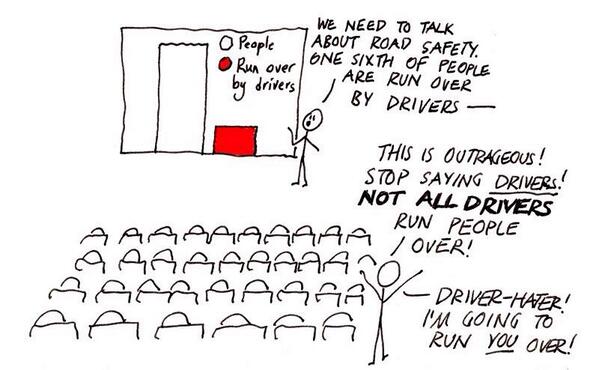
I know it's scary to face the unknown. But this isn't about you. This is about your partner and who they are and who they will be. Are you the kind of partner who stands before your mate and blocks their path?

Or are you the kind of partner who feels fear, takes a deep breath, tells that fear that it will not control you or make you control your partner, and musters up every ounce of courage you have to trust in your partner and let them be who they will be?

This isn't about you, this is about them. What kind of partner will you be to them?

Life rewards those who take the Path of Greatest Courage. I took mine. I risked losing a relationship that I valued, and I did lose it, but in exchange I also lost an abusive partner, the scales from my eyes hiding his abuse of his other partners, and I gained a measure of control over my circumstances, and my life as well as some deep connections and a better understanding of myself. I think it was a fair exchange.

So when you and your partner make it through all of this to the other side, how do you want them to look back on their relationship with you over this? Do you want them to see you as I see my ex? Someone who was holding me back and causing harm, who I am better off now for having traded him in for those experiences he was so afraid of?

Or as someone with courage who faced your fears, trusted in their love, and embraced your partner for all they are and all they will become?

joreth: (Bad Computer!)
[livejournal.com profile] margareta87 shared this website and suggested that everyone read everything on it. So I'm reading the most recent blog post and I want to share it specifically.

https://norasamaran.com/2016/08/28/variations-on-not-all-men/
"Sometimes he can’t tell the difference between him feeling bad because he hurt somebody, and feeling bad because someone hurt him. ... When Kyle is 20, or 30, or 40, or 60, and harms someone by action or omission, where will the ‘parent’ be who can say “you are good and loved and not shameful, and you did this thing, now stop acting like an ass and go make it right.”?"
I have an abusive ex that I talk about often. I *think* that I've done most of the emotional repair work so that I'm no longer acutely affected by my past relationship with him, but he makes such a good illustration of the messiness of emotional abuse that I continue to talk about him as a tool (heh, pun intended) to teach ethical lessons. This was basically what he was like. He was unable to distinguish between feeling hurt because someone hurt him and feeling hurt because *he* hurt someone and they reacted to it.

As the blogger, Shea Emma Fett phrased it, being victimized by acts of control is different from being victimized by my resistance to your control. In my most recent blog piece about beliefs vs. actions, I phrase it as raising your hand to slap someone and then having your hand hurt when you strike the arm that they raised to block your slap. Where was the grownup for my ex to say "people love you, and you did this thing, now stop acting like an ass and go make it right"? When I, eventually, tried to take that role, I got punished for it. I was lumped right in with the "bad guy" and we were both seen as "attacking" him. I was called "intolerant" and told that I was a One True Wayist because I told him that his method of keeping his partners small for his own comfort was unethical and hurtful and that *he* needed to do the work to let them grow rather than making them stay small on his own timetable.

"If you harm someone and then make it so that they feel afraid to tell you about it, be aware that women are likely coddling you constantly day in and day out in ways that exhaust them and that you take as normal and do not even notice."
He did this too. He made having a difference of opinion to him so intolerable that most of the family just let things go rather than argue. And they didn't make it clear that they were "agreeing to disagree" either. Often, he and I would have an argument, he would go away to complain to the others in the group, then come back and say "I talked to everyone else and we all agree that you're wrong", but then one or more of them would come to me privately to say that they actually agreed with me and disagreed with him but they didn't want to say anything because it was too much trouble to start a fight about it.

People in the group were constantly rearranging things in order to make him feel comforted or to accommodate him. If an argument got too heated, he would shut down, go into a semi-catatonic state, and when things got really tense he even reverted to self-harm and threats of self-harm. People in that group would literally force themselves into situations where they felt physically and emotionally unsafe just to prevent him from having a meltdown. Any attempt to tell him that his actions harmed them was met with said meltdown in which people had to back up and take back what was said. He called it "admitting they were wrong" and "owning their own shit" and he also called it "backtracking" and being "unreliable" which made them afraid because there was no right answer and no way to get out of the quicksand bog of arguing with him. I called it "badgering them into conceding." His victim called it "gaslighting". Whatever it was, he rewrote reality around him so that he was always right and everyone else catered to his "needs".
"Is it possible they have tried to tell you in a nice way, and you have clapped your hands over your ears or made it hard for them, and eventually they lose the capacity to be ‘nice’ while they are getting harmed? If you think back – really think back – how long were they trusting you and quietly asking you for help and empathy and support and compassion and honesty before they lost their buffer of capacity to speak kindly while drowning?"
This is what happens when people "blow up" seemingly "out of nowhere". If it looks like someone is "overreacting", there is a very good chance that they are actually acting appropriately if you add up all the times in the past, instead of taking this one instance in isolation. Regardless of how righteous you feel in your position (and believe me, I've seen plenty of people "blow up" at me on things that I'm dead certain that I'm right about - like gently pointing out something mildly racist and having them explode all out of proportion to what I actually said), embed this in your brain - if someone has lost their shit, there is probably something deeper going on. It is likely that they are reacting to an accumulation of things and your most recent encounter is just the straw that broke the camel's back. Now it's *your* job to step back and see if they are reacting to a lifetime of microaggressions and it's not personal to you or if they added together all the times they tried to talk to you about this and they're fed up with you not hearing them.
" if you make it hard for people around you to let you know you have caused harm, you’re going to invoke survival strategies in your friends and colleagues when you think you’re just having a regular hangout with your friend."
This partially explains when people of some sort of privilege get on their FB soapbox to preach about maintaining friends of different viewpoints. For someone with privilege, it's not a big deal to have a friend who has a different perspective when that person has less privilege because that different perspective doesn't affect the more privileged person directly. Their "debates" are all "academic" and they can take them or leave them. But the less privileged person is *harmed* every time they have that "debate" because, for them, it's not academic, it's personal. So one person thinks they're just having a friendly, spirited debate and the other person experiences it as one more cut in the death of a thousand cuts. So they have to employ fucking *survival strategies* in order to maintain that friendship, and eventually it becomes too much to bear. Think about that - the person you think of as a friend has to treat you like they're handling live plutonium and put on protective emotional "gear" just to be in your presence. I hope that makes you feel uncomfortable. Now sit with that discomfort because I'm not going to provide the coddling to make you feel better about yourself over it.
"I would actually apologize to him for having felt afraid. Because my hurt and fear hurt his feelings."
Being victimized by your control is not the same thing as being victimized by my resistance to your control.
joreth: (Misty in Box)
(If you are seeing white text on a black background and the reverse is more comfortable, you can read the Google doc that I used for my final draft here: https://docs.google.com/document/d/1jDo84msoBu74TQIW2OM4MLiILCoDIiQyzNllinU_FVg/edit?usp=sharing. The wording is identical.)

Modified disclaimer: "This is a personal post so it has extra rules. I don't want advice. I don't want condescension about my age or any other aspect of my identity or lifestyle or about not "seeing clearly" precisely because I've been through some fucked up experiences. I do not want devil's advocate. In fact, since this is all completely about lessons I've learned through very painful personal experience, I'm not interested in entertaining any debate over it. You are welcome to believe that I am wrong about my own life and experiences, if you keep that to yourself. If I see anything in the comments section that makes me regret having been open about my life, it'll be deleted without further explanation."

I have an ex-boyfriend. He abuses women. But he didn't abuse me. I'm not the kind to abuse easily. I'm not totally immune to it. I spent several years in my youth engaged to an emotionally abusive person who was successful at it. In fact, that's partially why I refused to believe it when his victim accused my partner of abuse. I had been through abuse, you see, so I should know it when I see it. And I didn't see it, therefore it didn't exist.

In general, I'm not the kind of prey an abuser looks for. I'm loud, aggressive, I have a strong support network, and I'm extremely confident in my memories and in defending my autonomy and my boundaries. Frankly, I'm too much work for an abuser to abuse. But, here's the thing I learned in my most recent lesson with abusive men: abusers aren't comic book villains twirling their mustachios and plotting out their Rube Goldberg-esque schemes to erase their partners' identities for personal gain. The term "gaslighting" is incredibly valuable, but not all gaslighting looks like the movie the name comes from. In fact, most gaslighting does not look like a film noir movie.

Abusers are often people in pain. They don't abuse because they hate their partners. They abuse because they're afraid. They're afraid of being abandoned. They're afraid that they're unlovable and if their partner ever discovers the "truth" about them, they'll lose that love. They're afraid of who knows what else. But a lot of us are afraid of things like that. So what makes them abusers and us not abusers?

They believe that they are right to address this fear by overwriting someone else's identity. There is also not necessarily a sharp dividing line between "us" and "them".

From the an article by Shea Emma Fett called Abuse In Polyamorous Relationships1 (all bold emphasis in all quoted passages in this post are mine):
"Most importantly, abusive behavior arises from beliefs, not from feelings, which is one of the reasons why people who are abusive are resistant to rehabilitation. I think this is a really important distinction, because people who engage in abusive behaviors can be kind and caring and gentle, and happy and wonderful to be around. They are not abusive because they are evil. They are abusive because the abuse makes sense and feels justified to them."

"[Lundy] Bancroft [author of Why Does He Do That?] says, “Anger and conflict are not the problem; they are normal aspects of life. Abuse doesn’t come from people’s inability to resolve conflicts but from one person’s decision to claim a higher status than another.”"

"What is this underlying thinking? Well, it’s all around you. It is the foundation of rape culture. It is the fundamental belief that women do not have a right to their own personal power. It is the fundamental belief that they can retain power over their bodies, minds and choices, only so long as we agree with those choices. ... It is the way we, all of us, men and women buy into the belief that we are entitled to women’s bodies, thoughts and choices. In polyamory, this belief makes it easy for us to treat our partners as things and not people.

But more than that, many of our fundamental beliefs in relationship[s] create a fertile ground for abuse. The goal of marriage is often longevity at any cost, and the presumption is mutual ownership over not just intimacy, but our partner’s choices, feelings and thoughts. And even if we take care to form our commitments outside of these assumptions, we still often carry a powerful sense of entitlement in intimate relationships. In short, intimate relationships often default to the power over model, and the relationship becomes a struggle for this power."

"The purpose of abuse is to erode a person’s ability to make choices for themselves. The abuser feels justified in taking proactive and punitive actions because of a fundamental sense of entitlement to their partner’s choices."
And from 10 Things I Wish I'd Know About Gaslighting2 by Shea Emma Fett:
"Gaslighting only requires a belief that it is acceptable to overwrite another person’s reality. The rest just happens organically when a person who holds that belief feels threatened. We learn how to control and manipulate each other very naturally. The distinguishing feature between someone who gaslights and someone who doesn’t, is an internalized paradigm of ownership. And in my experience, identifying that paradigm is a lot easier than spotting the gaslighting."
I'm not certain that identifying a paradigm of ownership is easier than spotting gaslighting, at least for me, because I've seen some people who are really good at twisting and using language to appear like they're on our side, but aside from that so, what? I've referenced these articles before, many times. Lots of people are talking about abuse nowadays. Why another essay on abuse that is basically just referencing something that's already been said? Well, because I don't think that the concept of "abuse is about beliefs" has really sunk in yet. I've spent many years yelling on the internet about why hierarchy* and rules in poly relationships are dangerous. People keep insisting that they can be done "non-abusively" or that everyone agrees to it therefore it's not abuse, but I don't seem to be able to get my point across - that it's not whether this specific action or that specific action is "abusive" or not or is "consented" to or not. It's about the underlying mindset and beliefs that allow people to think that hierarchy and rules can be done "non-abusively" in the first place.

From Relationship Rights: Can You Negotiate Them Away?3 By Eve Rickert:
"I believe that if you’ve come to a place in your relationship where someone has negotiated any one of their rights away, that relationship includes coercion, and that invalidates consent."

"There are certainly cases where you might choose not to exercise a right. It might be easy enough to say you don’t need the right to leave when, well, you don’t want to leave. But when you decide you do want the right? It’s still there.

And that’s what makes it a right."
That is the foundation of some later blog posts on whether or not hierarchy can ever be "ethical".

From Can Polyamorous Relationships Be Ethical? Part 2: Influence and Control4 by Eve Rickert:
"Healthy relationships are ones in which we can express our needs and desires, but it’s when we feel entitled to have our partners do what we want that things go off the rails. Entitlement makes us feel like it’s okay to overrule our partners’ agency (and that of their partners). If we’re part of a socially sanctioned couple, this is especially dangerous, because we’ve got lots of societal messages feeding that sense of entitlement. And the most damaging parts of hierarchical setups tend to come about when we enshrine entitlement into our relationship agreements."

"Once the tower of intimate influence is defended, however, we see the village once again reoccupied. The village is things that a person feels entitled to control in their partner’s relationship, or rules and structures that are put in place to ensure that one person’s needs are always favoured in the case of resource conflict."
I didn't recognize that my partner was abusive because he didn't *behave* that way towards me, and I didn't *see* him behave that way towards his other partners. So when this one person came forward and said he had abused her, I, along with his other partners, all stood up and said "He can't be! He's not like that! He's never done anything like that to us! The problem must be with you!"

But the truth is that he *did* do things like that to his other partners. They just looked a little different because we were all different people so he had to use slightly different tactics. His abuse was expressed differently with everyone so it didn't look like "abuse", but they were all expressions of the same set of *beliefs*. So when his other partners succumbed to his manipulation of them, it looked like everyone was consenting, therefore it couldn't be abuse. Because it wasn't necessarily the behaviour, it was the underlying belief that permitted the behaviour. "[I]f you’ve come to a place in your relationship where someone has negotiated any one of their rights away, that relationship includes coercion, and that invalidates consent."3
"Do abuse victims “consent” to be in their relationships? On the surface, perhaps it looks that way, but that is rooted in a victim-blaming, “why doesn’t she (he) just leave?” mentality and a serious oversimplification of the psychological dynamics of abuse. Abuse relies on tearing down your partner’s sense of self and personal agency to the point where consent is really no longer valid. And it doesn’t take physical violence to make a relationship abusive."3
The thing of it all is that this pattern was visible from the beginning. It wasn't invisible at all. It was just camouflaged beneath this community insistence that "anything" that two people "consent" to is A-OK. That whole YKINMKBYKIOK (your kink is not my kink but your kink is ok) mentality that I find so profoundly dangerous. I get why we started that. It's easy for people to place our own biases and judgements on other people even when we're trying to be all liberal and inclusive and shit. Look how often the furries get thrown under the bus by other kinksters, for instance. We had to teach ourselves that we don't have to agree or approve of someone else's preferences for those preferences to still be legitimate and valid and accepted. But instead of opening the door to inclusiveness, the door swung in the other direction and is now being used to bludgeon anyone who tries to critically examine toxic or harmful behaviour. It's like the religious extremists using "freedom of religion" to justify *imposing* their religious values onto other people by granting corporations personhood status to avoid covering contraception.

When I first met my abusive ex, he was in a hierarchical relationship that enforced triad structures only (FMF with bi-women, of course). So I thought "I kinda like him, but there's no way I'm touching that with a 10-foot pole!" Over time, their structure evolved until, many years later as our friendship grew, I was told that they had worked through their issues and they could now have independent relationships without each other and those relationships were allowed to grow on their own. So I thought "Hallelujah! People can change! People can learn and grow and break out of their insecurities!" Boy, was I wrong.

See, he and his wife still had a lot of rules with each other that I found ... disconcerting. But I wasn't told the full scope of all the rules, just that they found what works for them but that they had reached a point in their lives where they could accept that their other relationships couldn't work that way. So, in enters YKINMKBYKIOK - it works for us and we're not imposing it on you, so don't question it unless you want to be seen as intolerant of other people's preferences. So I didn't inquire too much, except to insist that this structure absolutely, without a doubt, no exceptions, would not work for me. They assured me they wouldn't try to impose it, and thus reassured, I entered into a relationship with him.

In the throes of NRE, I saw all the red flags, but I ignored them. Because he wasn't doing them *to me* and the person he was doing them to *said* she was OK with it and even claimed to be her idea in some cases. But they niggled at the back of my brain, so I stored these red flags in my memory (sometimes literally - a lot of our conversations were via chat, so I have the chat logs and I'm not relying purely on my memory) and when things came to a head years later, I was deeply ashamed that I hadn't paid more attention back then. And holy shit, when I learned what some of their rules were much later I was *really* upset with myself that I didn't press the issue in the beginning.

One of the red flags was that his wife didn't allow pictures taken of herself. Not just explicit photos, but any photos. Well, very occasionally she would pose for group photos of social events. But no candids and definitely no sexy shots. At the time, I thought this was just a quirk of hers. And it was, but sort of. She's also a very dominant personality, much like me in a lot of ways. Back in the beginning, when I thought "nope, not ever gonna go there!", I thought it was because *she* was calling all the shots and I didn't want anything to do with any relationship where the wife had more power over my relationship than I did. But they inadvertently introduced me to what I now call Relationship By Hostage Crisis. This is where two people get into a relationship with each other and one of them allows their partner to remove their agency in some way because the first person wants to remove the agency of the other themself. So they basically trade their own agency in exchange for controlling the other person's agency.

Some people seem to think that this is a fair power exchange, that it's not abusive if it goes both ways. But we're not talking about a D/s agreement where someone has the power to concede something. The reason why that's different is because *that person always maintains the power to take it back*. If they don't, it's abuse, by definition. I know this gets a lot of serious edge-players up in a snit when I say this, but kink is all about fantasy and illusion. None of it is real. Sure, it's real *enough* that it triggers the reactions in our brains so that it *feels* real. But it can end at any time. Franklin ([livejournal.com profile] tacit) once knew a guy who insisted his wife was his slave in every sense of the word and he owned her in exactly the same way he owned his TV. He insisted that it was a real slave relationship right up until his wife divorced him. You'll note that she wasn't summarily hunted down by the government and lashed or hung for leaving him.  But we do see cases where women try to leave their male partners and the men punish them by stalking, harassing, raping, and killing them.  He feels entitled to control her agency - her choices - and she is punished when she makes choices he doesn't approve of.  She does not have the power to take her agency back.  This is not a D/s consensual power exchange fantasy.

Giving up your agency in order to have control over someone else in trade is not a BDSM power exchange fantasy. You may indeed have power over someone else, but you *lose power over yourself* in exchange. This is not something you can renegotiate later when it's not working for you. You have become *powerless*, and it takes a great deal of effort to wrest that power back, if you ever get it at all. As they say, two wrongs don't make a right. Sometimes you can have two bad actors in the play instead of just one.
"Our brains are optimized to seek pleasure and avoid threat. It’s most of what we do. There’s nothing wrong with trying to avoid things that we believe will hurt us. However, most people would also agree that you can’t put a gun to someone else’s head in order to avoid the things you fear, no matter how uncomfortable the consequences. Sometimes we have to face what we fear because all other options require taking actions that we consider to be wrong. Therefore when we harm each other because of fear, let’s recognize that it was not the fear that was the problem. We all have fear. The problem was a belief system that said, well, maybe I can put a gun to your head."1
So, the wife wanted control over her husband in some way so she allowed her husband to control her body in this way (among others). He didn't want other people looking at her body in ways he didn't approve of. They held emotional guns to each other's heads. This is not a fair power exchange. No one was empowered by this situation, they were both disempowered *even while* they held power over each other. So, no pictures of her. Except that *he* obsessively took pictures of her. Of everyone.  At all times. And I mean at *all* times. I had ample opportunity during group sex to see him actually stop the sex, reach for a camera, and take a dozen pictures, all with her glaring at him in the picture because she didn't like having those pictures of herself taken. *She* wanted to control when pictures were taken and right then was not when she wanted to have pictures taken. But it didn't matter, because *he* wanted them.

I had a conversation with her about this once. This is where I learned that the no-dirty-pictures rule wasn't her own preference. She would have wanted to have posed for something for her own enjoyment, but he wouldn't allow it. She saw nothing wrong with his prohibiting her because, as her husband, he had that right to determine what happened to her body, but he also had that right (she believed) because she gave it to him. But there was no consideration for renegotiating that rule, at least not in practice. He made disagreement with him so traumatic to everyone in the family that everyone avoided disagreement with him at much cost. He literally made it a matter of life and death when people disagreed with him. So it was easier to capitulate than try to talk him out of one of his catatonic or self-harming states, and then they got to believe that it was their "choice" to negotiate that power away.

Later on, some other things were happening regarding her relationship with her boyfriend and my partner and I were arguing over his wife's autonomy and the boyfriend's rights in his own relationship with her, and we circled around to the subject of sex work, which led to the subject of dirty pictures. He was appalled, I mean *appalled* at the idea of a partner of his either "selling her body" or of his wife having nude pictures that someone else could see. We veered into all kinds of tangents, including me demanding him to explain how "selling one's body" through sex was any different from me getting paid to dance or to perform manual labor or how sex work was any more inherently demeaning than my soul-sucking retail job at barely above minimum wage.

I also had to watch him go through a series of mental gymnastics to explain why it was OK to be dating me, who has naked pictures of myself on a public website from when I posed as a tutorial model for [livejournal.com profile] tacit's BDSM site, but not OK to have a wife who might have similar pictures. The gymnastics got even more convoluted when I disclosed to him that I had been paid to pose for a nudie calendar years before and that picture is out there, floating around somewhere that I've never even seen and certainly have no control over what happens to it. The takeaway I got from that exchange was that it actually *did* bother him, but he was unable to admit it to himself so his cognitive dissonance forced him to justify on the spot why it was somehow different to be dating someone with that kind of exposure than to be married to someone with it.

But what really stuck in my memory was his explanation of why he believed he was in the right for not allowing nude pictures of his wife on the internet. He told me the story of the bowl of M&Ms. So, let's say you have a bowl of M&Ms on your desk at work. You love your M&Ms. They're your favorite candy. And sometimes you don't mind sharing your M&Ms with your coworkers, but you have this one coworker who you hate with a passion. He's a major asshole to everyone and he definitely doesn't respect you or your M&Ms. He feels entitled to them. You don't want him to have your M&Ms because they're not *his* M&Ms, and, in fact, you hate him so much that you don't want him to have any M&Ms ever because you don't want him to have the pleasure of eating M&Ms at all because he's such an asshole that he doesn't deserve the profound bliss that is the M&M.

I couldn't believe what I was reading (this was a chat argument). I couldn't believe this was coming out of the same person who was otherwise so aligned with all my values and beliefs and philosophies! So I said "but your wife isn't a bowl of M&Ms, she's a person who you can't own and she gets to make up her own mind about what happens to her own body." He tried to handwave away the objectification inherent in his analogy and pushed the "but he's an asshole and doesn't deserve to see the glory that is her body" angle.

He tried to appeal to my sense of justice but I don't actually want people I dislike to not have good things. I might often wish bad things on them, but all the times I can think of when I did that, what I wished was for the bad thing to be relevant to why I disliked them so that they would ultimately learn compassion and empathy from the bad thing, or at least be punished in the same way they were punishing others. I honestly don't give a fuck if Racist Joe in the next cubicle gets a lot of pleasure out of his cold Budwiser while sitting in his favorite recliner watching football at the end of the work day. I don't want to steal his Budwiser just so he can't have one. I'm not bothered by the idea that someone I don't like might actually be experiencing something pleasant or enjoyable or feeling happy. But I am deeply disturbed by the idea that other people are bothered by that.

There are so many other examples, that I have been using my experiences with him as moral tales for years since it all went down and I have yet to run out of examples. Argument after argument, random side comment after pointed discussion, there are a million different ways that he expressed his underlying belief that his partners could not be trusted to make their own decisions about their bodies; that if left to our own devices we would necessarily choose things that were not in *his* best interest; that what was in *his* best interest was therefore what was in *our* best interest; that what was "best" for the group took precedence over what was "best" for the individual; and that he was absolutely entitled, as the romantic partner, to have the power to make those kinds of decisions and to ask, demand, or manipulate his partners into doing what he decided we should.

I didn't see any of this because, for most of our relationship, what I wanted for myself and our relationship and what he wanted for me and our relationship were in alignment. "It might be easy enough to say you don’t need the right to leave when, well, you don’t want to leave. But when you decide you do want the right? It’s still there." Until one day, we weren't in alignment. He had no need to try any of the gaslighting or logic-circling or even more blatantly abusive tactics like threats of self-harm because I wasn't doing anything contrary to his vision of how our relationship ought to be or how I ought to be in our relationship. Until one day, I did. And then I saw it. I saw what his victim had been crying to me about just a few weeks before. I saw the entitlement. I saw the belief that he ought to be able to dictate my actions. I saw the carrot-and-stick game he played with her - using group acceptance as the carrot to get me to fall in line and group shunning as the stick if I didn't fall in line. "I talked with everyone else, and they all agree that you are wrong. You’re hurting the whole group, don’t you care about us?" I saw everything she said he had been doing to her for the length of their relationship, finally, in one day, directed at me.

And then I saw that I had always seen it. It had always been there.
"Therefore when we harm each other because of fear, let’s recognize that it was not the fear that was the problem. We all have fear. The problem was a belief system that said, well, maybe I can put a gun to your head.

The prioritization of fear arises when we replace a relationship of mutual support and co-creation, with one of parental protection. ... A relationship that is hostage to fear is one where everything, the relationship, the mental health of the participants, the future, everything hinges on the avoidance of something. Every relationship that forms on top of that avoidance, forms under the premise that the fear is more important than anything else. But just because you’ve agreed to never open the box, doesn’t mean the box isn’t there, informing the health and stability of every relationship that touches it."1
When we first broke up, it came as a shock to everyone. To everyone on the outside, he and I were the most compatible and stable of all his other partnerships. We were so similar in so many ways. And by the time we broke up, his relationship with the victim who came forward had gotten so tumultuous that all his other relationships were being affected, except, apparently, ours. Everything in his life seemed to be falling apart. He was so wrapped up in the drama with this one person that he had no more resources for maintaining any of his other relationships and they were all in danger of blowing up too. His last blog post prior to our breakup was lamenting the fact that his life was falling apart and I was his one port left in the storm. So no one saw it coming, because no one understood that this box containing his beliefs and fears was still there, informing the health and stability of every relationship including ours.

When I told people who had met him or who were privy to my gushings of my relationship with him during NRE, when I told them of how it ended, without exception everyone said that it sounded like I was describing two different people. It was a total Jekyll and Hyde story. His victim once said that she tried to reconcile these two people in her head. Part of what made her stay with him so long is that she kept thinking that she could get back to the nice Dr. Jekyll if she could only find the right way to behave that wouldn't let out Mr. Hyde. But her other partner pointed out to her, "He's not two different people. Your nice, sweet boyfriend is also the abuser. They're the same person."

I keep saying that patterns are important. But I also keep saying that it's the underlying beliefs that are important. People might be tempted to say "but look at all these other relationships he has! She was the outlier! The pattern is that he's a good guy and she's the problem!"  But that's not the pattern. The pattern is in his beliefs. Sure, he didn't try to manipulate me or control me ... as long as what I was already doing was something he approved of. So it may have *looked* like there was no pattern of manipulation or control because he didn't seem to try that on me. But the real pattern was that he *believed* that manipulation and control are appropriate methods of dealing with a partner whose behaviour was something he didn't approve of. "It is the fundamental belief that they can retain power over their bodies, minds and choices, only so long as we agree with those choices."

This is why benevolent sexism is still sexism and still a problem. The behaviour, on the surface, might seem like it's not oppressive because it supposedly elevates women. It rewards them. It "privileges" them. But only as long as women toe the line. Only as long as women fall within acceptable ranges of behaviour or dress or thought. A pedestal *seems* like a place of power and enshrinement, until you realize how confining it is to stand in one spot or risk falling to your death for daring to sit down or change positions.

It's tempting to say "he's not an abuser because he didn't abuse me!" I know, I said that at one time. But it's also tempting to say "but abusers don't abuse everyone yet they're still abusers". The thing is that they actually do, we just can't see it behind the camouflage. As [livejournal.com profile] tacit, and one of my metafores, are fond of saying, it’s not a problem … until it is. "Every relationship that forms on top of that avoidance, forms under the premise that the fear is more important than anything else. But just because you’ve agreed to never open the box, doesn’t mean the box isn’t there, informing the health and stability of every relationship that touches it." A racist who keeps his mouth shut when a black customer walks into his store is still a racist towards that customer. He's not a racist because he does racist things. He's a racist because he holds racist beliefs. And he holds those beliefs all the time, at everyone. A person who believes that they are entitled to control other people’s bodies, thoughts, and choices still believes those things even when they don't choose to exercise that entitlement, for whatever reason they choose not to in that moment. And those beliefs leave signs. It's not about whether or not he tries to manipulate a partner who is already doing what he wants her to do. It's about whether he *believes* he is right to manipulate her should she ever not want to do what he wants her to do. And that kind of thinking leaves footprints, if we only learn how to identify them.

The reason why this is important is because it is too easy to dismiss abuse when it doesn't look like how we think abuse ought to look. It's also too easy to accuse people of abuse when they are not, in fact, abusing anyone.

I wrote a paragraph in a recent post where I distinguished between "selfish" and "self-interest". That paragraph got quoted, and some people took exception to that distinction because abusers will just turn around and call what they're doing "self-interest" to justify their actions. What these detractors didn't seem to get was that this was my whole point.

What worked on my partner's victim was the accusation that she was being "selfish". That it was *she*, not he, who was the abusive monster. Her story is remarkably similar to the same one I linked to and quoted above. That's why I keep sharing Fett's writing - it really hits home with how similar it is to everything we (mostly she) went through. It all started unraveling for me when she called me crying, desperate that she had harmed him in some way, and how could she fix it? When she told me what she was afraid she had done, I was horrified that she could possibly think that she had done anything wrong at all. But how could she be such a monster? she wondered. How could she treat him so heinously? Are you fucking serious? I asked her. This had nothing to do with her at all. This was all about him.
"If you are being abused, there is a very high chance that you will be accused of being abusive or of otherwise causing the abuse. That’s because this accusation is devastatingly effective at shutting you down and obtaining control in a dispute. However, I also believe this accusation is often sincere. People often engage in abusive behaviors because they feel deeply powerless and that powerlessness hurts. But not everything that hurts in a relationship is abuse, and not everything that hurts your partner is your responsibility. It’s important to be able to distinguish abuse from other things that may happen in relationships that are hurtful, or may even be toxic or unhealthy, but are not fundamentally about entitlement and control."1
There are all kinds of things that are problematic to varying degrees. But they are not all about entitlement and control. And this is *very* important to recognize. And they should never be conflated. That harms actual victims of entitlement and control. It's not always just the abuser accusing his victim of being abusive. I see it in communities as well. Now that we're finally talking about abuse in my various subcultures, a lot of terms are getting bandied about - abuse, harassment, consent, violation, predator, narcissism, borderline personality disorder ... just to name a few. Not all of these terms are being applied where they should. When things that aren't abuse get mislabeled as abuse or "rounded up" to abuse, it makes it much harder for actual abuse victims to find proper support. When things that are indeed problematic but not "abusive" get labeled as "abusive" instead of their real problem, then we can't address the problem in ways that are effective for solving the problem.

And when people live in fear that any possible misstep might get them cast out of communities under accusations of "abuser", especially if those people are actually victims who have been told by their abusers that they are the abuser themselves, it makes it way more difficult for anyone to seek help or to seek correction for things that might actually be correctable (or not even offensive at all).

I think we're on the right track now that we're sensitive to abuse and harassment and control in our communities. But I think we're also in danger of slipping off the track too easily. We're not quite at the destination yet and we still have further to travel. One of the dangers is in stopping too soon. Now we know all these words, and now we have started supporting victims and accusers in order to break the previous chilling hold on victims from finding the support they needed when they come forward. But we still don't quite have our finger on the pulse of the problem yet.

Patterns are important, but it's the underlying beliefs that those patterns reveal that are the real key. Those underlying beliefs are what enable abuse and harassment and control and oppression and all the other bad things we're finally starting to look at and combat. Those beliefs set up the foundations that allow abuse and control and manipulation to happen. But not all bad things are about entitlement and control. It's the beliefs that make abusers so resistant to rehabilitation, so it's the beliefs we need to confront. If we don't confront the beliefs but instead attack the behavioural patterns, abusers will simply change their behavioural patterns to continue avoiding detection. It's the beliefs that need to change, and the behaviour changes will follow naturally as a consequence.

At the same time, if those beliefs aren't present, then not only is the attack the wrong way to approach the situation, the behaviour itself also has different chances of correction. It's much more likely to correct someone's behaviour if the behaviour doesn't stem from a deep belief that their behaviour was, in fact, already correct. I’m repeatedly told by those with social anxiety and other social awkward issues that we need to stop excusing bad social behaviour by labeling it some mental illness because people who aren’t predators but legitimately socially awkward often feel horrified when it is brought to their attention that they have done something wrong and they want to learn how to do better. That’s because they don’t have an underlying belief that they were right, they were simply unaware, and they don’t want to do these wrong things. These issues are correctable, but not if we ostracize everyone who does something wrong without first finding out if it was a social awkwardness / anxiety thing or if it was a boundary-pushing predator masquerading as socially awkward thing. One of them believes they didn’t do anything wrong and the other doesn’t. One of them can have their behaviour corrected with guidance and the other can’t because they don’t believe their behaviour was wrong.

How we address the problem needs to be changed if the belief underlying it isn't about entitlement and control, if we want our efforts to be effective. And, as my partner's poor victim learned the hard way, if there are no underlying beliefs about entitlement and control, then there's a good chance that she wasn't doing the abuse she was accused of in the first place. She, like Fett, wracked her brain trying to figure out how to stop this "abuse" she was doing to him, and that only made things worse for her. Fett describes many times about the extreme self-loathing and self-hatred they felt because they believed themself to be an abuser when they weren’t. Because they weren’t actually abusing anyone, the intense searching for the root of non-existent abuse only deepened the wound and left them more and more vulnerable to their abuser’s manipulation.

As Fett says, being victimized by your control is not the same as being victimized by my resistence to your control. His victim wasn't abusing him because, no matter how much he felt hurt, she wasn't the one doing any hurting of him. She did not have any underlying beliefs that she was entitled to control him. In fact, all of his hurt stemmed from her very strong belief that no one was entitled to control anyone else. She was resisting his control and that made him feel hurt. If your hand hurts after slapping someone who raised their arm to block the slap, that person didn't hurt you; you hurt yourself by slapping them.

But *his* underlying beliefs of entitlement were always there, and were always visible. When he first accused her of abusing him, almost everyone who knew her were shocked and suspicious. What do you mean she abused him? She had never exhibited that kind of behaviour before! They had relationships with her that weren't abusive at all! When she later accused him of the same, people said the same thing about him.

But she did not have those underlying beliefs, and her supporters were not wrong to question the accusation. It *was* contrary to everything about her. And because it was so contrary to her very nature, it was a sign that she was actually a victim of abuse herself. When his supporters questioned her accusation of him, well, I don't want to go so far as to say it was "wrong" to question, because serious accusations deserve to be treated seriously, which includes inquiry into the situation. But their dismissal of her accusation in favor of their personal experience with him *was* misplaced because they were looking at the wrong thing - his actions and feelings vs. his beliefs.

When her supporters questioned his accusation of her, they investigated her beliefs. In light of what she believed about entitlement and control, the accusation was patently absurd. The absurdity of the accusation is what led to the situation finally being identified accurately - that he was gaslighting her and emotionally abusing her. He accused her of abuse. Some people who knew her (not me, to my great shame), questioned that accusation. It didn't fit what they knew about her. She had never done anything like that to them. But, more than that, her *beliefs* were so contrary to the accusation, that her supporters were able to start piecing things together for her when she was so mired in self-doubt and illusion that she couldn't do it herself. So they started adding things up and told her "you are not this person he says you are. He is gaslighting you."

She finally broke free and accused him of abusing her. Some people who knew him questioned that accusation. It didn't fit what they knew about him. He had never done anything like that to them. But that's where they stopped. They did not question his *beliefs*. If they had, like I eventually did, they would have discovered that his beliefs are not actually contrary to the accusations at all. And they would have discovered, like I eventually did, that signs of his beliefs had been visible from the beginning. So no one else started adding things up, and to this day people believe that she abused him and that I also abused him because I withdrew my support and then resisted his attempt to control me when I withdrew that support. Because they looked at actions and feelings and not beliefs.

Those beliefs were visible, and showed a pattern, if you knew how to look for them. Without those beliefs, she could not have abused him. Hurt him, sure, because we all hurt people, especially when we are in pain ourselves and especially because the people who are the most vulnerable with us are also the most susceptible to being hurt by us precisely because of that vulnerability. But she *could not* have attempted to control or manipulate him because she *does not* hold any beliefs that she is entitled to his thoughts, his body, his choices. Everything she ever did in that relationship was an attempt to escape his control, not exercise it. But her attempts to escape that control were *felt* by him as "harm". And misunderstood by everyone else as "selfishness". And I, of all people close to that dynamic, should have been able to see the difference, since that is essentially my very existence within the context of romantic relationships - constantly attempting to escape control and being labeled "selfish" for the attempts.

The problem is that this subject is so complex and so nuanced that I don't think I'll ever be done writing about it. And so this post now becomes a mini-novel. All to explain that patterns are easy to disguise or misinterpret if we only look at actions and not at underlying beliefs. When we look at patterns of *beliefs*, things appear very different. Someone who seems totally affable becomes a manipulative monster (everyone's favorite TV dad, for instance). Someone who is accused of being that monster turns out to be a victim themself. And within communities concerned with social justice, it's hard to see sometimes because those monsters learn to co-opt the language of social justice. But the beliefs are still there, and they show up, if you know how to look for them. So when you go looking for them and they don't show up, it's time to wonder just who is the attacker and who is being attacked and maybe all is not as it seems.

When a bunch of people all stand up and say "I looked, and they didn’t perform those actions on me!", maybe we can question the validity of the group defense. But when a bunch of people all stand up and say "I looked, and those beliefs just aren't present", maybe we ought to question the validity of the *accusation*, like when my abusive ex accused his victim of being abusive for daring to resist his control of her. She (and later, I) was ostracized from her community and her support group because everyone automatically believed the "victim", meaning he called dibs on the label first and everyone jumped to his side by default, without critically examining whether his claims were even plausible, given the beliefs of the people involved. Her actions were deemed "abusive" simply because he felt hurt by them, without looking to see if there were any elements of entitlement or control present and, if so, which direction they flowed.

But those who cared enough to look beneath the surface finally saw the truth. Those who took the time to look for patterns of *belief*, not actions or not simply whether someone felt "hurt", when we saw the patterns of belief, we knew that she could not have been abusive, even if she might also have caused harm. And my refusal to see this pattern when it was first shown to me, that led to consequences of my own. Consequences that could have been avoided, and possibly even resulted in better protection for his victim sooner, had I learned to look for belief patterns and had I learned to recognize that internalized paradigm of ownership rather than quibbling over whether or not specific actions "counted" as "abusive".

Maybe, had I done that instead, I wouldn't today be wracked with guilt and self-doubt, all these years later. Maybe his victim would have escaped sooner and healed faster had I not backed the wrong horse and had I not challenged everyone else who said "but she can't be an abuser because our experience of her is different!"  Maybe she wouldn't have been so easy to isolate had I listened to *her* other supporters instead of arguing that they just didn't see how much drama the family had only when she was brought into the fold. Instead of questioning their support of her on the basis that they were too close to her to be "objective" and not close enough to the situation to see all the hurt feels he had. Maybe if I had acknowledged that, as people who knew her so well for so long, they might actually have had some insight into her belief structure and been exactly the right people to know if she had the beliefs necessary for her to abuse him. Maybe, if I had known that it was the beliefs that were important, not actions that happened behind closed doors that can be interpreted in many ways or rationalized and not simply “feeling” hurt by someone, things could have been different and we both could have been spared at least some of the damage that dating an abuser left us with. Maybe, had I understood all this back then, I wouldn't today feel like that house with broken windows**.

This is not the only time I made this mistake, either, although I was closer to this situation than to others. There was another time someone cried "abuse", and I believed them automatically because I was told I should, and only many months later did I learn that he was, in fact, an abuser. He was just the one who cried foul first. But, again, it took a confrontation with him personally where his beliefs that it was acceptable to overwrite another person’s reality became visible for me to see the pattern. Two people accused each other of abuse, and I took this side because I now "knew", thanks to my experiences dating an abuser, that abusers often think of themselves as victims. So, obviously, his abuser was just doing that, right? Except that later, he tried to gaslight me too. After telling him multiple times my feelings on something, he continued to insist that I did not feel those things, and to insist on his own narrative of what I felt. Now his "abuser’s" accusations of gaslighting sounded more plausible. He *believed* that he was entitled to control another person’s reality, and patterns of that belief were visible, if you know what to look for. That doesn’t let the other person off the hook for whatever wrongs they committed in this very messy situation. But it does mean that I was wrong to "believe the victim" without treating all the accusations flying around seriously and critically examining the situation even though I thought I did at the time. My bias towards "believe the victim" and my personal experience with abuse telling me that I should now know what abuse "looks like" fogged the matter and I did not examine the situation critically enough, or with enough information (knowing the difference between beliefs vs. behaviours or feelings) to be able to examine it properly.

So I yell on the internet, hoping people can learn very expensive lessons without paying the high price I paid to learn it first. After I believed the wrong "victim" more than once, I'm not positive that "believe the victim" is the right response. *Support* the victim might be a better response, because support allows for the ability to examine the situation and then provide the *right type* of support based on that examination. Had I "supported" all the actors in that messy double-accusation drama instead of "believed" just one of them, I might have been able to provide better support for the actual victims in the story, given that I had some community authority and responsibility in the matter. Had I "supported" my then-boyfriend instead of "believed" him, I might have discovered the truth sooner and been able to support him by holding him accountable instead of inadvertently contributing to the gaslighting of his real victim. Had I "supported" him instead, I might have been able to hear the chorus of "she couldn't have done that because we know her!" and looked into it more clearly instead of dismissing it out of hand, and I might have then learned about this beliefs vs. actions/feelings problem.

And maybe we might both have escaped without breaking first.


* I will not be hosting any debate in my comments about the definition of hierarchy. That’s why I linked to the definition I’m using here. If your definition differs, then you’re not doing what I am calling "hierarchy" and I don’t care. I absolutely refuse to hold space for this endless circular argument because it has managed to keep the entire community derailed for over 20 years. I’m insisting on moving on. Any comments that include anything even remotely resembling "but sometimes hierarchy is…" or "but I don’t do that…" or "but my kids really do take priority!" will be summarily deleted regardless of what other content the comment may have. If you’re feeling the desire to make a comment like that, go read the link I provided for the definition of hierarchy, and then parts 1 and 2 of Can Poly Hierarchies Be Ethical first. If you still feel the desire to make those comments, re-read all three posts. Continue re-reading until you no longer feel the need to make those rebuttals.

** This is in reference to an essay that might not be available. The essay is an analogy to living in a house with windows that aren’t perfect but that do the job. They’re good enough and the house is sound. Then one day, someone comes along and breaks the windows. And you spend a long time ignoring the broken windows, and then working around the broken windows, and then finally learning how to fix the broken windows. One at a time, you repair them. They’re not all repaired yet and some rooms are still unusable because of the broken windows, but the house is getting fixed, the new windows look great, and you learned a new skill. But the windows were fine to begin with. You didn’t need to learn this skill or replace the windows until someone came along and broke them. So you’ve had to spend all these years learning how to fix windows that shouldn’t have had to be fixed in the first place, and all these years ahead of you continuing to fix each window, when you could have been using that time to learn a different skill, to get better at something new, to grow or improve. Instead, you spend all this time just trying to move backwards to get back to a place you were before because you can’t move forward until you get there first. The breaking of the windows was a huge step backwards and now you’re playing catchup. And it all feels unnecessary because the windows were fine to begin with.


1. Abuse In Poly Relationships by Shea Emma Fett - https://medium.com/@sheaemmafett/abuse-in-polyamorous-relationships-d13e396c8f85

2. 10 Things I Wish I’d Known About Gaslighting by Shea Emma Fett - https://medium.com/@sheaemmafett/10-things-i-wish-i-d-known-about-gaslighting-22234cb5e407

3. Relationship Rights: Can You Negotiate Them Away by Eve Rickert - www.morethantwo.com/blog/2015/01/relationship-rights-can-negotiate-away

4. Can Polyamorous Hierarchies Be Ethical? Part 2: Influence and Control by Eve Rickert - www.morethantwo.com/blog/2016/06/can-polyamorous-hierarchies-ethical-part-2-influence-control
joreth: (Misty in Box)
www.theestablishment.co/2015/11/23/tiny-home-houses-poverty-appropriation/

I recently had to block someone because they posted about that common of white privilege memes - anyone can travel if you just commit to it and don't hold out for 5-star hotels! I didn't block them just because they made that post. I had to block them because I and someone else tried to explain the privilege inherent in the position in the comments, and *their friends* flooded the comments with more of the same "you just don't want to travel badly enough because if you wanted it, it could be done" and "you're just afraid". I had to block that person just to stop getting notifications about their privileged friends continuing to gaslight me and tell me what I "really want" or what I'm "really afraid of".

And yes, I *am* afraid to lose what little safety net I have managed to hold onto while the rest slips rapidly through my fingers, by living in the same country that recognizes me as a citizen and where my parents can send me emergency cash overnight. When your only means of survival requires your government to give you assistance and your retired parents to send their hard-earned (and dwindling) retirement funds on bailing you out every so often, the idea of leaving the country and not being able to access that meager safety net because you don't have any cash saved up is terrifying (assuming that "selling everything you own" even adds up to the amount necessary to get a passport and plane ticket in the first place, which my stuff doesn't). And yes, some of my friends are afraid to travel in countries where they can't easily get their insulin because they are so poor that their only travel option is that couch-surfing, get a dishwashing job when you get there option which doesn't exactly provide them with the ability to stock up on insulin in a foreign country. Travel, no matter how cheaply you spin it, is a luxury when it's a choice.

As I told those arrogant people in the comments, living hand-to-mouth and washing dishes and sleeping on someone's couch is not something that a person aspires TO when it is something they are currently trying to escape FROM. I don't care how magnificent the sunset looks over a pyramid, it doesn't mean shit when the only way to see it is to be worse off than I am at home and then, because of that, be too poor to get back home. It's not like the sun doesn't set here too, y'know.

That's actually how I ended up stuck in FL. I spent all my money, traveled as cheaply as possible, even worked odd jobs on the way, made it out here with nothing saved up (because of unexpected emergency travel expenses, I spent all the savings I was supposed to live on once here just to finish getting here) and no job waiting for me and no place to live. And the effort it takes just to survive out here means I have been unable to get back to even my starting point, so I can't afford to leave what was supposed to be a temporary trip. Sure, it takes less money to live in other places so you could conceivably survive somewhat comfortably by traveling cheaply somewhere else. But because it takes less money to live there, you also earn less money while you're there. If you spend all your money getting somewhere, there's no guarantee that you'll make enough money once there to get back. I've been stuck here for 16 goddamn years because I can't afford to get back home, thanks to it being cheaper to live here than back home.

I know EXACTLY what it takes to give up "everything" and "just do it", and I know how hard it is to recover from that and I know what happens when you "give up everything" and never recoup it so you can't ever go back at the end of the adventure. I know what happens after you ride off into that sunset. Life happens and life is a bitch.

"It’s likely, from where I sit, that this back-to-nature and boxed-up simplicity is not being marketed to people like me, who come from simplicity and heightened knowledge of poverty, but to people who have not wanted for creature comforts. For them to try on, glamorize, identify with."

"The drop-offs were happening at a white anarchist collective filled with people who were choosing not to participate in the system of capitalism.

And I couldn’t help but think: that must be nice. To have that choice. "

"the same people of color who may go on welfare out of necessity, out of the systemic oppression that makes it difficult for them to have the same access to upward mobility, are considered socially uncouth and lazy, while white anarchists (in this context) are praised for their radically subversive actions."

"But I do think it’s time to start having conversations about how alternative means aren’t a choice for those who come from poverty. We must acknowledge what it means to make space for people who actually need free food or things out of dumpsters, "

The only people flocking towards all these "live simply" hipster solutions are people who didn't come from a life where "live simply" wasn't a choice. It's easy to give up your extra "things" or space when your background tells you that you can always replace it again in the future. It's easy to look on a life of crawling through dumpsters and living on couches when you had your full vaccination schedule and medical benefits and a history of more or less healthy diet to make you hardy enough to withstand any medical complications that comes from accidental exposure or a poorer diet than normal or a 6-week *choice* of poor sleep on a couch that you can give up and come back to your nice bed when you're done.

It's easy to think all that stuff sounds like "fun" or even "responsible" when you haven't lost someone you know to exposure and malnutrition that could have been prevented had they ever had the "choice" to give it up when they were tired of playacting at being poor.
joreth: (Misty in Box)
I have, on occasion, offered to host "guest posts" for people I know who wanted to write something they felt was important but didn't feel like their own platform was the appropriate place for it, for whatever reason. I'm not really known as a blogger with a large audience, and LiveJournal isn't really a popular blogging platform these days, but I figure with my history of topics I can probably afford to host certain posts when others can't or would rather not.

So, today I'm providing a platform for Jess (Burde) Mahler over at Polyamory On Purpose:


Had a conversation today that pulled into focus some thoughts on “boundaries” “control” and, most importantly, “choice.”

I’ve said in other contexts that every day we choose to be in our relationships. I didn’t decide to be with Michael one day seven years ago and that was it. Every day we have been together, I have decided to be in a relationship with him and to make our relationship healthy(er).

In the same way, every (social) relationship you are in is one you choose to be in. Work, military and political relationships can be forced on us. Who we love, befriend, count as family, and bump bits with cannot. Every day we choose to be in those relationships.

Usually, we aren’t aware of these choices. If you choose to be in a relationship with Wanda, you aren’t going to wake up every day and say “Do I want to be in a relationship with Wanda today?” You default to the established choice. Somewhere in your subconscious a decision tree runs “I decided to be in a relationship with Wanda yesterday and nothing has changed (or things have changed for the better) so I’m still in a relationship with her today.” We only become aware of this choice when things go wrong. "Wow, I can't believe Wanda did that. Maybe this relationship isn't the best idea. No, I'm going to stick it out, we can make it work!" (Or "...Yeah, I'm not sure I can do this anymore. I think it's time to leave this relationship.)

People always have the right NOT to be in a relationship. At any day, at any moment, we can choose to end an existing relationship. Starting a relationship takes agreement, ending a relationship does not. No one can require you to be in a relationship with them.

Remember that.

Okay, so this conversation I had today, someone was bothered by the distinction between controlling and consideration for a partner’s feelings. The specific phrases were “My bf/gf won’t let me….” and “My bf/gf would be hurt if I did ____, so I won’t.” The person I was talking with basically saw the second phrase as emotional manipulation. Emotional manipulation is a way of exerting control on someone and is a form of abuse.

I, on the other hand, saw the second phrase as respect for a partner’s boundaries. My partner will be hurt if I do this, I don’t want to hurt my partner, I won’t do this.

The difference, the critical difference, (and why I still think I’m right ;) ) is choice.

Let’s break those two phrases down a bit.

“My bf/gf won’t let me...” In this statement, you do not have a choice in your actions. Your partner has made the choice for you. This is controlling. It would not surprise me to learn that this relationship is abusive. (Controlling relationships are not always abusive—you can choose to give control to your partner, a la power exchange relationships, but controlling relationships where the control is coercive are always abusive.)

“My bf/gf would be hurt if I did...” In this statement, you have a choice. You may choose to do this thing. You may choose not to do this thing. All your partner has done is give you information. In this case, the information that if you do this thing, they will be hurt. In consent, giving additional information is called making sure your partner is fully informed. Same applies here.

Now, if you choose to do the thing that hurts your partner, and your partner punishes you for it, that is abuse. Your partner is trying to control your choices. The next time you think about doing something that would hurt them, they want you to choose what they pick for you to choose. Not what you would choose for yourself.

Telling a partner what to do: controlling.

Telling a partner your feelings and preferences: informative and important for fully informed decisions.

Telling a partner your feelings and preferences and punishing them if they don’t do what you want: controlling and (outside of consensual power exchange relationship) abusive.

With me so far? Cause the next step is a humdinger.

“If you do ____ I will not be able to be in a relationship with you.”

I’ve been told in the past that this kind of statement is automatically coercive because it is an ultimatum. But if I fill in the blank this way:

“if you hit me I will not be able to be in a relationship with you.”

Suddenly the same people who were saying it is controlling or coercive language agree that you are making a perfectly reasonable statement.

Let’s drop something else in the blank:

“If you talk with your ex I will not be able to be in a relationship with you.”

All of a sudden, those same people will once again see it as controlling or coercive. But it’s the same language, the only thing that has changed is what your partner is talking about.

So the idea really seems to be “asking your partner to do or not do certain things in order to be in a relationship with you is controlling.”

And this is where we come back to where we started. No one can require you to be in a relationship with them. I can break up with you tomorrow because you have a hangnail. I can break up with you because your voice is squeaky. I can break up with you for no reason at all. And you can do the same, in all of your relationships.

It’s not asking your partner to do or not to certain things to be in a relationship that is controlling—they are asking you. The idea that “asking your partner to do or not do certain things in order to be in a relationship with you is controlling” This is controlling and coercive because it implies “you can’t break up with someone because they do something you don’t like.” Fuck no, I can break up with who I want, when I want, where I want. And so can you. And so can your partner. And their partner. Ad the nauseum.

But-but-but-

I can hear the objections. “Saying ‘if you do this I can’t be in a relationship with you’ isn’t asking! It’s telling them what to do if they want to be in a relationship with you!”

big sigh

Rather than argue, which I so could, I accept this framing. And?

Seriously, so what? I have the right to lay out requirements for the relationships I am in. This goes back to (again) No one can require you to be in a relationship with them.

If I want to, I can say that no one can be in a relationship with me unless they shit gold and fart rainbows, while dancing the rumba. That is my right. Deal with it. (It’s also your right. And your partner’s. And their partner’s. Ad the nauseum.) If I say that, chances are I’m not going to find anyone to be in a relationship with. That’s my choice. If I relax my standards to only people who shit and fart while dancing the rumba, I might actually find someone to be in a relationship with. But if I don’t want to relax my standards, I don’t have to. (also, ewwwww.)

So let’s go back to “If you do ____ I will not be able to be in a relationship wit you.” If it’s not controlling, and it’s not asking, what is it?

It’s laying out a decision tree.

It is saying “You have choices. You can choose to do this. You can choose to not do this. Those are your choices. After you make your choice, I get to make a choice. I get to choose (again, just like I do every day) whether or not to be in a relationship with you. If you do this, I will probably choose not to be in a relationship with you. If you choose not to do this, I will probably choose to continue being in a relationship with you.”

In this can, your partner is not taking away your choices. They are not controlling or coercing you. They are clearly stating “These are your available choices. These are the choices I will make depending on what you choose.”

This, like “My bf/gf will hurt if I do ...” is providing information. It is providing information that you need to make an informed decision. You can choose to do this, knowing it will probably end your relationship. You can choose to do this and coerce your partner into continuing to be with you (abuse) or you can choose to not do this because being with your partner is more important than doing this. These are your choices. These have always been your choices. The only difference is, they have now been stated clearly, so you understand them.

“But not letting me talk with my ex is coercive!” Yup. And if your partner said “you aren’t allowed to talk with your ex,” that would be controlling and wrong. (Again, assuming not a power exchange relationship.) However, your partner is allowed to say “I will leave this relationship if you talk with your ex.” Why? Because your partner can leave this relationship at any time. Because you cannot require your partner to be in this relationship. All you can do is choose to be in this relationship with them and make the right choices for you.

What if something your partner wants is harmful to you?

Well, then we have an incompatibility. One of the incompatibilities that gets talked about a lot is children. I want children. You don’t want children. We are incompatible. We have two choices. One of us can give up what we want to keep the relationship together, or one (or both) of us can choose to leave the relationship. Some incompatibilities can be worked around. “I am a vegan, I need to be in a relationship where I don’t need to eat meat.” “I’m not a vegan, I need to be in a relationship where I don’t need to eat tofu.” “Okay, how about we each cook our own meals, and we can make sure our families are on board with us bringing some vegan/non-vegan chow for the holidays.”

Now, someone saying they can’t be in a relationship with me if I talk with my ex would be a major incompatibility for me. I couldn’t give up talking with my ex even if I wanted to (we have kids together). So what would I do? I would not be in a relationship with this person.

What if I’ve been in a relationship with someone for a while and they say they can’t continue the relationship if I talk with my ex?

We go back to that decision tree. Being able to talk with whoever I want is a major deal for me. So I would reluctantly decide “I love you, but if you need me to not talk to people in order for our relationship to continue, I’m afraid I can’t do that. If you need to leave our relationship, I understand.”

Maybe they leave the relationship. Maybe we talk about it and they realize it was never about my ex, it was about their insecurity. Or maybe they tell me that every time I talk with my ex I’ve been picking a fight with my partner and didn’t realize it. (in which case, they kinda could have phrased their boundary better, but hey we’re all human). Maybe if there is an underlying cause of their boundary that isn’t directly about talking with my ex, we can find a compromise. Or maybe not. Maybe this is just an incompatibility that can’t be worked through. Or they aren’t willing to work through it. And they go their way.

And none of this is controlling. Or coercive. It’s just two people making the best of a hard situation and doing what is right for us.
joreth: (Misty in Box)
One of my pet peeves is when people straighten something and then laugh and say "OMG I'm so OCD!"  No, you're not.  OCD is not about liking things tidy.  Yes, some people with OCD do express it in ways that include straightening things like crooked pictures or their table settings, but that's not what OCD is.  Look at the letters - OCD is about having intrusive thoughts that you obsess over, and then having compulsive behaviour that you literally cannot stop yourself from doing no matter what.  What makes it OCD is that last letter - D for Disorder.
A psychological disorder is a deviant, distressful, and dysfunctional pattern of thoughts, feelings, or behaviours that interferes with the ability to function in a healthy way.
Let me repeat that:  distressful; dysfunctional; interferes with.

When I was a child, we used to laugh at and tease my dad because he couldn't leave the house without checking that the stove was off and then asking all of us if we checked to make sure the stove was off.  Then, as he drove away from the house, he had to have everyone verify for him that the garage door was closed.  If he couldn't get verification of these things, he would sometimes even drive all the way back to make sure. 

We all treated it like some kind of quirk, something worth making fun of.  Dad seemed to take our teasing in good humor, but that may be a survival trait he picked up from his own family growing up.  His family is ruthless about teasing each other.  As much as I loved hanging out with my fun-loving uncles, growing up for me was also torturous because I couldn't escape the harsh insults and criticisms from people who seemed to have a magical laser-like ability to find exactly those insults that would hurt me the most.  So when my sister and mother and I would roll our eyes and say "geez, Dad!" or "there he goes again!", it was probably pretty mild by comparison and something he was able to laugh about himself.

In college, I took my first broadcast class with a teacher who had OCD bad enough that he was, at one time, institutionalized for it.  On the first day of class, he showed us a video he had made called The Touching Tree.  He showed us this video for 2 reasons:  1) it was an example of the kinds of things he would be teaching in his course - composition, lighting, camera movements, editing, etc. and 2) it explained what having him for a teacher all semester would be like.  

Watching this video I finally put a label to my father - OCD.  I had no idea that his silly quirk about the stove or the garage door or needing to check all the windows at night or not being able to sleep without a fan running or needing to have a bowl of ice cream before he could sleep or of microwaving his food even if it came right off the stove were all symptoms of a mild form of OCD.  I also had no idea that some of the intrusive thoughts and odd behaviours that I had were also OCD.

Many years after identifying that I probably had some form of OCD, I discovered another thing that explained why my OCD isn't quite the same as either my dad's or my former teacher's versions and not in ways that were accommodated for in the natural variance of expression of the disorder - I discovered that anorexia actually could *cause* OCD.  My own condition wasn't isolated as an anxiety disorder on its own, but a *symptom* of some other disorder!  So there are some specific things about me that don't *quite* line up with classic OCD.  But there are lots of things that do.

For instance, one of the expressions of OCD is getting stuck in a counting loop.  Right now, go ahead and count to yourself from 1 to 10.  If you don't have OCD, you probably just counted 1, 2, 3, 4, 5, 6, 7, 8, 9, 10.  If you do have OCD, there's a good chance that your counting sounded more like this:  1, 2, 3, 4, 1, 2, 3, 1, 2, 3, 4, 5, 6, 1, 2, 3, 4, 5, 1, 2, 3, 4, 1, 2, 3, 1, 2, 3, 4, 5...  

Imagine if you had a simple task like counting inventory.  Now imagine reaching a particular number, and then thinking to yourself "wait a minute, did I skip a number?  I might have skipped one.  I did skip a number.  I better start over to make sure I didn't skip a number," and having that thought intrude repeatedly while you are trying to count so that you never finish counting.  Imagine not being able to silence that voice and not being able to stop yourself from starting over, even though you KNOW that you didn't skip a number and that this is holding you up from your job.

My version of that is songs.  In fact, while writing that paragraph about counting, in my head I now have the counting song from Sesame Street stuck in my head, but only the chorus.  I constantly have a song playing in my head.  Most people are familiar with earworms.  But what if you have never in your entire life NOT had a song stuck in your head?  And what if it's not the whole song, but one verse stuck on repeat, like a scratched record, and it's playing for hours, sometimes days?  

As the song lyric is playing in my head, I'm having parallel thoughts that go like this:  "did I sing that too fast?  Thoughts travel faster than verbal sounds, I might have played that part too fast.  Yep, the tempo is too fast, if I try to sing it out loud, I'm singing faster than the song in my head.  I need to start over.  Did I faithfully recreate the entire song with all the instruments and harmonies or did I just play the lead vocals?  I'm sure I forgot the guitar in there.  I better start over.  Oops, I'm going too fast again, I better start over..."  This is why I'm always wearing headphones, or at least why I try to always have them with me.  I can drown out this broken record player with other music (and it has to be some other song, not the same song).

Sometimes, it's not a song lyric, but a spoken sentence.  If you ever watch a movie with me or listen to a podcast with me, watch my hands.  I will often tap out the rhythm of the last sentence I just heard and I'll tap it out over and over again until some other sentence or phrase catches my attention.  Sometimes I'll mouth the sentence myself just after they did, and I might silently whisper it several times.  This is an outward expression of the same loop in my head and that sentence or phrase will be repeating long after I've managed to still the tapping or whispering.

OCD is expressed in a lot of different ways, so even though it's popular to think of it as neatening up things or washing hands, that's only scratching the surface of ways that someone can have disruptive, intrusive thoughts and compulsive behaviours.  Something that I didn't know until I talked with my teacher that first night of class is that people think that germaphobes are neat freaks but sometimes they are incredibly dirty.  It sounds counter-intuitive, but think about it - if you are *afraid* of germs, you might be too afraid to actually clean a surface where you think the germs are living.  That might get you too close to the germs.  So someone with the germaphobic expression of OCD might actually live in filth and squalor because they are too afraid of germs to clean their house.

So, you see, OCD doesn't mean simply that you like things in order.  It doesn't just mean that you like even numbers.  It doesn't only mean that you straighten crooked picture frames or place your books and DVDs all in order.  Does the thought of those things being out of order intrude on your ability to do anything else?  Are you helpless to move onto the next task until the straightening is done?  Do you repeatedly go back and check to make sure you really did straighten it correctly?  Do you know that you're acting irrationally and do you feel a sense of self-loathing that you can't control this straightening behaviour?  Then you might actually have OCD.  But just liking things straight and orderly, even if it will "bug you until you fix it" is not OCD.

My OCD is very light because my anorexia is very light.  I've only had it get out of control twice in my life and both were under extreme duress (which is actually kinda the definition of anorexia - when I feel that my life is out of my control, I seize control over the one thing I know I can control, my diet).  Most of the time, my OCD interferes with my life but in a manageable sort of way.  I'm fortunate, I have found some tricks that work just well enough that people think I'm merely quirky, like my dad, instead of actually making it hard to hold down a job or maintain social ties.  

But those intrusive thoughts are still there, always running in the background.  It's a constant struggle to drown them out or channel them into helpful ways.  The compulsive behaviour is always there, interfering with my daily life.  It's a constant struggle to contain them to unnoticeable blocks of time or movements too small to notice.  If your interest in straight lines isn't something you fight with in order to be productive and prevent people from thinking you're weird, then it's probably not OCD, you just like things straight, which a lot of people do.

If you take away only one thing from this, take this:  OCD and other anxiety disorders are not about willpower or preferences.  This is not something that you can just stop if you try hard enough. 

By definition, a compulsion is something that you cannot stop, at least not without help.  I didn't eat for a year and I used to do 500 crunches every night before bed, so trust me when I say that I have plenty of willpower.  And yet, I can't stop doing certain other things.  That's because these things don't fall under the category of "willpower".  Willpower doesn't touch these things.  

And logicking or rationalizing them doesn't make them go away either.  Most people with OCD are very well aware that they are doing fucked up shit.  We are aware that it's not rational, that our brains are lying to us, and that other people don't do these things.  That's part of the problem - we know the truth but we can't stop anyway.  

IT HAS ABSOLUTELY NOTHING TO DO WITH WILLPOWER.  I can't stress that enough.  

This is not something that a person can just change if you explain how ridiculous they're being.  This is not a character flaw.  This is not a sign of weakness or laziness or lack of trying.  This is a mis-wiring of the brain that mere "willpower" or "strong character" can even touch let alone fix, anymore than having trouble walking on a broken ankle is about "willpower" or having a "strong character".  It's fucking broken, we know it's broken, and it will take outside intervention to correct it and even then it may never be as good as an ankle that was never broken.

Here are some videos that explain OCD.  If you have ever straightened something up and then said to the person next to you "oh, it's just my OCD", then you need to watch these, at least the shorter ones.  And if you only watch one, watch the first one called OCD & Anxiety Disorders: Crash Course Psychology #29.  I'll include near the end the trailer for the video that my old broadcast teacher made, because the whole video is about 40 minutes long but if you have the time to watch the whole thing, I recommend it.  I'll post the whole video just after the trailer.

OCD & Anxiety Disorders: Crash Course Phsychology #29:


This Is What It's Like To Be In My Head For 3 Minutes:


A video about OCD:


Preview Of The Touching Tree by James Callner:


The Touching Tree (the full movie) by James Callner:


This movie was my introduction to OCD and it's how I learned that my dad likely has it because I recognized him in the main character.  The teacher in this film is actually *my* first film teacher.  And I don't mean that my teacher was like the film teacher, I mean that the actor who played the teacher was my professor in college.  He showed us this film both as an illustration for the sorts of things we would be learning in class and also to introduce us to his condition so that we would understand what it meant to interact with him.


Just because you like things neat and tidy, it doesn't mean you have OCD, but there is a slight possibility (2%-8% of the population) that you have something called OCPD - Obsessive Compulsive Personality Disorder.  Now, this is really confusing because the names are so similar and even the symptoms seem similar. 

But OCPD is characterized by a general pattern of concern with orderliness, perfectionism, excessive attention to details, mental and interpersonal control, and a need for control over one's environment, at the expense of flexibility, openness, and efficiency.  People with OCPD do not generally feel the need to repeatedly perform ritualistic actions - a common symptom of OCD - and usually find pleasure in perfecting a task, whereas people with OCD are often more distressed after their actions.

According to Wikipedia:
"Unlike OCPD, OCD is described as invasive, stressful, time-consuming obsessions and habits aimed at reducing the obsession related stress. OCD symptoms are at times regarded as ego-dystonic because they are experienced as alien and repulsive to the person. Therefore, there is a greater mental anxiety associated with OCD. In contrast, the symptoms seen in OCPD, though they are repetitive, are not linked with repulsive thoughts, images, or urges. OCPD characteristics and behaviors are known as ego-syntonic, as persons with the disorder view them as suitable and correct. On the other hand, the main features of perfectionism and inflexibility can result in considerable suffering in an individual with OCPD as a result of the associated need for control."
Anorexics are extremely likely to have either OCD or OCPD - or both!  I likely am one of those anorexics that has both, as I have the distressful intrusive obsessive thoughts like patterns and loops of OCD as well as the satisfying feeling of lists and organization and the rigidity and inflexibility (my mother would say "stubbornness") associated with OCPD.

More about OCPD at Wikipedia:  https://en.wikipedia.org/wiki/Obsessive%E2%80%93compulsive_personality_disorder and more about OCD at Wikipedia:  https://en.wikipedia.org/wiki/Obsessive%E2%80%93compulsive_disorder
joreth: (Bad Computer!)
So, there's a certain type of person for whom my words resonate. I became a pseudo-public figure so those people could hear me, not to gather a large following. It's more like I was just making myself into an available resource. I know that I'm not to everyone's taste, and I'm fine with that. The people who like what I have to say can read what I say, and the people who don't, don't have to.

So I find it interesting that only a portion of my posts get multiple shares. If I'm extremely lucky, the number of shares gets to the 2 digits. Like I said, I'm fine with that because I'm not in this for the numbers, I'm in this to be available to those who want my words and that's it.

But the really interesting part isn't that I only get a handful of shares every now and then. No, the interesting part is that the more angry I get, and the more cuss words I use, the higher my shares go. And the post that I made that starts right out of the gate with cussing and rage? Yeah, over 1,300 shares so far.

So, to those people who think that a message will go further if it's nicer, fuck you. To those people who like the sentiment of an activist, but not the anger, fuck you too. The anger is PART of the sentiment. Even people who were embarrassed by the cussing and preemptively apologized for it in their shares, they still shared it because it was *important*, because it said something that people felt needed to be said.

I know that I'm not going to accomplish very much sitting here at my computer and making Facebook posts. That's why I vote and why I sign reputable petitions and why I contact elected officials. But what I *can* do from my computer is provide people with a voice. I will express that rage and that sadness and that horror that people are feeling even when some people wish I would just shut up and stop causing a ruckus, because I can afford to. I will express anger so that people know they're not alone in their passion, and I will share words for those who need to borrow some.

I don't have very much to give, but I do have my emotions and my words. Those include swear words, ugly words, harsh words, because sometimes, those are the only words appropriate for the depth and the intensity of the emotions they represent. There's a reason why my most angry, most cuss-filled posts get the most shares - they reflect what people are feeling. You can't separate the "bad words" from the emotions. They are the expression of those emotions.

So I will continue to swear when I'm angry. And when I'm happy. And when I fucking feel like it. And you will know that I am offering an honest, raw expression of my emotions. Because I have built a life where I can do that, and since so many people still don't have that luxury, I refuse to modulate my words and my tone on their behalf for the dainty sensitivities of the very people who won't let them do it for themselves. Anyone who is more upset at my use of language than the message itself is part of the problem.
joreth: (Dobert Demons of Stupidity)
So ... just FYI, it's possible to defend a person's right to say no while still acknowledging that their *reasons* for saying no stem from internalized cultural bigotry.

Like, they totally have that right to say no to sex with anyone at any time and for any reason. If I ever saw, say, a black person yell "you HAVE to have sex with me, otherwise you're racist!", I'd totally rip them a new one.

But it's also possible for a person to not want to have sex with a particular marginalized demographic (note: not an individual in that demographic, but the entire demographic) *because* the culture of bigotry that they grew up in affected their preferences and tastes as they developed into the adult sexual being that they are today.

Denying that we are products of our culture, that we don't develop in a vacuum, and that it's really difficult, if not impossible, to tease out exactly what parts of us are "nature" and what parts of us are "nurture" (save the false binary comments, I'm making a point here), are contributing factors to exactly that sort of cultural bigotry that usually ends up raising this exact issue.

Maybe if we could learn to accept that people are contradictions, that no one is a Good Person (TM) or a Bad Person (TM), and that we all do both good and harmful shit to people, maybe we could start admitting that bigotry influences us instead of defending ourselves as if our very integrity depended on never ever having a bad thought or bad motivation ever ever, like, ever, and then we could finally get on the road to moving past it.

Also, P.S. - "moving past it" doesn't mean "and now you have to start having sex with people you don't want to".
joreth: (Misty in Box)
I have a question and I need for everyone interested in answering it to assume that I am asking in good faith, not trolling.

Are there any articles that directly compare and contrast the difference between being gaslighted and someone who is *actually* the horrible things that a gaslighter accuses the victim to be?

Let me expand a bit.  OK, a lot.

I've had the misfortune to see a gaslighter work his black magic now in person, right in front of my eyes but on someone other than me, and I've seen the devastation it caused. I've seen it in a poly context, which, for some reason, actually made it harder for me to see at first - easier for the gaslighter to hide. I've been an outspoken critic of what I have eventually come to see as real abuse in the poly community and how our own community standards protect and privilege abusive relationship structures and behaviours. So, in no way do I want to counteract any of the work done to bring awareness and solutions to gaslighting.

But I'm reading a lot of articles on gaslighting lately, and it struck me that, if I switched perspectives in my head and read the article *as if I were* the gaslighter himself (choosing a gendered pronoun because I am most familiar with male abusers and female victims, and I feel the need to use different pronouns to help keep the illustrations understandable), using the excuses and justifications he gave to make it look like he was the victim, if I took on that mindset for a moment, I couldn't tell from many of these articles who was whom. And a gaslighter or narcissist can find ammunition in these articles to continue their subjugation, and validation in these words.

So, for example, this one article lists several "tell-tale signs":

1. Something is “off” about your friend, partner, … but you can’t quite explain or pinpoint what.

So, this gaslighting observation that I mentioned above, in the beginning, he had me (a close but outside observer) convinced at first that he was the real victim. He confided in me his perspective. I do believe that he really did believe the stories he was spinning to me. It wasn't until I talked to the victim alone and then confronted him about the victim's side, and then HEARD him say "no, they don't feel that way, here [victim], tell Joreth that you don't feel that way" and then the victim proceeded to confirm the gaslighter *even though* I had just had an hour long conversation with them in tears about exactly how they felt. The victim told me that *I* must have misunderstood or misheard their anguished cries, that it wasn't a big deal, that everything was worked out.

I KNOW WHAT I HEARD. The victim felt a particular way, the gaslighter insisted that they didn't, and then the victim's story changed to match the gaslighter's version.

My point is that I believe the gaslighter is that fucked in the head that he (and most of them) really does believe his (their) version of events. I don't believe that most gaslighters are deliberately plotting to undermine people like in the movie, but I know for a fact that undermining people is the effect that's happening. I was one of his confidants, so I heard what I really believe to be his honest and true view of himself and his motivations. I believe that I understand the view of himself that he holds, at least well enough to read an article from a gaslighter's perspective who doesn't think he is doing anything wrong.

So, when I read articles like this and I put myself in the mindset of that confidante for whom I was on his side before I knew better, I have a hard time telling from these articles that *he* was the one who was doing the gaslighting. That's how he had me fooled for as long as I was.

He believed that something was "off" about his victim. They kept "changing their story". They weren't consistent. They saw things in strange, corner-turning ways that he didn't understand. I was constantly playing "interpreter" for them because he just didn't understand the victim.

4. You feel threatened and on-edge, but you don’t know why.

As the blogger Shea Emma Fett alluded to, abusers really do feel victimized, but they feel victimized by their victims' resistance to the abuser's control. When this gaslighter attempted to control his victim, and they resisted, the abuser felt personally threatened. I went out on a date once with a guy who I had a history with and I was interested in a future with, and my then-bf, when I told him all about it, accused me "HOW COULD YOU DO THIS TO ME?!" Listen here, asshole, I did *nothing* "to" you. This thing *happened* to me. It may have affected you, but it wasn't done *to* you and certainly not with malice. Nevertheless, he, and the abuser I'm talking about, felt threatened. This abuser was *constantly* fighting with his victim, to the point that he started working as late as possible to avoid being at home where another fight might break out. He was on edge all the time. He didn't understand why this was happening or how to avoid it (because he didn't understand that it was his own doing and he didn't understand the victim's wants - namely the desire to not be abused). He would check off "yes" to this one too.

6. You never quite feel “good enough” and try to live up to the expectations and demands of others, even if they are unreasonable or harm you in some way.

The motivation for this gaslighter's behaviour was a massive amount of fear and insecurity.  Every time he felt his insecurity crop up and it prompted him to try to control other people to manage his fear, I stuck my nose in to tell him that he should do better.  His victim also ineffectually tried to tell him that his attempts to control them was hurting them and he needed to do better.  In my own arguments with him, he accused me of being unreasonable for insisting that his attempts to control his partners were harmful.  He insisted that *my* suggestions for not controlling people were actually harmful *to him* somehow.  We argued in circles and I never got a clear explanation for how other men (even men that he didn't like) seeing naked pictures of his wife harmed *him* (for example), but he clearly believed that it did.

Remember that ex above?  He honestly believed that my date, and what we did on our date, with my new prospective partner was something done *to* him, and that it harmed him in some way, even though he wasn't on that date and he was told about the date both before and afterwards, prior to my seeing that ex in person again so that he could make informed decisions about how to relate to me in the future (and no, I didn't have wild, unprotected, fluid-exchanged sex with some random stranger and come home with an STD or something, which is usually what people point to when they want to defend the position that it's reasonable to be upset about what one partner does outside of a given relationship or to control, or even request, a specific set of behaviour for outside a given relationship).

I insist that a no-rules, boundaries-based relationship is the better relationship standard, and the gaslighter believed that my standards are too high, are unreasonable, and harm him in some way.  He's not the only one who thinks that either.  I have been told, verbatim, that not everyone is as "evolved" as I am when it comes to relationship and emotional maturity.  I call bullshit on the "evolved" part.  As far as I'm concerned, respect for agency is the bare minimum.  I get that it's not always *easy*, but it's also not some advanced, high level concept set aside for, I dunno, monks who have reached enlightenment or Clears who have spent millions of dollars to the Church or whatever.  Learning to respect other people's agency is something that children are capable of learning, and it's a lifetime of societal reinforcement that causes us to unlearn it (if we learned it in the first place) by instilling a sense of entitlement to other people's bodies, emotions, and minds.  When fear has a hold of you, respecting other people's agency may be challenging, but challenging is not the same as "harmful".  But because it can be challenging, someone who is an abuser or who is gaslighting someone can indeed believe that the standards their victim might suggest are "too high" and are "harming him".  Personal growth is uncomfortable, especially when you resist it.  That doesn't make it, necessarily, "harmful", but it can feel that way, so a gaslighter could see this "tell-tale sign" as evidence for his narrative too.

7.  You feel like there’s something fundamentally wrong with you, e.g. you’re neurotic or are “losing it.”

The gaslighter excused his efforts to control people away by claiming he had PTSD.  I do not believe that self-diagnosis, I believe another one made by an actual diagnostician but that's not actually relevant right now.  What is relevant is that the gaslighter *does* believe that he suffers from PTSD and he does, indeed, exhibit several symptoms, including "checking out" (which, I'm told by reliable clinicians, are also symptoms of a handful of other mental illnesses including the diagnosis I believe is more likely to be the correct one).  Every time he tried to control his victim and they pushed back, here's what would happen.  The victim would insist on their reality, and the gaslighter would go glassy-eyed and catatonic, unable to interact with the world around him.  *Until*, that is, the victim recanted and accepted the gaslighter's reality.  Then, suddenly, he would "wake up" and start interacting again.  Later, though, he would use that as "evidence" that the victim was "inconsistent" and kept "changing their story" and therefore shouldn't be trusted to know what reality was.

But because he would get "triggered" by his victim's resistance, he would often come to me in distress over how he was "losing it" or that there was something wrong with him.  PTSD and other mental illnesses are viewed as "something fundamentally wrong with you" or "neurotic" by society in general, so regardless of which mental illness he might have, he could legitimately think that "something is fundamentally wrong" and he would be "correct" about that.  He felt that he was being hollowed out, that he couldn't function in daily life anymore as their arguments increased in frequency.  He had trouble concentrating at work because he was always upset about their latest argument.  He was stressed and frightened by obsessive thoughts of losing his victim.  When I saw only his catatonia and the aftermath of their arguments, it was completely believable that he was the "victim".  But that required keeping the victim feeling isolated in an "us against them" tribalism within the group, because as soon as I started talking to the victim themself, and seeing the arguments from the beginning, not just the effect of the argument on him, things looked very different.

My second fiance was a gaslighter.  He was very young, though, and clumsy about it, and I'm way too self-confident for those kinds of tactics to work for very long on me.  He did things like this too, only he wasn't nearly as believable about it.  Whenever we got into an argument, if it looked like I was going to win (or that he was going to lose, since the argument was usually about whether or not he could have sex with me or I could go out in public without him), he would get "sick" somehow.  He got "the flu" twice a week on the nights of my ballroom dance class.  He got an upset stomach on laundry night if I wanted to do it at my parents' house instead of his parents' house.  He got another one of his upset stomachs on the night of a friend's bachelorette party when I told him it was "no guys allowed".

One time, he even "knocked himself unconscious" on a low-hanging pipe in the carport when we walked from the car to the house during an argument.  He managed to somehow hit himself in the head hard enough to lose consciousness completely without actually making any sound of impact and while moving at the rate of a slow lumber.  I've had someone swing a metal pipe at me with the intention of hurting me and hit me on the head and I didn't go fully passed out.  Head injuries don't work like they do in the movies.  And when I left his ass lying on the concrete, he also somehow managed to get "robbed" in broad daylight while lying unconscious (that one was the last straw and I called his bluff hard enough that he admitted his lie).  His various maladies and misfortunes were intended to distract me from the argument and trigger my compassion so that I would forget why I was mad at him and run to him to take care of him.  Fortunately for me, I'm not the "maternal" type and my reaction was to give the benefit of the doubt the first time or two, but then to become contemptuous of an adult who couldn't care for himself.  Contempt is the number one relationship killer, and unconsciously developing that emotion as a response to abusive tactics has probably saved my life on multiple occasions.

So, once I saw this gaslighter's tactic from the other side, I recognized it from my own abusive ex-fiance.  He would get "sick" and I would have to stop arguing to care for him, because if I kept being mad at him while he was sick, then *I* was the monster with no compassion.  Fortunately for me, I'm not terribly bothered by people I'm mad at thinking that I'm not compassionate because *I* know better, and that's what matters to me.  But this gaslighter was taking legitimate mental health issues and preying on his victim's concern over harming others and their fear of being seen as not compassionate.  Again, I believe that he really believes his side of things.  I don't think he actually deliberately calculated how to fake PTSD in order to win an argument (whereas I do believe my ex-fiance faked his unconsciousness - which happened more than once - although his upset stomachs were probably a real reaction to anxiety).  I believe that he really was "checking out" because I believe there is really something very wrong with him.  But it was always just so *convenient* that it ended as soon as the victim recanted, and then that recanting was used later to further undermine the victim's position and even their standing in the community.  If the victim stood their ground, they were "driving" the gaslighter to a mental breakdown, but if the victim backed down, they were unreliable and couldn't be trusted.  Either way, the victim was the "monster" who kept "harming" their abuser.

But from the gaslighter's perspective, since these episodes came more and more frequently as the relationship spiraled faster and faster towards its demise, he felt that he was "losing it" and becoming more and more unhinged.  And he was becoming unhinged.  He was a total wreck of a person by the end.  But he was still a gaslighter, and I do not believe the victim was doing it *to* the gaslighter.  I believe it is a consequence of the sort of person the gaslighter is who had to face the sort of person that the victim was.

8. You feel like you’re constantly overreacting or are too sensitive.
9. You feel isolated, hopeless, misunderstood and depressed.

This is really just more of an extension of the last one.  The relationship was spiraling out of control because the victim was doing more and more resisting of the gaslighter's attempts to control them and their own breakdown as a result of the gaslighting working, and that led to daily fights that consumed their every waking moment and also took over the atmosphere of the rest of the immediate community whenever either of them was present.  When you feel like your life is going out of control, regardless of why or how, it's not unexpected to feel isolated, hopeless, misunderstood, or depressed, especially if someone is trying to tell you that your behaviour is out of line.  When he wanted to control his victim, I told him that he was essentially overreacting.  I told him that he needed to dial it back and let his victim (who I had not yet begun to think of as "the victim") have their agency and do their thing.  I told him, more or less, that his feelings of fear and the need to control them were too much, out of sync with the reality of the situation, and that the solution was for him to get over his issues, not control the victim's behaviour.  In essence, it could be argued that he saw my words as telling him that he was "overreacting or are too sensitive".  So, from his perspective, these are a big "yes" also.


11. You feel scared and as though “something is terribly wrong,” but you don’t know what or why.

Again, I believe that he believes his own narrative.  This gaslighter felt that his life was spinning out of control and he didn't know how to wrestle control back.  Every day was fraught with arguments and intense fear.  More and more people were becoming unhappy by the splash zone of this one relationship.  Life began to look chaotic and turbulent.  Not only was this relationship a source of pain and fear, but because the two of them were constantly fighting, all his other relationships started to suffer and he started to fear that he was about to lose his other relationships as well.  Then, not a month after he told me that I was the one stable thing in his life, we had our own blow-out that he apparently couldn't anticipate.  Everything was "terribly wrong", but because the truth was his gaslighting and he didn't recognize it, he didn't know why everything was "terribly wrong" or how to fix it.

12. You find it hard to make decisions.

With his catatonic episodes happening more and more frequently, and the arguments happening constantly, he started to revert to a more child-like mental state.  He had trouble making decisions because his brain was just freezing up from all the chaos.  He was never good at making decisions anyway, preferring others to take the lead on things, which is actually one of the reasons why it took me so long to figure out that he was controlling the people around him to manage his insecurities.  It's hard to believe someone is a manipulator when they appear to be such a follower.  But because he felt that his life was out of control and that he was losing his own grip on reality, making decisions became more difficult than usual.

13. You feel as though you’re a much weaker version of yourself, and you were much more strong and confident in the past.

This was something he actually told me, more or less. He was so distraught by everything that was happening, that he felt like he was becoming "hollow", which is sort of like saying he is a "weaker version of [himself]". I have absolutely no doubt that he felt like he was losing his mind. His life wasn't looking the way he wanted it to look and the way he had always controlled his life in the past wasn't working with this partner. This partner was resisting his control, and he felt so entitled to controlling them to keep his own mental issues manageable that their resistance to his control was threatening and made him feel harmed.  Having those feelings, and the extent to which this whole relationship was disrupting everyone's life, it doesn't matter that he was the one abusing the victim, those feelings still feel real and still affect how one sees oneself and their place in the world.

14. You feel guilty for not feeling happy like you used to.

This gaslighter was *known* for his exuberance for life. In the dictionary, next to the word "happy", you'd see his picture.  I've known a bunch of people like that - in fact, it seems to be one of the elements of "my type". [livejournal.com profile] tacit is one of those people for whom "happy" is an integral characteristic too.  But, obviously, this gaslighter was not happy all the time during this period.  He was stressed and anxious and depressed and angry and sad all the time.  For someone whose very *identity* includes "happy", not being happy can make one feel like one is not oneself anymore.  And for some of those people, if part of their identity rests on their ability to be happy and for others to see them as happy, particularly if their happiness makes other people happy and their sadness makes other people sad for them, no longer feeling happy can feel like a personal failure.

So, this gaslighter failing to control his victim, causing them to be miserable, which causes them to challenge the relationship and the attempts to control, which makes the *gaslighter* unhappy, this can lead to a sense of guilt for not maintaining this happiness in the face of all this loss and misery even though the gaslighter is the one causing the chain reaction in the first place.  Since this sort of gaslighter doesn't realize that he's the one setting the spark, he has a difficult time recognizing that his unhappiness is something he can fix because it's something he caused.  Or, he might suspect or know (possibly subconsciously) that it's something he caused (even if he believes he caused it but have the wrong ideas on *how* he caused it), and so feel guilt for knowing that he did it all to himself.

So, this whole long exposition is to explain that I am looking for sources to help explain why, when a gaslighter feels these things, it's *not* a sign that they are a victim or being gaslighted by their actual victims.  When a person is gaslighted, they start to believe that they are an abusive monster who is doing terrible things to their abuser, but an abuser actually *is* doing all those things.  I could write a similar checklist of "how to know you're being abusive" and read it through the perspective of a gaslight victim and that victim could conceivably reach the conclusion that they are, indeed, an abusive monster because of the lens that each is viewing the world through.  I know there's a difference, I just don't know how to explain or illustrate that and I'm looking for sources to cite and other people's words to use as analogy or illustration or explanation.
joreth: (Misty Sleeping)

www.theage.com.au/interactive/2016/the-big-sleep/

I'm seeing this article making the rounds on FB. It's a story about a married couple at the end of their years choosing how to finish their life. Consider this your content warning both for the article and the rest of my comments.

For most of my life, I have never understood the desire for suicide. Death, or as [livejournal.com profile] tacit and my metamour call it, The Void, has always terrified me. I want any and all methods possible to prolong my life. I suppose I could be called a transhumanist, because I'm in favor of radical life extension. I want to live for hundreds, thousands of years. I want death to be *optional*.

And that's what makes me support this couple. I couldn't understand this decision until recently, but I also have always known that it was not my place to decide what was right for other people. Just because I couldn't imagine the sort of circumstances that would make someone embrace death doesn't mean that I would *never* understand that decision, and the thought of longing for death but being denied it was just as terrifying to me as the thought of dying itself.

I have been suicidal twice in my life. The first time, I was a very young teen. That teenager doesn't seem like me. I see her from the outside now. So I was unable to empathize with people who wanted to die, although I supported their right to choose on principle. The second time was much, much more recently, and it was after I discovered words like "transhumanism" and "radical life extension". This time, I was able to experience being in the mind of someone who longed for death and who wasn't able to understand people who wanted to go on living. Now I live with the memories of being both people in my head.

You might think that, having come (mostly) out of a suicidal depression, I would feel grateful that I stuck it out long enough to no longer wish for death, and to find life even more precious for those (and other) close brushes with death. But this makes me even more strongly in favor of the rights of assisted suicide. It's true, I'm glad that I did not have the opportunity to go through with it. Now. But I am even more convinced now that our approach to suicide is wrong. There are far too few resources to help people like me who are having an emotional imbalance, for whatever reason, get past it and learn how to embrace life, and there are far too many laws that are unable to distinguish between people like me and people like those in this article. These are not the same kinds of suicidal tendencies, but in both circumstances, the tendencies are treated the same - as a problem we have to legislate against. Instead of placing benches in the courtyard, we put up signs telling people not to sit on the planter.

These people made a rational decision that they considered from all angles for many, many years. They do not believe in an afterlife, which could (and often does) influence someone's desire to die by convincing them that there's something better waiting for them "on the other side". They had nothing to gain from their suicide, and plenty to lose - including their daughters, their freedom if it failed, their daughters' freedom if they were found guilty of assisting the suicides, but most importantly, they stood to lose that which frightened them more than death - a slow decline into pain and confusion.

I am no longer certain that I can face that kind of future with a stalwart, steadfast commitment to life borne of fear of The Void. I'd like to think that I still love life as ardently as before. But I can't fault them for their choice, and I can understand their fear better than I ever have before. I have always stood for making death optional because my goal is to live forever. But in making life optional, that requires making death itself a valid choice. As the unrelated saying goes, consent is meaningless if you can't say no. Making death optional doesn't mean very much if you can't choose that option when you want it.

Surprisingly, this article actually made me feel hopeful and optimistic. Yes, they died. But they died on their own terms, just as they lived on their own terms. We should all be so lucky.

joreth: (Purple Mobius)
>"But it's not FAIR that I have to give up X / not do X / he gets to do X!"

It's amazing how much more fair the world becomes when you stop feeling entitled to things that were never yours to begin with and when you see your partners are real human beings with their own agency instead of need fulfillment machines.

"But we're *married! It's not fair that she can just come along and start taking up his time!  He should be cutting time for her out of everything BUT his time with me!"

"But I was here first, so it's not fair for him to expect to get an equal amount of love that I get!"

"But we made an *agreement* that they would never go to that restaurant together!  That's OUR place!  It's not fair to go without me!"

My partner's time is not my time.  It belongs to them and they choose to share it with me or not as they wish.

My partner's emotions are not my emotions.  They belong to them and they choose to share their emotions with me or not as they wish.  They choose to allow their emotions to be influenced by me or not as they wish.

That restaurant belongs to neither myself nor my partner and is open equally to our business.  While it may be associated with certain memories and emotions for me, it is not, actually, the source of my specialness.  My specialness belongs to me.  My partner's specialness belongs to them.  Our relationship's specialness exists only because we exist in the relationship together.  No one can take my specialness away from me because it IS me.  My partner's specialness does not belong to me because it is a representation of my partner.  My partner can choose to share whatever of themselves makes them special with whomever they wish, and I am fortunate, not entitled, to be one of the people they choose to share themselves with.

My relationships are a gift that I get to open every single day. They are more than fair because they are not anything that is owed to me.

Releasing the sense of entitlement to my partners' bodies, time, emotions, and mind makes my relationships much more fair and tends to give everyone a larger slice of the pie.  Because agency is not a finite, tangible resource, so loosening the grip can actually make more of it to go around.

Sometimes, we have to let go of our hold on things in order to better secure our connection to them.  There's that saying about letting something go and if it comes back, it's meant to be, but if it doesn't, it wasn't meant to be.  I appreciate the sentiment, but it's not *entirely* accurate, because it depends on how you define "let it go".  You can't replace codependency or attachment with apathy.  If you don't nourish your relationships, they won't flourish.  The idea isn't to reign in your feelings for someone and stop caring for them.  In fact, letting go of entitlement is an act of caring *more*.  It's an act of courage.  You have to care so much for them, that you're willing to let them be a fully developed human being without your control to make them act as you desire them to act.

What you're letting go is your fear, your desire for power, your belief in control, your disbelief in their humanity.  Those are what you let go of, and those are things you don't want to come back.  When you let *those* things go, people are more likely to want to stick around.  When you let those things go, everything suddenly gets more "fair".
joreth: (Kitty Eyes)
Just to be clear, with all my liberal friends posting from liberal sources, I have yet to see anyone advocate (beyond schadenfreude wishful thinking) treating the Oregon terrorists the way that black people are treated.  I'm sure that someone, somewhere, is actually, seriously, advocating that "solution", but every single comparison I've seen from my so-called "inconsistent" liberal sources are making the comparisons for the purpose of driving home the point that the way black "criminals" and black suspects are treated is patently unfair and excessive, not to suggest that the correct approach is to turn that same police overreach onto the siege.

With one notable exception that I kinda agree with. I have seen it suggested that, *IF* (and this is a hypothetical here, not an actual suggestion for action) the excessive police brutality was turned on to white Christian males, then and only then would the people defending the police actions against black people and other minorities understand and make a stand opposing police brutality.

The suggestion was that, because mainly white people don't see that kind of brutality enforced on people who they can empathize with (i.e. who look like them and talk like them and hold the same values as them), they will need to see it happening to their "own" people in order to understand the full atrocity of militarizing police and allowing excessive force as SOP.

The hypothesizing was suggesting that the only reason to want, or even contemplate, law enforcement to treat the Oregon situation the same as the way people of color are normally treated is not to encourage or support police brutality, but because that might ironically be the only way to stop it.  The hypothetical posed wasn't to suggest that we *should* do this, but to suggest that, *if* it were done, it might have the affect of speeding up the process of getting people on board with demilitarizing police and enforcing corrective action on law enforcement, and ultimately, demilitarizing police and reducing police brutality and enforcing police accountability is the goal.

Fortunately, many of us on the liberal side of the spectrum are also sci-fi and comic book geeks. We've already explored this concept in safe, fictional outlets. I *do* believe it's true that the people supporting shit like BlueLivesMatter won't see the horror of the entrenched police brutality culture unless it's turned on them instead of people they can rationalize as somehow "deserving" it.

But the reason why all the articles and posts that I've seen comparing the treatment of white terrorists to random black people on the street are pointing out the discrepancy and hypocrisy is NOT to suggest that we legitimize the use of excessive force by turning it on white terrorists because that's basically the origin story of a bunch of villains.

Remember Unbreakable? Remember Captain America's story arc through the current crop of Marvel movies? The bad guys are all using ... questionable ... tactics to ensure the safety of the people. They all have justifiable motivations for removing people's liberties, for supporting or promoting violence, for the use of excessive force. They're trying to stop *supervillains* and *aliens* for fuck's sake - extreme measures are called for!

And, in following through with those motivations they turn into the villains.


https://youtu.be/YeT7MzDcpeg


"I believe in something greater than myself - a better world, a world without sin."
"So me and mine gotta lay down and die so you can live in your better world?"
"I'm not going to live there.  There's no place for me there, any more than there is for you.  Malcom, I'm a monster.  What I do is evil, I have no illusions about it but it must be done." ~
the most self-aware villain in nearly all of fiction.

Which is why liberals continue to compare the treatment of Those Assholes (I refuse to name mass shooters and other terrorists to reduce their fame and their reach) to the treatment of people who might be class valedictorians or sports stars or cosplayers or they might be petty criminals but who have the audacity to be doing whatever they were doing when they caught the attention of law enforcement with dark skin or an unfamiliarly pronounceable name or clothing that represents different religious beliefs. To show that these actions are villainous, not to recommend turning around and doing them to those privileged enough not to have experienced them before.

Sure, the downtrodden fantasize and daydream about doing to their oppressors what was done to them. That's the reason an entire genre of revenge fiction exists. In Revenge of the Nerds, the nerds violate the privacy and the agency of all the "cool girls", whether those specific individual girls harmed them specifically or not. Because they're the oppressed protagonists, the movie was loved and their actions were excused as justifiable ... at the time. Now, however, with a new generation of liberals willing to be more critical and hold higher standards, RotN is widely viewed as the jackoff wish fulfillment porn of sad, whiny white dudes who are the current crop of villains in geekdom (see my other post on the new SW movie for more about that).

Progressive means that progress has to be made. We continue to evolve and develop even more nuanced and finer grained understandings of social justice and freedom, forged by compassion. Liberals are not content with our parents' liberalism, but criticism of liberalism continues to see it as a static, unchanging set of dogmatic beliefs.

So when people compare the treatment of high profile, violent, white male criminals to the treatment of, basically, any person of color, it is *generally* not a hypocritical call to treat the high profile, violent, white male criminal exactly the same (although some argument could be made that a white male firing a gun AT A COP and tricking cops into proximity of a fucking bomb really is deserving of having the cop shoot back). It's to point out that even violent offenders who may or may not actually deserve that kind of response are still treated with more respect, dignity, compassion, and care than a kid with a toy gun, a guy who illegally sells cigarettes, a kid who shoplifted, and another kid who smoked a joint.

The point is to treat that child, that shop owner, those teenagers, with the bare minimum of caution and rational threat analysis and avoidance of force that a white dude with a bomb, a deluded Bonnie & Clyde wannabe white couple, and a bunch of white supremacist conspiracist dudes who want to *overthrow the federal government with automatic rifles* (yet forgot to pack enough Doritos to last the winter) get.
joreth: (Bad Computer!)
OK secular lefties, here's the thing...

You can disagree with an ideology. You can disagree vehemently with an ideology. You can even believe that the Slippery Slope applies here and is not a fallacy - that the fundamental concepts in the ideology sets up a culture in which the radical extension of that ideology is a natural consequence. You can even hope that some day, reason will win out and that ideology will be relegated to a chapter in a history textbook on "myths previous eras and civilizations once believed."

But what you cannot then do is ACT upon any individual person in the demographic that holds that ideology in a negative way, such as insulting them or physically assaulting them, unless it is a clear cut case of self-defense or it is a clear cut case of addressing their *ideology*, not their person. And I mean clear-fucking-cut, like they're charging you with a meat cleaver shouting "I'm doing this for my ideology!" at the top of their lungs (srsly, guys, entitled white dudes are writing manifestos - it's fucking clear cut race / gender / religion related, not a "loner" with "mental health issues").

When you take "This ideology is bad" and then follow it up with "this individual who uses this ideological label must therefore be bad so I will preemptively beat the shit out of them / call them names with historical or cultural oppressive contexts / refuse them the basic rights of survival and human dignity / bar them from entering a public place on principle just in case they might do something bad even though this individual hasn't actually done anything bad that I have proof of or said anything to me at all", that makes you a fucking bigot and part of the problem.

People are notoriously good at compartmentalizing their beliefs and at dealing with cognitive dissonance. Most people claim an identity label that is associated with a whole passel of shit they don't agree with. While that may actually be one of the problems you might have with that particular ideology or the people who hold it, this means, practically speaking, that you can't predict any given individual's likelihood of acting either harmfully or beneficially just by their identity label.

You need, like, actual proof of intentions for that.

Catholic doctrine, for instance, is very clear that it opposes all form of birth control, sex before marriage, homosexuality, and divorce. It takes a hard stance on those issues. There is no grey area, no wiggle room. Catholic doctrine is definitely, clearly, adamantly opposed.  But how many Catholics do you know who have done one or more of those things? And how many Catholic churches do you know have allowed those members to remain part of the congregation?

Fuck that, how many people are fawning all over themselves to gush at the Pope whenever he gets quoted out of context as saying something that can vaguely be interpreted as not being a total douchenozzle on those topics? Even though, in context, he says nothing of the sort and even though his PR team always cleans up after him and makes an official statement that the Pope didn't mean to sound so liberal but that he really is still a douchenozzle and even though the official policy is very clear and has been so for generations and even though he goes on to say exactly that sort of douchenozzlery in other places with other audiences who don't want to hear the wishy-washy version of the Pope but that the liberal media doesn't cover?

People claim all sorts of labels for themselves. Many of those people do not practice the literal definition of the labels, or they don't practice all the things associated with those labels. In fact, that's something that I complain about often - people who use labels in ways contrary to the label's intent and muddying up the waters for the communicative purposes of labels (and please don't derail the comments with "that's why I don't use labels" - I take issue with that too but that's a subject for another rant).

You cannot tell what actual beliefs a person holds by their labels. You ought to be able to, since that's what makes labels meaningful. But you can't. You can use the labels to give a broad, general idea, but they are not predictive. You cannot predict, by a person's label, which specific beliefs they hold or how those beliefs will express themselves on that individual.

That's why the whole men vs. women thing is bullshit. Even for the legitimate times when we can statistically make two categories of people called "men" and "women", those labels are not predictive and you cannot use a category term to make specific assumptions or predictions about individual people. Even statistically different categories like "man" and "woman" have such a high degree of overlap that they become completely useless terms when trying to guess things about a specific individual. At best, they can be used *descriptively* (as opposed to prescriptively) after that individual has self-identified as such and the people you are communicating with all have the same understanding of the label.

For instance, I often use MBTI as shorthand. I identify as an INTJ, so I might try to communicate to someone that I'm having trouble with their spontaneity because I'm a J. That saves me a lot of time trying to explain that being schedule oriented is an innate trait that causes me distress when upset, blah blah blah, and then the other person can know that I'm not having a *personal* issue with *them*, that this is just a thing about me that makes me "me". So, once we have established this baseline set of definitions for communication, then I and that other person can use the labels as shorthand in the future to reference a broader definition that we don't have to spell out every single goddamn time we need to reference that concept. "I am doing this thing because I am an INTJ, not because of some other assumed motivation or intention you might want to ascribe to me."  "Oh, got it, I understand your motivations now."

However, I once dated a guy who broke a Valentine's Day date with me to go out with his other gf. He used the excuse "but you're an INTJ, and INTJ's don't care about holidays, but she's an INFP, and they do care about holidays, so it's a bigger deal to her than to you."

WRONG! 1) He changed my schedule, which is a huge no-no for a schedule-oriented person. 2) He didn't ask me first, he just assumed I wouldn't mind, which is taking away my ability to control my own life. I might not have minded, but I wanted to be able to make that decision for myself. 3) I have personal insecurities that have nothing to do with MBTI about my poly relationships not being viewed as "real" by my partners and metamours, so couplehood markers like holiday dates are actually important to me even if the holiday itself is not. 4) She wasn't poly and I was having massive conflicts with her over her inability to deal with being part of a poly network that included me, including doing things that put him in awkward positions of having to "choose" between us and of him too often choosing her "over" me and this was just one more glaring example of how I was "losing" in a relationship that wasn't supposed to have "winners" and "losers".

Back to the main point: you can't predict based on a person's identity label how they will express the beliefs associated with that identity label. At best, labels can be used after-the-fact by the individuals who hold them to describe themselves and then to use as shorthand to refer to that description at a later time.

Of course, we're all going to try to make assumptions and predictions based on those labels. That's what our brain uses labels for. If someone tells me that they're a Catholic, I'm going to assume they hold a whole collection of beliefs that are associated with Catholicism. But I'm going to be *aware* that I'm making those assumptions and I'm not going to preemptively attack them or try to bar them from living in my area on the assumption that they might be anti-abortion, which might then prompt them to bomb an abortion provider's office. There has to be evidence that they are actively planning a violent crime before I can take any action, including verbal, intended to prevent the presumed crime.

So when secularists start supporting policies banning Syrian refugees, for instance, based on the argument that Islam is problematic therefore all Muslims should be presumed to be dangerous based on their holy texts justifying violence, you're being a bigoted racist shithead. I am totally opposed to all forms of religion, including Islam. I could go on at length about the problems with Islam and how privileging religion in general sets up exactly the sorts of cultures where radical extremism can flourish.

But refugees from a war-torn nation fleeing for their lives from radical religious wackaloons is NOT the time for philosophical debate on the pros and cons of ideologies. Now is the time for compassion for human fucking beings who are being tortured and killed and who are asking for our help.  Our first priority is to help them as fellow human beings, to protect their lives and their dignity as people. Only then, when their survival is not at stake and their dignity as sentient beings is not being attacked, do we have the ethical high ground for addressing their ideologies in an intellectual debate. 
joreth: (Purple Mobius)
Listening to people justify giving romantic partners full access* to each other's phones & emails in the aftermath of a broken trust in order to rebuild that trust. Saying that because someone did something related to texting that was "against their rules", it sucks, but it might be a necessary way to regain the trust of the person who was betrayed.

No, no, no, no, no, no, no.

If someone has broken an agreement or betrayed the trust of the other person, giving someone full access to things that DON'T BELONG TO ONLY THE PERSON IN THE COUPLE IN QUESTION is not acceptable. Texts and other communication owned by the "betrayer" are not their sole property. Those communiques (and, more importantly, the thoughts and intimacy they contain) also belong to the person who sent them. You are not sharing something that is private to the person who broke the rule, you are sharing something that is private of someone who is not in the relationship where the broken trust occurred.

By insisting on full access to the communications of a third party, you are pawning off the burden of repairing your broken trust onto that third party. The *third person* is the one who has to shoulder the responsibility for the "betrayer's" actions and for the "betrayed's" fear. And not just that person who participated in whatever action constitutes a "betrayal", but ALL third parties who might communicate with the "betrayer" in that manner - every single person has to give up their own privacy (and potentially hamper their own intimacy, even platonic and familial ones) to assuage the "betrayed" and fix this now "broken" relationship. All friends, all family, even all future partners (for those in open relationships) have to pay for what the "betrayer" and some other person did.

If your relationship is now "broken" and you are trying to rebuild trust between the two of you, it is your ethical responsibility to find a way to work through that pain and fear in a way that makes the two of YOU shoulder the entire burden for the work involved. It is not ethically right to violate the privacy and intimacy of people who are not in your relationship, who did not break any agreements (because they didn't make those agreements with you since they are not your partner), and who are not trying to rebuild any broken trust with you. New metamours may be trying to *build* trust with you, but they should not have added onto their load the responsibility of *REbuilding* the trust that someone else broke.

If you are choosing to put the work into this relationship so that you can eventually trust your partner again, that is your choice and you need to shoulder the burdens of your own fears regarding your partner's lack of trustworthiness. I'm not saying it doesn't suck. I'm saying it's YOUR burden to carry. All too often, poly people carry into polyamory with them bad habits from monogamy that go unchallenged in monogamous culture.

Until the industrial revolution, and really until WWI, marriage was not considered the One Relationship To Rule Them All.  In fact, just the opposite.  Philosophical treatises were written and sermons were preached condemning the act of making one's spouse the sole source of all types of support.  People were expected to find emotional, financial, labor, and sometimes even sexual support from all manner of relationships other than their spouse.  Placing one's spouse in a position of one's Everything was considered to be an affront to God himself because it was seen as replacing God with a human being.  Men and women were expected to have strong emotional ties to people of the same gender, and in some eras, those ties were expected to be stronger than the ties to one's spouse.  Parents, grandparents, aunts and uncles, extended family in general were expected to live under the same roof, or at least nearby, to help with the labor of running a household and raising children.  One's pastor or preacher was expected to carry the burden of one's religious commitments and spiritual support.  And, in certain eras and locations, sex with one's spouse was considered a necessity for procreation but sex for pleasure was expected to be saved for one's lovers.  It was considered "unseemly" to be "too in love" or too infatuated or too attracted to one's own spouse.  That wasn't their role.

But then, somewhere along the line, mainly about the time that the industrial cities took over as holding the bulk of the population, all that changed.  With famine and war, people left the countryside in droves and flooded the urban centers, leaving behind extended family, generational churches, and best friends.  The nuclear family took over because single adults left their entire network behind to make a living in the big cities and started raising families alone, while existing families could often only pack up themselves (the spouses and kids) to search for a "better life" in the city, again leaving behind their support networks.  Suddenly, spouses HAD to become one's Everything because all they had was each other.

Although the U.S. has made attempts to build other sorts of networks from the wreckage the Urban Influx left on the old-style networks, the nuclear family and the myth of the One reigns supreme.  We have elevated the role of the spouse (and by extension, any singular romantic partner) to such a degree that people, even those of us conscientious objectors who ought to know better, can't even see the ethical dilemma with privileging one role above all others.  When faced with questions like "should your spouse have unrestricted access to your text messages", we don't even blink an eye when we shout "of course!"  That's not even a question for most people - it's taken for granted that spouses would share everything.  Even those things that don't belong to the other spouse to share.  It's written into marriage vows.  It's part of the cultural fabric.  And if some third party would dare to suggest that this thing here doesn't belong solely to the spouse in question to be giving permission to access, it's just flat out assumed that the romantic primary couple has "priority" so of course anything belonging even in part to the spouse belongs entirely to the spouse and simultaneously belongs to the other spouse.  Requests for privacy are seen as direct challenges to the primacy of the couple.

Personally, if my romantic relationship isn't strong enough to accommodate for individual privacy, I would say that the relationship isn't as "primary" as one would think.  The specialness and strength of my relationships and of my role within those relationships comes from the connection itself which is comprised of the individuals that make up the relationship, and nothing can take that away short of the individuals themselves.  Including the rights of the individual within the relationships.  Once the rights and integrity and very personhood of the individuals within the relationship are seen as less important than the relationship itself, the relationship is inherently doomed because the foundation of the relationship is the individuals in it.

So no one has "unrestricted access" or "full access" to those paths of intimacy, including communication, that involve anyone other than the two of us on that path together.  Some of my partners and metamours may have emergency access, but that is not "full access" or "unrestricted access".  Attempting to access the communications and therefore possible paths of intimacy of my other partners and loved ones is seen as a boundary violation, both my own boundaries and those of the other people, by the one doing the accessing.  It is understood that the wrongdoing here is in the accessing of data, not in the keeping of privacy.

When I was a teenager, my sister used to sneak into my room and steal my clothing and my cassette tapes.  No amount of shouting or sneaking into her room to steal them back would stop her.  I begged my parents for a lock on my door to keep her out.  They responded that a locked door would enable me to hide things from THEM, and as my parents, they had a right to access every space in the house, including my space.  I had no right to privacy as their daughter living on their property.  These are the kinds of assumptions that we bring with us into poly relationships - property and ownership of other people - their bodies and their minds.


As a child, I knew this was wrong.  As an adult, I know now why.  This is a violation of my very autonomy, the thing that makes me a person.  So, in my romantic relationships I can leave the metaphorical door unlocked because everyone knows that opening that door without an emergency-based reason would harm the relationship between myself and the person who opened that door.  My partners are not children or pets who can't be trusted to stay out of my room, nor are they overprotective parents who think that I am not entitled to my own autonomy.  Should I ever feel the need or the desire to lock my door, my partners understand that it's my room to lock and they didn't have a right to access that space anyway.  But, because they understand this, I can leave the door unlocked for safety purposes and everything that anyone gives me that I keep in that room is safe from anyone else getting to it.

I understand the desire to infringe on someone else's rights in order to make the bad feelings go away.  I understand how scary it is to shoulder my own burdens in a relationship where there is fear, insecurity, and broken trust.  I've been there, I've done that.  To this day, I may feel a strong enough fear to prompt me to ask to violate someone's boundaries for my own comfort.  But the key is that I do not assume it is my right to do so, and I must shoulder the burden myself to do the work on repairing the broken trust and calming that fear.  The allure of making someone else carry one's own burden is strong.  It will take everyone's effort to stand up to that allure and to create a culture that does not support the violation of other people's boundaries, privacy, and intimacy in service to our own fears and pain.


* By "full access", I do not mean that one *must* keep a lock on their phone and *never* show any texts to one's partner.  My phone doesn't even have a lock because it's a dumb flip phone, and I have a shared document online with passwords and other instructions for access to my files in the event of emergencies where someone else needs to run my life on my behalf.  But my partners have no interest in accessing my data short of an emergency, and everyone who communicates with me has a reasonable expectation that what they say to me will be held in confidence if they ask for it.  When they communicate with me, they know that they are communicating *with me*.  They do not have to communicate with me under the assumption that they are also communicating or sharing with someone else.  Assuming that all communications will be shared with someone else creates a built-in filter that hampers and infringes on the intimacy we can build together because they can only build as much intimacy with me as they are willing to build with this other person who will have access to that intimacy.

Partners who ask for "full access", in this context, are not asking for pragmatic, emergency-based access, nor do they technically have access but a lack of interest in accessing data.  Those are different situations and one that I am not addressing, so please don't derail the comments with "I can read my husband's texts because we trust each other but I don't because I don't care / we trust each other."  That's not what I'm talking about.  "Full access", in this context, is when one partner is suspected (or known) of possible relationship agreement violations and the other partner deliberately goes into their data (or wants the ability to do so) in order to check up on them.  They either want to police their activity like a child who can't be trusted to do their homework without the teacher sending home a homework sheet that the parents check off every night, or they want the threat of checking their activity to act as a deterrent to prevent their partner from misbehaving.

And these people will justify their actions or their request to violate privacy on the grounds that their partner has already proven that they can't be trusted, therefore punitive and corrective action is necessary.  That or if an infidelity of some kind hasn't actually happened, they will hand-wave away their violations with things like "if he's not hiding anything, then it shouldn't matter if I have access" and other hand-wavy justifications like the ones my parents used to deny me a lock on my door, which all have the underlying root of couple privilege and ownership.  It's not about "hiding" things, it's about treating partners as adults who have the right to make their own decisions (even bad ones), and about respecting the autonomy of both partners and third parties, AND about carrying one's own relationship burdens and responsibilities without pawning the work off onto someone else.
joreth: (Kitty Eyes)
In response to some comments I have seen on several other people's threads where they shared that graphic trying to explain that no one *owes* you their time, attention, love, sex, relationship, thoughts, etc. these blog posts are relevant.

Discussions about agency and abuse in relationships tend to get sidetracked by the minutia and strawman arguments of people pursuing *selfish* (i.e. not self-centric, but selfISH where it requires a lack of concern for how one's actions affect others) hedonism. In other words, there is some defense of "but if the other person is doing things for their own pleasure and it hurts you, that's not OK!" Of course it's not, but that's a different discussion.

"This is my experience. You can not know my experience.
That is your experience. I can not know your experience.
These are my choices. You are not entitled to control over them, you are not victimized by them.
Those are your choices. I am not entitled to control over them, I am not victimized by them."

"When we really understand the difference between these statements, we will understand how to support both survivors and abusers.

'I was victimized by acts of control' is not the same as 'I was victimized by the other person’s resistance to my control.'
"

http://emmfett.blogspot.com/2015/01/the-community-response-to-abuse.html

And then in the article they reference:

"“An abuser’s behavior is primarily conscious — he acts deliberately rather than by accident or by losing control of himself — but the underlying thinking that drives his behavior is largely not conscious.”

What is this underlying thinking? Well, it’s all around you. It is the foundation of rape culture. It is the fundamental belief that women do not have a right to their own personal power. It is the fundamental belief that they can retain power over their bodies, minds and choices, only so long as we agree with those choices. It is the way in which we punish women if we feel they’ve stepped out of line. It is the way we always suspiciously ask “what is she getting out of this?” when a woman reports abuse, harassment or assault. It is the reflexive dismissal of female anger as irrational, and female pain as imaginary. It is the way we, all of us, men and women buy into the belief that we are entitled to women’s bodies, thoughts and choices. In polyamory, this belief makes it easy for us to treat our partners as things and not people
."

https://medium.com/@sheaemmafett/abuse-in-polyamorous-relationships-d13e396c8f85

This part is relevant because most of the objection to that graphic is in the idea that someone just has the *right* to go off and do whatever they want to do. OMG what is the world coming to that anyone can just LEAVE whenever they want?!? What if I don't want them to go?!?

"It is the fundamental belief that they can retain power over their bodies, minds and choices, only so long as we agree with those choices". It doesn't matter if we think they are making a poor choice for themselves. It doesn't matter if we are hurt by their choice to leave us, stop loving us, not liking us, revoking consent to sex with us.

They do, in fact, have that right. They might be behaving like dicks about it, but they still have that right. If someone gets involved in an explicitly monogamous relationship and then decides to have an unsanctioned sexual relationship with someone outside of that relationship, their monogamous partner does not own their body and they have the right to do with their own body what they will.

They're being a dick and I will harshly criticize and name-call and publicly shame people for making choices that infringe on other people's right to consent. *That* is not what they have the right to do. The choice to *remain* in an explicitly monogamous relationship without giving their partner the information necessary to give informed consent is what they don't have the right for. But they, and they alone, hold the rights to what happens to their own body and mind.

That graphic does not address the content of the person's character when it says a person has the right to leave, to not love, to stop loving, etc. It only addresses the one seeking to exert control over that person trying to leave.

"Understand, that when your reasons for disrespecting the boundary become more important than the boundary itself, you are displaying a belief of superiority, entitlement and control, and these beliefs are the foundation of a culture that tolerates rape and abuse."

"But what if…
It doesn’t matter. It doesn’t matter whether it was unjust. It doesn’t matter if it hurt you. It doesn’t matter in reference to whether or not you respect the boundary. It’s their right to set the boundary because they are a whole and complete and autonomous human being. When you don’t respect the boundary, you are telling them in no uncertain terms, that you think that they are less than this.

But…
No.
"

http://emmfett.blogspot.com/2014/11/how-to-respect-boundaries.html

Yep, it absolutely sucks to have someone want to leave a relationship that you want to keep. It absolutely sucks to have feelings for someone who doesn't reciprocate. It absolutely sucks to have a partner make partner selection choices that involve other partners who do not respect your own relationship with the mutual partner. They are still allowed to make their own decisions about their own body, mind, and emotions, just as you are allowed to make your own decisions about your own body, mind, and emotions, including whether or not to remain connected to someone whose choices result in your pain.
joreth: (Nude Drawing)
There is a special, sweet tension that comes with unresolved sexual attraction. There are several people I feel a strong sexual draw towards, whose personalities or other traits make them incompatible with me for any category of sexual partner - from one-night stands to full on Partners. Knowing this, I choose not to act on these feelings, not even to discover if they are returned, to avoid what will inevitably be a much more uncomfortable situation as the incompatibilities play out to a predictable conclusion. I would tell them honestly, if they ever wanted to know, but I have not been given any indication that they are curious, so I don't offer.

Actually, I find it increases the acuteness of the tension when we both are aware of the attraction and of the fact that it can't be acted on. The flirting takes on more nuance and is much richer when that happens. But many people find that knowing someone is attracted to them when a reciprocal relationship is unavailable (either because they're not interested back, or they are but I won't agree to one anyway) to be awkward enough to avoid wanting to know about it. Out of consideration for social mores, I generally choose not to reveal my interest in someone if I'm not at least willing to consider acting on it should they be so inclined. I don't like making people feel uncomfortable around me unless discomfort is my goal (I'm looking at you, misogynists, racists, & PUAs). Anyway, so I am attracted to certain people while simultaneously being repelled by the situation that acting on that attraction would create. Feeling this ambiguity creates a sense of tension that I have come to enjoy in a similar way to how people who like the pain of eating spicy food seem to enjoy that particular torture. Which makes my day when I have to work with one or more of those people very ... flavorful.

One of the effects of being able to experience physical attraction to people without requiring some kind of emotional or intellectual connection is that one might be attracted to someone who is not a suitable romantic partner of some stripe or another. And being attracted TO someone is not the same thing as finding someone attractIVE. I am perfectly capable of appreciating the aesthetics of a person without wanting to fuck them, or have some other sexual encounter with them. I find all kinds of things aesthetically pleasing, like architecture and sunsets and kittens, without wanting to have sex with them even a little bit.

The same goes for people. As a matter of fact, this created quite the dilemma for me just after puberty. As a photographer and an artist (although my proclivities in this area were as yet unrealized back then), I found lots of women attractIVE. Unfortunately, in the era and area in which I grew up, I was pressured by individuals and the culture at large to interpret this pleasure at seeing the female form as a *sexual* attraction, and I identified as bisexual for a few years. It wasn't until I actually started having sex with women that I was able to recognize a distinct difference in my attraction for women vs. my attraction for men - namely that I had no attraction *towards* women, just an *appreciation* for them. But, I digress.

Anyway, because I don't need to have some kind of emotional or intellectual connection to a person in order to develop sexual feelings for them, I can find myself desiring to have some kind of sex with a person who really isn't someone I ought to have a sexual relationship with. It could be that they don't feel any attraction in return. Or it could be that I might want a different style of relationship than they are interested or willing to engage in. Or it could be that they would be willing to have casual sex with me, but would then develop contemptible feelings towards me as a female willing to have casual sex because they have internalized the misogyny of our culture's attitudes about sex. Or it could be that they would be more than willing to have a relationship with me but they are not capable of having a healthy poly relationship (which is non-negotiable with me) and are either not able or not willing to do the work necessary to eventually reach that place. I am not a beginner relationship. If you aren't ready for the hard, advanced work, a relationship with me will be more struggle than pleasure and I do not believe in maintaining relationships whose risk-reward ratio is skewed towards the risk instead of the rewards.

It could also be something on my end. There are lots of traits that people can have that I find very off-putting, and I have discovered through trial and error that ignoring how the first rush of NRC (usually referred to as NRE) can make me overlook those things in the beginning always, and without fail, results in me developing contempt or disgust for my partner when that NRC wears off and my natural dislike of the trait reasserts itself. So, for instance, smoking; I absolutely hate smoking. I hate the taste, I hate the smell, I resent the addiction, and I tend to think less of people who are willing to harm their bodies in this way. I might be able to downplay all of these reactions in the beginning when I'm running on happy brain chemicals, but eventually my dislike of smoking will overcome the waning NRC. And as we know, contempt is the biggest predictor of a relationship's demise. I would rather remain friends with someone and maintain some platonic friendly emotional boundaries around them than engage in a relationship that will eventually trigger my contempt or disgust even though these negative feelings would be merely one of many feelings including many positive ones.

So I sit here, contemplating the tug-of-war going on between my body's sexual attraction and my brain's reminder that this will not end well, while a detached part of me watches all this going on and enjoys the tension it produces. It took me a long time to understand, accept, and lean into this tension. And it's still a balancing act - swing too far to one side and it reverts to that unrequited ache of a teenage crush (with a bit of self-doubt just to mix things up) but swing too far to the other and the body's urges take over and make regrettable decisions. I'm reminded of a comment I once posted on More Than Two's Facebook page, that they liked well enough to reproduce as its own post. I've been meaning to post it myself, so as to archive it, and today's contemplations on the subject are as good a time as any:

"The truth is, sometimes you fall in love with someone who’s a terrible fit for you. In polyamory, sometimes you fall in love with someone whose partner is a terrible fit for you. And sometimes you are a wonderful partner for somebody in one stage of your lives, but then things change, and you find after five or ten or twenty years that you’re holding each other back instead of helping each other flourish. None of these necessarily come down to mistakes; they’re just things that can happen, because people are complicated." ~ Louisa Leontiades' book review of The Husband Swap.

That's why I love [livejournal.com profile] tacit's aphorism so much about how sometimes we can really and truly love someone and still not make a good partner for them. We have to be able to see the end of a relationship as separate from the failure of a relationship and we have to be able to see that our feelings for people are not the same thing as our compatibility with those people.

The whole *point* of polyamory is to consciously design relationship structures that work for the people in them that break away from the "traditional" model. As long as we're admitting that the Flintstones model doesn't work for everyone, why stop there? Why not question everything about relationships, including the assumption that they're supposed to be forever, or that they're supposed to "be" at all.

The thing that liberated me from the devastating misery that is the unrequited crush (that, as a nerdy, bullied girl, was the majority of my early romantic experiences and the source of much later anguish and self-doubt) was the internalized acceptance that I could have feelings and that was all they had to be. I could love someone, or crush on them, or admire them, or have the hots for them, and the end goal for those feelings was to simply have them. *Doing* anything about those feelings, for example: pursuing a relationship, was a *different* issue. They might be related, but they are a *different* answer to a totally different question.

It's not "I have feelings, therefore...", it's "I have feelings - full stop." It's not even about not acting on the feelings. I'm not suggesting that we don't act. I'm suggesting that acting is *separate* from feeling. Fully recognizing that, perhaps ironically, opens up the possibilities for acting to include more choices. More choices, which might have more options for "success", if we define "success" as "the participants are happy / satisfied / fulfilled with the outcome of their choices" rather than merely "lived together until one of them died."

This is all a very highbrow, analytical, navel-gazing, philosophical essay to say, basically, that I lust after some people I know, including some coworkers, but who would make totally unsuitable partners, so I am not acting on my attraction, but I am enjoying the lustful feelings when I see those people.  If you have not yet learned how to lean into your discomforting feelings, such as desiring someone who doesn't desire you back or who would not make a suitable partner for you, I highly recommend learning how to do this.  In addition to merely removing the discomfort (and / or the drama that comes with poor partner selection), it also creates a new sensation to enjoy.  It takes a lot of practice and a lot of work on the self-esteem to do it, but it's totally worth it.
joreth: (Dobert Demons of Stupidity)
http://www.patheos.com/blogs/friendlyatheist/2015/10/02/before-you-claim-the-ucc-shooting-was-about-christian-persecution-consider-all-the-evidence/

This supports the comments I've been making about this issue - that the culture around Those Assholes* is the important factor, and the ideology merely focuses the targets for them. The underlying motivations for these sorts of tragedies are toxic masculinity, entitlement, and the glorification and celebritization of violent offenders. That's what they all have in common. They are ticking time bombs, all they need is some ideology to point them in a direction.

Even if this guy *was* truly atheist, and not one of those pathetic "I am chaos, the Devil bows before me" poser jackasses who chose Christians just because they have the most power in this country so they make the most high profile targets (and therefore are guaranteed to grant him the celebrity status he so obviously desires), we have that same dark underbelly in our own subculture. We have those same dark alleys of entitlement, toxic masculinity, and the glorification and celebritization of violent offenders and violence.

Those dark alleys have been spilling out their filth over the last several years. They're the reason I now identify as Feminist. I was one of those irritating Chill Girls who thought the gender wars were largely over and we had won, so I didn't need feminism. Until I joined the atheist community. Then I saw how bad misogyny still is and how much of it still reigns in our culture. That's how I became a labeled Feminist. Atheists turned me into a big-F Feminist.

If this guy really is an atheist targeting Christians, I won't pull the No True Scotsman card. Atheists can be assholes and atheists can be Assholes. Any woman who dares to criticize atheists on any topic, but particularly gaming, knows this, especially those women who have been forced from their homes because of the public threats of violence. This is why Atheism+ was born and why, even those who didn't jump on the + bandwagon are fighting from within our own ranks to clean up our atheosphere metaphorical "streets" of these dark alleys and the disturbing elements they produce.

But it sounds more and more likely that he wasn't atheist, and that he targeted Christians for their publicity power. Which brings us right back to the original point, that what those asshole atheists and Those Assholes, and This Asshole specifically, have in common is a deeply ingrained sense of entitlement, toxic masculinity, and the glorification and celebritization of violent offenders.

Gun Rights proponents like to trot out countries with high gun ownership, low gun restrictions, and still low gun violence. The *reason* why those nations exist like that is because their culture is different. They don't have the same entitlement and toxic masculinity permeating their culture. Sure "guns don't kill people, people kill people", but those people are products of their culture.

I was raised in liberal-but-rural California where guns were not glorified, but necessary for hunting. Guns were weapons to be treated with respect. They were not part of our identities, but tools - dangerous tools - to be used with caution and limitations. I was raised in a culture that does not produce mass shooters, racism, or the idea that violence is a solution to anything.

I was also raised in gang-ridden urban California, where guns were glorified as a status symbol and a means to power. I was within the physical boundaries of that culture, but I was apart from it, thanks to my family. I knew of children, my own peers, who had been caught in gang wars. I even dated someone who had been removed from the entire school district because he threatened violence on a teacher (which he gleefully admitted at the time). Violence was all around me and my family. Both of us - my family members and the gang members in my neighborhoods - had access to guns. One of us thought guns were a solution and the other saw them as a tool. Guess which of us has a higher incarceration rate for violent offenses?

The *culture* needs to be changed. And until it can be changed, it shouldn't have easy access to weapons. As a child, guns were kept out of my hands until I could understand and respect them properly. I was handling guns at a very young age, because I could understand. But my father would never have handed a loaded weapon to a 2-year old. He introduced them to me as I was able to understand and respect their inherent danger. Apparently, we need to treat our nation as a toddler prone to temper tantrums with no control and no higher cognitive functioning. You can't have the guns until you understand and respect their inherent danger. When you understand that, like your older sibling - the countries who don't have the same violent glorification tendencies - perhaps you can have them back.

I won't pretend to know which, specific, policies will effect the change I'm talking about. I am not an expert on legal policy, so I'm not proposing specific restrictions because I don't know which ones will work. What I do know is that the evidence increasingly shows it's the culture that's prompting these shootings. It's our *culture*. It's *our* culture. We need to stop promoting toxic masculinity, stop excusing entitlement and start owning up to it when we have it so that we can work on dismantling it, and stop turning these shooters into fucking celebrities. Regardless of their specific ideologies that chooses their targets for them, they choose acts of violence because they think it's a good thing to display anger and aggression and violence as signs of their masculinity and that this version of masculinity is something desirable. They choose acts of violence because they feel entitled to remove other people's agency. They choose acts of violence because they crave the fame, the notoriety and WE FUCKING GIVE IT TO THEM.

They achieve their goals. They choose acts of violence because they're fucking successful. And they're successful because we have given them a clear path to their success. WE have. Our culture. Our society. We gave them exactly what they wanted. The number of people they kill, whether they "get away" with it or not, that's all irrelevant. They've asserted their dominance and commanded our attention. They are successful. *We* are the ones who need to change because we are their final targets.

As an atheist, if any mass shooter is actually atheist, I fight to change our atheist culture so that we stop producing Those Assholes from within, not denying that they exist, not distancing myself from the responsibility of the culture that produced them. I don't see the gun nuts doing the same. I don't see men (who aren't already feminists or feminist allies and therefore largely shunned from masculine culture anyway) doing the same. I don't see theists doing the same when it's one of their own. 4-chan, PUA circles, Southern Pride groups - these types of groups are the tinder for these firebombs.

Our larger culture that excuses rape, excuses casual racism, excuses religious posturing, excuses homophobia and transphobia, excuses any sort of dehumanization, objectification, othering, and the removing of agency - our larger culture gives places for these cesspools to thrive and fester. Just like the guy who doesn't actually agree with rape but who laughs at rape jokes so that the rapist standing next to him thinks they are allies, our culture provides the hiding places for those among us who would do such harm. Our culture built those alleyways and is refusing to install safety lights. It's time to root out the dark places, and that starts with us.


*Those Assholes or That Asshole is the term I use in place of the name of any violent offender, as doing my individual part to deny them the celebrity status that is one of the main goals for their actions.
joreth: (Bad Computer!)
One of the things that bugs me about the "why should burger flippers get $15 an hour when soldiers don't?" argument is that it implies that there are people who deserve a living wage and people who don't. It ranks human beings into Worthy Of Survival and Not Worthy Of Survival and it categorizes these people, not on their character or how they behave in society, but on what kind of job they managed to obtain at this one particular point in their lives - a job, I'll remind you, that is one you would definitely notice if everyone who held that job suddenly stopped.

Because, you see, the only people who are making the assumption that demanding a living wage is reserved for one category of people (burger flippers) and not another (soldiers) are the people who think it's appropriate to rank those categories in the first place.

The people demanding the living wage are not saying other people should make less, or even equally low amounts. It's like the ‪#‎BlackLivesMatter‬ crowd - we're highlighting one group who gets shit on because they need that attention right now but it doesn't mean that other lives don't matter. Those of us in support of living wages are not also prohibiting increases for those who already make living wages. "This guy deserves to feed himself and pay rent for working 40 hours a week" is not an argument that leads to or includes "but those guys don't." That is, as a matter of fact, the argument against living wages.

So why should a "burger flipper get $15 an hour when soldiers don't?" (Ignoring whether "soldiers don't" is even true for now). Why should they? I dunno, you tell me, since I'm not the one claiming they should. The question isn't why should one class of people get paid better than another class of people who are doing work that I value more. If that were the question, I'd be ranting about sports salaries vs. teachers, not talking about living wages. The real question here is why *anyone* should be allowed to starve to death or lose one's home when they're willing to put in as many hours as we collectively think is necessary for being "productive" in order to justify keeping those doing the work we *do* value at proportionally low wages.

If so-called "burger flippers" are making better benefits and pay than soldiers, then the people you ought to be mad at are the ones who decided to pay soldiers so little, not those who want to pay "burger flippers" enough to survive, since those paying the soldiers so little are the ones ranking human lives and compensation, not the people who give a shit about everyone being able to survive.
joreth: (Swing Dance)

Those of you who don't follow me on Facebook might not know about the Orlando Ballroom Dance Party Portal.  It's a website intended to encourage social partner dancing in the Orlando area, but it also has some good resources for general social partner dancing - like the playlists.  Every day on Facebook, there is the Song Of The Day - a post that highlights a particular song by linking to the YouTube video for it and suggesting a style of partner dancing suitable to dance to that song as well as linking to a related page on the website with the history and description of that dance style.  I repost all those music videos on my personal FB page but it's not on Twitter or Google Plus yet, so I haven't been reposting there because I could only link back to the FB account.  But the point here is that this week highlighted a song popular among the neo-swing culture called Zoot Suit Riot by Cherry Poppin' Daddies.  Some of you may have heard of it.


There is some interesting history behind the Zoot Suit Riot that is related to the ‪#‎SwingDance‬ culture that the zoot suits were a part of. Many people don't take the time to really listen to the lyrics and just enjoy the bouncy swing of the song, but it's actually about a very racially charged time in US history.

The basic story of the song is during a time when Mexicans in California were experiencing a lot of racism during WWII. White soldiers and sailors began assaulting Mexicans for what they perceived as a lack of patriotism in spite of the fact that Mexicans were over-represented in the military during the war, simply because of their attire (the zoot suits). In the media, these zoot suits became a symbol and a target of the racial tension and hatred by white servicemen. This lead to a series of riots that targeted Latino youths, and this song is about those Latinos taunting soldiers about to go overseas as sort of a rallying song supporting marginalized people.

As a Mexican American who grew up in California, this song has always struck a particular nerve with me because the racism that led to the riots was never eradicated. As a middle class white-passing Mexican in the '80s and '90s, I didn't bear the brunt of it like some of my more clearly ethnic neighbors did, but I saw it and I felt it.

My own grandfather (who was a teen & young man in the '40s and himself racist) refused to attend my parents' wedding because my mother is Mexican and his objections were things like he didn't want her Mexican family hanging around his neighborhood because the neighbors would see a bunch of hoodlums and thugs with their low-rider cars and Chicano clothes and Spanish language.

I was fortunate enough to not have to personally experienced any race riots, but I wasn't terribly far from where some happened in the '80s and '90s, and the culture I grew up in sprang from some very terrible historical riots that happened right in my own town and the racial repercussions reverberated through the generations.

So I very much understand the rage and frustration that can lead to an entire group of people doing things like taunting soldiers and burning their own neighborhoods. When everything is taken from you - your dignity, your money, your ability to succeed, your children, even your voice, all you have left is the rage to get the attention of your oppressors. Sometimes that rage turns inward, sometimes it turns outward, and sometimes it gets expressed in ways that people who don't feel it, who aren't subject to its causes, don't see as productive.

But, although it may seem to be self-harming in the moment, the long view of history shows that this rage and its expressions are what lead to change. Because the people comfortable at the top can't hear you when you ask politely. They only take notice when you scream at the top of your lungs and break things.

For more information on the Zoot Suit Riots, visit the wikipedia page at https://en.wikipedia.org/wiki/Zoot_Suit_Riots, and while you're there, you might want to fall down the rabbit hole of wiki links that talk about all the related stuff like pachucos and the arrest that kicked the riots off.

joreth: (Bad Computer!)
I think I get one of the reasons why I lose my temper online, and I'll try to expand later (but right now I'm running late, as usual). The things I post are about people's subjective experience, their personal autonomy, their personhood, and their dignity. These things are not up for debate.

Yet people treat the posts in my feed as though it's a stage where two equal ideas with equal merit are to be weighed and considered. The counterpoint to the stuff that I post about does not deserve to share a stage with the stuff I post about. They do not deserve equal time, equal consideration.

My rage is part frustration that I'm not being heard and I'm not making myself understood, and it's also the sheer horror that anyone could even think that these topics are up for debate in the first place.

I post things for people's education and information. Which means that people need to *learn*. Learning involves listening, not talking back. People's autonomy, personhood, dignity, subjective experiences, the right to exist - these things are not up for debate, and if you think they are, you're a horrible person and I will not host a platform that helps spread your position. The Flat Earth "theory" does not deserve to share the stage with real science and rejection of other people as people does not deserve the same stage as respect for those people.
joreth: (Misty in Box)
"He immediately made a real effort to put himself in the shoes of others.  It's just that he had trouble first taking off his own shoes. "

This is from an article that I'll be writing about later, but this sentence, out of context, is important.  This is about empathy.

One of the biggest problems I encounter in other people is empathy - they are not able to put themselves in someone else's shoes.  What happens, is that they imagine *themselves* in whatever situation we're talking about and conclude that they'd do things totally different *because they're themselves*.  They have different feelings, different priorities, different experiences that all add up to different conclusions.

That doesn't help to see things from another perspective.  When not-poor people give me financial advice, as I was saying in a previous post on FB about it, they give me advice from their own perspective - the one that says that there is enough money hanging around to open up that savings account or to count on coming in regularly enough to pay for health insurance or to buy those $75 boots that will last longer instead of the $10 boots for right now.

"Well, if *I* were in that position, I'd do..."  No. It's not if *you* were in that position, it's if *you* were *them* in that position.  They can't put themselves in the shoes of others because they can't take off their own shoes first.  They keep putting *themselves* in someone else's situation.

And I'm *quite* certain that I do this too.  After all, we're not talking about literally taking on and off shoes here.  Removing our own expectations, perceptions, experiences, memories, and personalities isn't just difficult, it's often impossible.  Sometimes, the best we can do is to just recognize that someone else is different, and their experience of the world will not match our own.  Sometimes, all we can do is just *believe* them when they tell us how they are experiencing something, and feel compassion for them.  We need to try to take our own shoes off in order to try their shoes on, and if we can't, then we just need to look at their shoes and say "yep, those are your shoes, and I hear what you're saying about them."

And that's empathy.
joreth: (Misty in Box)
http://everydayfeminism.com/2015/08/things-wish-known-gaslighting/

Awesome article just got republished on Everyday Feminism​ by a terrific online blogger I discovered a year or two ago, Shea Emma Fett​:


"Gaslighting does not require deliberate plotting. Gaslighting only requires a belief that it is acceptable to overwrite another person’s reality."

"The distinguishing feature between someone who gaslights and someone who doesn’t is an internalized paradigm of ownership."

"Gaslighting Doesn’t Always Involve Anger or Intimidation"

"Losing spots in your memory makes it very plausible when someone tells you that they cannot trust your memory. It makes it very plausible when they tell you that you are abusive."


I once knew someone who was abusing his partner, and I knew the partner as well, but I didn't see the abuse. Because I couldn't see the abuse, I unwittingly enabled it, for which I feel deeply ashamed and guilty to this day. That guilt is a good deal why I write about abuse so much more now - to prevent anyone else from unknowingly enabling abuse.

One of the ways in which I enabled the abuse is because of this principle. As a skeptic, I am fully aware of how fallible our memories are. This often leads me to demanding proof before believing something. When it comes to real-but-invisible things like abuse or oppression, that's a dangerous mindset to have.

This abuser that I knew also considered himself a skeptic. So, naturally, we shared an understanding in the fallibility of memory. In fact, his memory was so fallible, that if it didn't exist in pictures or a chat log, his brain would erase the memory all together.

So, when he said that his partner was remembering things wrong, I saw no reason to contradict him. Of course she was remembering things wrong - we all remember things wrong! Except in this case, he wasn't being scientifically pedantic about memory, he was using her natural fallibility to *rewrite history* and therefore erode her own sense of self.

I remember one time in particular when she even came to me and told me that he was doing this. I had been in full protect-my-sister-empathize-with-her-fully mode, but then she brought up the memory thing. I instantly backpedaled and tried to "explain" that he wasn't gaslighting her, he was just being a good skeptic by reminding her of the fallibility of memory.

If I could go back in time and smack myself upside the head when I said this, I would. This was the equivalent of "oh, he didn't mean anything by it! He's harmless! You shouldn't feel creeped out by him inappropriately touching you!" I'm still working on the balance between scientific accuracy of how memory works and supporting victims of abuse. I have not mastered this trick yet.


"Change should make you bigger. It should increase your tank of self-love. It should make you stronger, clearer, more directed, more differentiated, and more compassionate. The pain of growth is different than the pain of destruction. One will fill you with love and pride, even when it’s hard, and the other will fill you with shame and fear."

"It’s ridiculous when someone tries to tell you who you are, what you feel, what you think, what you intended, or what you experienced. When it happens, you should be angry, puzzled, or maybe even concerned for them."

"You can solve a lot of things with communication, so long as the objective of both people is understanding. But the minute someone tries to replace your experience, it’s time to stop communicating, at least on that subject."
joreth: (Misty in Box)
http://www.oprah.com/omagazine/Bren-Brown-Rising-Strong-Excerpt

"Storytelling helps us all impose order on chaos—including emotional chaos. When we're in pain, we create a narrative to help us make sense of it. This story doesn't have to be based on any real information. One dismissive glance from a coworker can instantly turn into I knew she didn't like me."

Some of us do this all the time, don't we? It's implicit in the Passive Communication technique that some of us are taught, some of us do naturally, and women in general are expected to use (either we are told we should communicate that way, or we are assumed to communicate that way and our statements aren't taken at face value by people who hear them and assume there's some other intent).

"They can recognize their own confabulations and challenge them. The good news is that we can rewrite these stories. We just have to be brave enough to reckon with our deepest emotions. "

It was pointed out in the commentary from the post where I got this that we have to beware of putting too much emphasis on the consequences of storytelling, without addressing why we develop storytelling in the first place because we might end up giving too much shelter to manipulative behavior. I'm a huge fan of understanding the "why" of things.

Pointing out the consequences of storytelling is important because that's often how to get someone's attention and impress upon them why they need to change a behaviour. But it's also important to understand why someone is doing it in the first place. If the storytelling is a survival technique (you have to read into someone's words in order to anticipate their own passive communication so that you can modify your behaviour before the punishment happens, for instance), then altering the storytelling won't actually solve the underlying problem and, in fact, may make things worse.

I discovered that with the whole "girls don't respond to guys' OKC emails" thing - it turns out that girls get punished for responding even with good intentions if the response is not the one the guy feels entitled to. So I push for women to respond more often, but as long as women get socially punished for it, they're not going to listen to my advice. Society has to start punishing men for being entitled before women will feel brave enough to respond, or even to make first contact.

So the storytelling thing needs to be tempered with understanding the root causes. Yes, it's absolutely important to build a society in which people are less prone to storytelling and passive communication. But, as was pointed out, that assumes a baseline of good faith and direct communication on all people doing the communicating. So we also need to be aware of that baseline, which changes the course of action for what we should do when we learn to identify that we are, in fact, storytelling in this context.

But, y'know, examine your root causes for your emotional reactions. Barring manipulation, it'll make you a better communicator, a better partner, and a better person.
joreth: (Bad Computer!)
I know this will piss some people off, but I firmly believe that everyone has a right to not have sex with anyone they don't want to have sex with, for any reason they have, or no reason at all. Even if that reason is stupid. Even if that reason hurts someone's feelings. Even if I think that reason is so full of shit that I want to physically and literally knock some sense into them. They have a right to say no and they have a right to revoke consent at any time.

What they don't have a right to do is treat that person any differently in a non-sexual context than anyone else, or harm them in any way, or participate in a system that discriminates against them or any of that other bullshit. But that's not the issue. Those are good reasons not to disclose private information to people who are not sex partners and it's a good reason not to take on certain people as sex partners (with the added bonus that you don't have to disclose to them). It is *not* a good reason to manipulate someone into becoming a sex partner who would not consent to that role had they known.

"But we can't read minds to know all the possible things that all the people in the world might possibly make them not want to have sex with me!"

Strawman argument. There are things that we know by virtue of living in our cultures what people are *likely* to object to. Just like I know what Christianity is all about, and what the experience of being a white male out in society is all about, and what mono relationships are all about - even though #NotAllWhateverMajorityDemographic, I know enough about those demographics because I'm steeped in the expression of the experience of those demographics every fucking day of my life. I know that if some guy hits on me while I'm walking down the street, there is a greater-than-average chance that he won't like me *because* of my atheism, my polyamory, my feminism, my job, my independence, and my gender identity even though I'm really not that far away from cis. Those things all go contrary to the cultural narrative, so I'm pretty sure that at least one of them will be deal-breakers for the average guy who thinks it's appropriate to hit on me while walking down the street.

But, on the very off chance that he might like me precisely because of those things, or that maybe he won't mind those things, telling him about it up front will be a bonus. It'll give him even more reason to be interested in me. But that's such a statistically unlikely event that it has never once happened to me in all my years of being hit on by randos on the street.  Excuse me, not minding the atheism thing happened exactly once, but he was not American-born and he was from a country where religion isn't a big thing, so I don't think it's really an exception to my point.

Now, disclosing all that shit to street randos is not what I'm advocating either - that's a personal call regarding safety. But by the time I've decided to accept someone as a sexual partner, and he has accepted the idea of me as a sexual partner, I know there are certain things that he is, by pure numbers, likely to have a problem with and could affect his willingness to consent.  Most of those things are actually related to the act of sex itself and are not unreasonable to want to know, even if their reaction to that information or their beliefs about that information are, in my opinion, unreasonable.

What I absolutely do not want, as a small female person, is to find out *afterwards* that he would not have given consent by *him* finding out afterwards and thinking that I betrayed him. I've actually already had that happen to me and I count myself damn lucky that all I got away with was a hurt pride and some temporary embarrassment at being shoved out the front door without all my clothes on. I know all the excuses - this was just for fun and not some long-term relationship, if that was a deal-breaker for him then it was his responsibility to ask about it, blah blah blah.

I know how mainstream guys (and a lot of poly guys) feel about the idea of putting their dick in somewhere that some other dick has already (recently) been. Telling them up front that their dick isn't the only one is the best way I've found so far of only fucking the guys who won't beat me for it later, and being open about that in general is the best way I've found to locate guys who actually think it's pretty fucking cool that they're not the only ones.

When someone finds out after they have already had sex with someone whom they wouldn't have had sex with had they known what they found out later, it doesn't matter how "wrong" they are for not wanting to have sex. It doesn't matter how unjustified they are for feeling betrayed. It doesn't matter to the people they kill, or beat, or humiliate. Being "right" doesn't save them that beating, that death, that humiliation, that heartache, or that disappointment.  Knowing that the potential partner is that sort of person is the kind of information you want *before* you fuck them and not to find it out the hard way.

It didn't feel great when I had to disclose to people who I liked that I had an STD.  It really hurt my feelings to have people I cared about be so afraid of something based on stigma, and not facts, that they were afraid to even touch me non-sexually even though it wasn't something they could catch that way and it wasn't even something that was likely to harm them.  But it would have hurt them more to have sex with me without the information necessary to give informed consent.  It was more than just physically harming them, because I disclosed my STD long after I needed to, long after it wasn't possible to pass it on, just to make sure they understood sexual safety.  Not giving them that information would have been robbing them of their agency.  It would have been manipulative, and it would have been making decisions for them - deciding what they "needed to know" on their behalf based on what *I* felt about that information.  Sure, *I* knew that the STD wasn't likely to harm them, but that wasn't my call to make.  They have the right to refuse sex with me on any grounds and to make decisions for their own participation based on their own risk analysis, not mine.

If the information that you're hiding (even passively) isn't a big deal, then it shouldn't be a big deal to disclose. This goes along with the Little White Lies defenses & [livejournal.com profile] tacit's post on truth and virtue- if someone is defending the secret that hard, then it's clearly not "no big deal". Remember, this isn't a situation where one partner is demanding to know something that isn't relevant and is attempting to violate another's privacy. This is something that could *change someone's consent* for having sex with you.

If you can't trust the person you're about to get slippery with to handle the information that you're keeping secret, then this is probably not the safest person for you to be getting slippery with either. If you fear for your safety, then don't take them as a partner. You don't *have* to disclose anything that will make you unsafe, but if you're unsafe with this partner, then choosing them as a partner was your first mistake (assuming you, yourself, weren't coerced or forced into the encounter in the first place - this whole rant is aimed at consensual sexual arrangements, not abuse victims keeping secrets from their abusers to prevent further abuse - again, go back to the truth and virtue post) and keeping the secret is the second in a list of mistakes.

This is about two things - 1) respecting your partner's agency enough to give them the information necessary for them to give consent. You can't read their minds to know that they would revoke consent if they found out that you once masturbated to a poster of the New Kids On The Block when you were a kid and they have an irrational fear of cooties from Donny or whatever the fuck one of their names was, but you can know that there are certain kinds of information that is culturally important and likely to affect someone's willingness to fuck you if they knew about it (and if you don't know that person individually well enough to know their specific deal-breakers, you at least know those culturally likely deal-breakers). Your partners are human fucking beings and deserve to be treated with no less dignity and respect than allowing them to consent to sex with you and I can't fucking believe this still has to be said;

And 2) saving yourself either the repercussions of being found out later, or of being a person who is not your best self. Sure, it's possible that person may never find out, especially if it's a one-night stand in a strange town and you didn't exchange names or phone numbers and have no overlapping social circles or interests to ever run into them again, even on the internet. It's probably even likely. But *you* know that you will have acted with the best of intentions and the highest degree of integrity. *You* will have been a person who respects your partner's agency. *You* will have been the sort of person that you ultimately hope your partners would be for you - someone who does not take it upon themselves to decide on your behalf what information is "necessary" when it's actually something that you think is not only important, but reasonable to be informed about.

This isn't about degree of severity.  I have two analogies I often bring out in this debate - murder and jawalking aren't the same thing and don't deserve the same punishment, but both are against the law.  A creek isn't the same as the ocean, but both will get you wet if you step in them.  I'm not talking about whose the baddest, most evilest, most terrible person out there and I'm not talking about stringing people up by their toenails even for minor infractions.  The guy who didn't dislose his HIV and had unprotected sex with a bunch of people, giving them HIV? Yeah, he was a monster, and I'm not putting him in the same category as someone who has a sort-of sexual partner with no arrangement of exclusivity not disclosing that person to a one-night-stand in another country on a business trip.  But both are still examples of not disclosing information that not only could affect one's willingness to consent but is *likely* to.  Both are still examples of not respecting the other person's right to not have sex, one example just has much more dire consequences than the other.

I'm far less likely to make a personal value judgement about someone who says "I've done some things where I wasn't my best self. I know my justifications for them, and I may even slip and not be my best self in the future, but I know that this thing is not living up to my highest ideals of integrity," than someone who tries to justify their actions, digging in their heels and doubling down on preventing informed consent with excuses, selfish justifications of "privacy" and "not my responsibility" and "too much trouble / effort."  Someone who says "yeah, I torrent big blockbuster movies.  I know it's wrong, but I do it," isn't getting the same kind of judgement from me as someone who says "I don't care if you're a starving artist, you OWE the world, and consequently me, the right to use your art without being compensated for it." (That's a real example, btw, not a strawman and not hyperbole).  This isn't about degree.  It's about being your best self and by doing so, treating those around you with the dignity and respect that they deserve, especially those you engage intimately with.

If I want to live in a world where I, as a woman, have the right to say "no" for any reason whatsoever and no reason at all, if I want to live in a world where my body is completely mine and I have ultimate authority over what happens to it, then I have to make that world by defending other people's right to say "no", even if I disagree with their reasons, because it's *not my place* to decide the validity of someone else's reasons for saying "no".  If integrity were easy, everyone would do it all the time.

"Ben, there's a story eating at you ... one you know you gotta tell."

"Not that simple."

"Telling the truth is never simple... or easy. Why only the best of us ever really try."
joreth: (Misty in Box)
http://tacit.livejournal.com/611774.html

Psychologists often talk about a quirk of human psychology called the fundamental attribution error. It's a bug in our firmware; we, as human beings, are prone to explaining our own actions in terms of our circumstance, but the actions of other people in terms of their character. The standard go-to example of the fundamental attribution error I use is the traffic example: "That guy just cut me off because he's a reckless, inconsiderate asshole who doesn't know how to drive. I just cut that car off because the sun was in my eyes and there was so much glare on the windshield I didn't see it."

We do this All. The. Time. We do it without being aware we're doing it. We do it countless times per day, in ways large and small.

For the last several years, since I first heard of this error, I've started catching myself when I, for instance, call people assholes on the road. I still do it, but in my head I remind myself that I'm just letting off steam and that they feel just as justified as I do when I do it to other people. I think it's helping me (and is entirely appropriate) to feel my feelings as they are and to be validated in my reaction to situations while still considering my opponents as "people". I think it's important to be able to be angry at someone for doing an assholeish thing, and even to judge people for their actions, while still keeping the situation in context that they are a complete person who believes they are the hero of their own narrative just as I do.

"I would like, therefore, to propose a radical idea:

The world is made of lots of people. Some of those people are different from you, and have different ideas about what they want, what turns them on, what is and is not acceptable for them, and what they would like to do.

Some of those ideas are alien, maybe even incomprehensible, to you.

Accept that it is true. Start from the assumption that even if something sounds weird, distasteful, or even disgusting to you, it may not be so to others--and that fact alone does not prove those other folks have something wrong with them. If someone tells you they like something, and you have no compelling evidence that they're lying, believe them--even if you don't understand why.

I've been trying forever to get people to understand this, and I started by getting myself to understand it. I know lots of people (myself included) who think they have The Answer to other people's problems. I know, for instance, people who get really upset when other people make career choices that are not choices that they would choose for themselves. These are usually people who pride themselves on their "work ethic" because they have bought into the erroneous tale that people who work hard enough will be rewarded with an increase in the quality of life based on capitalistic standards.

So anyone who is poor must not be "working hard enough". Anyone who is poor who turns down a job, or who gets sick and goes home instead of working through their illness, or basically does anything that they, themselves, think they wouldn't do in the other person's situation, those people (by this logic) deserve the poverty they get.

I know, I've had that same perspective myself for most of my life. It gets *really* tiring to keep explaining that other people are DIFFERENT PEOPLE. They have different limitations, different perspectives, different preferences, different goals, different priorities, different feelings, different abilities ... and all these differences add up to making different choices that people should not necessarily be punished for.

People who have lots of sex do not "deserve" to get STDs, or to be beaten up, or to be thought of as some kind of "lesser quality" of person. People who do not want to work 80 hours a week doing manual labor in two or three different jobs and still not get any medical benefits do not "deserve" to remain poor or thought of as "lazy".

We do not all need to have the same house, the same jobs, the same clothing, the same kind or amount of sex, or the same goals out of life. And yes, as long as we live in a scarcity-model capitalistic society, sometimes that means that some of us pay more in dollars than others for that right. But if that means that people get to live the lives that makes them happy (which, btw, ultimately *does* contribute back into society), then I'm all for that.

"Equality" does not necessarily mean or have to mean equal dollar amounts. It means equal opportunity for "life, liberty, and the pursuit of happiness".
joreth: (Misty in Box)
https://captainawkward.com/2014/10/31/640-i-know-he-would-never-physically-hurt-me-is-not-a-selling-point-its-a-sign-that-things-have-already-gone-too-far/

This whole article is amazing and a must-read, and there are so many points that could be picked out and reflected upon. But I'm picking out one particular point, and it's not even one of the main points. I'm picking it out because I have a personal association with this particular point.
"So, even though I had meant to tell him what happened between me and Peter, I didn’t. When Nathan gets upset at me, I tend to recoil. He’s intimidating, though he would never physically hurt me. ... That was another Huge Mistake.

Nathan was totally fine with Peter and I becoming partners as well, but he said that he thought it would be best if we didn’t do anything sexual yet. That created a lump in my throat and a questioning in my mind. After much stewing, the next night I told him what happened, and he Flipped the Fuck Out. He punched the wall, told me I cheated on him, and that I had totally broken his trust. "
~ Advice Asker

"You are a woman who wanted something, and you went after it in a way you thought was within the bounds of your relationship. You found out later that your partner didn’t agree. You didn’t do anything to deserve the amount of humiliation and worry and fear you are feeling right now." ~ Advice Giver
I wish I had known about this years ago.  I have ridiculously high self-esteem.  I am supremely confident in myself and my ability both to handle romantic relationships and to leave them if they go bad.  This means that I've missed people's attempts to manipulate and emotionally abuse me in the past.  I just thought they were jerks.  It took seeing someone I love dearly get emotionally manipulated, and to eventually see how my own ignorance of the situation contributed to it, before I finally started to learn anything about emotional abuse.

I know what physical abuse is, and I've always had the "the second someone raises a hand to me, I'm outta here" mantra.  And I've held to that my entire life.  What I didn't know was that doing that kind of mental calculus, "the calculus called Would He Hit Me?", is a sign of emotional abuse.  I never *felt* emotionally abused by my partners getting jealous and punching things in their rage.  I knew, without a doubt, that they'd never hit me.  But I thought their jealousy was unreasonable (not the punching the wall - that was a totally safe outlet for anger, I thought (I have my own anger issues)), so I'd leave them for the jealousy reason alone, not the intimidating violence.

I once had a partner.  Like the questioner above, who wrote into Captain Awkward with her story, I had a partner with a mismatch in poly relationship expectations.  Unlike that questioner, it wasn't because I told him my boundaries but he refused to tell me his, so I would bump into them on accident.  No, we talked about it.  And we still didn't see eye to eye.  But because we talked about it, I *thought* that we understood each other and it was only until I smacked head-first into his massive armored tank of insecurity and abuse that I learned otherwise.

I found myself in an incredibly unstable situation.  I was experiencing loss left and right.  The situation that led to the discovering-my-boyfriend-was-an-abusive-monster thing was only the beginning of my series of losses, and the whole series combined threw me into a deep depression that I hadn't experienced since I had been bullied as a kid.  I not only thought about suicide, but I started planning it.  This was the time that I needed my partner the most to be supportive and compassionate.  But this was the time that frightened him the most, so he lashed out.

I went after something that, at the time, I felt I needed to help cope with all my chaos and loss and pain.  And it did help.  It was honestly the right thing for me at the time and I don't regret it at all.  It directly led to another series of events that eventually contributed to my healing, and to pulling myself out of the bleakness that was consuming me.  It turned out to be absolutely necessary for me, although I couldn't have known that at the time - I thought it was something I should do, but I didn't realize how it would start a snowball effect that would ultimately lead to saving my life.  The details are not mine alone to share, even anonymously, but I will also say that the thing I "went after" is not actually the thing that I was accused of doing that lead to my partner "Flipp[ing] the Fuck Out".  But I did pursue another relationship, and its progress frightened my abusive ex.

Something that Captain Awkward doesn't mention in their response is a lesser known truism - if you make it unsafe for your partner to tell you the truth, they are likely to start hiding things from you.  My ex made it very unsafe for people to share difficult things with him.  Some things were difficult because they triggered his insecurity.  Some things were difficult because he felt strongly about them and argued tenaciously (a trait I share with him) so that his loved ones stopped giving their contrary opinions on those subjects because it simply wasn't worth the argument.  He made sharing difficult subjects with him a very scary thing.

In addition to that, he was largely unavailable at this time, both temporally and emotionally.  This was part of the chaos that had entered my life - a small part, but a contributing part.  He had begun working longer hours, long enough that he essentially was at work for all but one or two waking hours a day.  This pissed off his live-in partner, because she never got to see him anymore, and their tradition was for her to wait for him to come home so they could eat dinner together and this meant that she was now waiting until 9 or 10 at night before she could eat (don't ask me why she didn't just eat when she needed to eat and then spend time with him while *he* ate whenever he came home - that's a whole thing in passive-aggressive manipulation that deserves its own post).  

He was trying to manage a total of 4 romantic partners and two of them were emotionally turbulent, to give the understatement of the year.  We used to chat online throughout the day, but his work situation had recently put an end to that.  So I was allocated the 10-minute drive from his office to his house to talk to him on the phone in the evenings.  Except on those nights where one of his other partners was in the car with him because there was also car trouble in the group and some car sharing had become necessary.

So, here I was, in a relationship with someone who was giving me about 30 minutes of his time per week after being accustomed to his attention pretty much whenever I wanted, knowing that I would only have his attention for 10 minutes at a stretch, which would have a pretty hard cut-off time otherwise his live-in partner would get pissed (which he indicated to me that she blamed me for cutting into her time with him, causing a rift between her and I and making me feel like a bad metamour for not "considering her needs" to eat - a common abuse isolation tactic found in poly relationships), most of that time would be taken up with his anguish over the troubles his other relationships were giving him, AND that, because of how he reacted to difficult news, telling him about my own emotional tailspin and the subsequent Incident would be a very Unsafe Conversation and definitely take more than 10 minutes, further ruining the night for his live-in partner who was waiting for him so she could finally eat her one big meal of the day.

All of this added up to the fact that he was unreachable to talk to immediately after the Incident (again, too busy at work, putting out relationship fires at home, just not available), and he was very "intimidating" to talk to when I did finally have his attention.  So I know that I handled my end of the conversation poorly several days after the fact when I could finally have that conversation with him.  I was accused of "cheating" on him when I A) didn't do what he said I had done, B) only waited as long as I did because I literally could not reach him or have any of his time and attention until the moment I finally did talk to him about it, and C) acted completely within my own ethical framework that I thought I had conveyed to him but I found out because of this that we had different relationship frameworks.  

He immediately tried to impose restrictions on me.  He was very slick about it, though.  Unlike the abuser in this advice letter, he didn't do it punitively, exactly.  He tried to *retroactively* impose restrictions on me.  He wanted me to obey some restrictions that he claimed had *always been there* that I had now broken.  Those restrictions violated the agency of my other partner because they imposed limitations on that other partner's behaviour who was not present to negotiate for them, nor would that partner have accepted them had he been present. I felt (and still do) that I would never have agreed to such restrictions had I understood that's what *he* thought our relationship was operating under.  As they were not restrictions that *I* wanted either even self-imposed, that should have settled the matter.

But, instead, my ex told me that I could not just arbitrarily "change" the nature of our relationship without his permission.  Since the so-called "change" he was speaking of was regarding my own behaviour, yes, actually, I can.  He can choose to remain with me or not in light of the change, but I am the sole arbitrator of my own behaviour and, as such, am the *only* one who has the ability to "change" it or not.

I do not believe he had ever encountered any romantic partner who faced that kind of challenge from him head on with "yes, I can make, re-make, and re-arrange the boundaries around my own behaviour without input from you" before.  Whenever I had seen him challenge one of his other partners in such a manner, without fail, they backtracked and apologized and, in many cases, grovelled for his forgiveness, and accepted all kinds of restrictions and limitations in order to "prove" their worthiness of remaining in a relationship with him.  

He called it "accepting responsibility for fucking up".  I call it "falling victim to gaslighting", at least in these cases where I witnessed it and where I have details of the situations that I'm not sharing here.  I believe my refusal to bend on the issue of who can command my behaviour is what ultimately saved me.  As a blogger once said, "'I was victimized by acts of control' is not the same as 'I was victimized by the other person’s resistance to my control,'" and "These are my choices. You are not entitled to control over them, you are not victimized by them."

He felt "victimized" by my resistance to his attempt to control my behaviour.  He felt "betrayed" because I behaved in a manner that didn't affect him directly at all, was something that I needed to do for myself in a time of need, but was something that he found frightening because it was not under his control.  When I gave no quarter, the relationship ended swiftly, without build-up or warning.  Everyone was surprised by how quickly things escalated to a breakup.  And I can't be more thankful for that, because I saw what happens to his partners when the breakups are slow in coming, and when they try to negotiate and seek compromise in good faith with him.

There is no "in good faith" with an abuser.  I did not recognize him at the time as an abuser.  I do not feel abused by him because his attempts to control me were met by my stubborn refusal to give up my autonomy.  I am quite unyielding about that.  And when people feel "victimized by the other person's resistance to my control", that unyielding feels cold, hard, calculated, uncompassionate, uncaring, and other words that are supposed to be bad adjectives for a romantic partner.  But those are the adjectives that have rescued me from several abusive relationships.

And, strangely, those partners of mine who have not attempted to abuse me or who do not have abusive tendencies don't feel that those adjectives describe me in the slightest.  Funny, that.
joreth: (Purple Mobius)
I've been seeing a lot of "this thing happened between my partner and their other partner.  How do you handle that / deal with that / take that / interpret that happening between your partner and their other partner?"

My answer is (and my advice that pretty much everyone should also do this) "there is nothing there for me to handle / deal with / take/ or interpret. If it wasn't about me, then it's not about me and there is nothing for me to react to."

It's things like, the metamour wants to try some sex thing that they haven't done before, or some new person has been flirting with or sexting the partner, or maybe the metamour dislikes something about the partner and they had a disagreement over it. It's relationship stuff between two people who are not me, and it's not something like abuse or anything damaging to my partner.

This kind of thing is symptomatic of our cultural values of ownership and possession in romantic relationships, and the lack of agency and autonomy. Those values seep into our subconsciousness and into our assumptions about relationships and they manifest in all kinds of strange and interesting ways, even when we think that we respect and value our partners as people.  We probably do, but it's really hard to overcome all the cultural programming that we're subjected to.

And when someone asks how I feel about something that occurred between two people who aren't me and had nothing to do with me, that programming becomes obvious.  At least, it does to those of us who have learned to read code.

The context was something like, someone posted in a *poly* forum "How would you handle someone flirting with your partner?"

My reaction was "there's nothing for me to 'handle'.  It's not something that's hurting him, it's between two people that has nothing to do with me."

There wasn't any lying or deception going on, there wasn't any actual sex yet, the poster knew about the existence of the person flirting with their partner before it happened, and the partner & the flirty person had some romantic history together.

That's not the only post I've seen, just the latest one that prompted this post.  What would we do about some situation that is not happening to us?  The underlying assumption is that we have some right or obligation to interfere in some way, that what happens to our partner happens to us or is some kind of statement to us or about us that we need to react to.

I've also seen it for things like "how would you handle your partner dating someone who you don't like?" or "what would you do if your partner started dating someone who wasn't [insert whatever quality here that you think is important in a dating partner]" and "how would you deal with your partner's other partner wanting to have a kind of sex with your partner that you haven't had with them?", all with the implication in the way that they word it and in their follow up comments that *you* ought to be doing something about their relationship, not questioning how to handle a *metamour* relationship, which is a different sort of question.

I find the whole thing very weird and off-putting.  The very question, and the fact that it comes up so often under different contexts, belies some incredibly deep, unexamined assumptions about possession in relationships that bleed into the polyamorous communities.
joreth: (Purple Mobius)

I saw a post that I just can't get out of my head. A married hetero couple has decided that they will be expanding their attempt to have a baby by allowing the wife's boyfriend to try to father the child too. Sounds wonderfully poly, right? Well, this couple has also already decided that they won't learn who the bio-father is, and no matter who that bio-father is, the married couple is who will raise the child. And they're going to announce this decision to the boyfriend soon.

I just can't properly express my horror at this situation. There is so much wrong here that I'm having trouble knowing where to start. This is exactly the kind of thing we're talking about when we complain about not being an equal partner. I want to be very clear about this: I am NOT suggesting that the boyfriend MUST be an equal co-parent to the child. What makes this a disempowering relationship, what makes the boyfriend not an equal is not what role he will play in the child's life, but that the decision on that role has been made without his input.

Here's the thing. I'm adopted. I strongly believe that my bio-parents made the right decision in giving me up for adoption and I have always believed that. This is not about who gets to be the parent. The decision to give me up was made by my bio-parents, not my adopted parents. My adoptive parents did not decide that I should be their child and then they found my bio-parents and announced to them from on high that they shall bear their child for them. I have a relationship with my bio-mom, so I actually do know the circumstances of my adoption. She decided, on her own, without any coercion from anyone, that giving up her parental rights was the best thing for me. Her parents would have supported her if she had decided to keep me. It was a hard decision for her, but she made that decision because she believed it was the best thing for me. She chose my adopted parents from a list of hopeful parents. My adoption was a case of everyone involved coming together and choosing each other voluntarily. My bio-mom had full agency in the decision to not be a parent. If anything, she had more power in the decision than anyone else in the equation.

I am a firm believer that not everyone should be parents, even if they contribute the genetic material to the child. I support parents who leave their children and spouses because I believe it frees the kids and spouse up for building working families and prevents children from being raised by parents who don't actually want to raise them. I don't approve of leaving children in financial straits, but that's a different rant. I wholeheartedly support people who do not want to be parents, for whatever reason, and I believe that children are better off not being parented by people who don't want to be parents.

I keep reiterating that my argument is not that the boyfriend ought to be the father because I know that some people are going to hear my objection and come back with "but what if he's OK with not being the dad?" That's not the point. That's SO not the point. The point is that the decision has been made for him by people, at least one of whom is not even in the relationship and who will not be biologically related to this man's child. Imagine if a divorced woman remarries, and her new husband has the ability to go back in time and tell his new wife's first husband "this kid that you're about to father? Just so you know, it'll be my kid. Legally, and in practice, and from before it's even born. You don't have a say in this, if you don't like it, you can just avoid impregnating your wife, or you can divorce her now before she gets pregnant and we'll find someone we like better to father my child for me."

"But he doesn't have to accept! He's free to say no, or to leave if he wants to." Again, missing the point. Once someone has given their heart to another, they are not as free to say no as it seems. Especially when that person is already entangled with people who, judging by this situation, have set him up in an inherently disempowering situation. If everyone involved believes they are happy with their current arrangement, and if he is in love, it's all too likely that he'll look at the situation and think "sure, I don't mind not being the 'father' because I'm still the boyfriend and I'll still be a major part of my child's life." Because when one is in love, imagining the day when the relationship goes sour and custody battles get wicked seems so ridiculous, so absurd, that one usually doesn't even consider it as a possibility.

"Of course my partner would never be one of those frightful, evil witches who would keep me from my own child! If I thought they were that kind of person, I wouldn't have fallen in love with them in the first place!" No one who ends up in divorce court, bitterly tearing their children in half and using their children's bloody pieces to whack each other over the heads with ever thought their spouse was the kind of person who would do that sort of thing. When we're in love, we can't even imagine our partners doing anything so horrible. This is why people are able to say stupid things like "unconditional love". I guarantee that there is something that your loved ones can do that will make you stop loving them. The problem is that you don't think they are the kind of person to do that sort of thing.

And you are also terrible at predicting your future emotions - everyone is. What we think is acceptable when we're in love, we often don't think is acceptable after the love is gone. I've certainly agreed to things in my relationships because I was in love and I didn't think it was really that bad, but after the relationship ended, I was disgusted at myself for having agreed to it and for not seeing how that thing was really a prelude to exactly those things that led to our breakup and it was actually far, far worse than it looked from the beginning.

Things like veto, and this situation, are like that - they don't seem that bad when you haven't gone through it and you're in love so you can't see how the other person could possibly have bad motivations or would possibly take advantage of the situation and harm you. It's usually not until you've gone through it and are out the other side that most people even have the opportunity to see it for the bad thing that it is, and even then usually the only people who do so only do because it didn't end well. It's like when people don't wear their seatbelts.

I know a guy who refuses to wear a seatbelt. Apparently he was in a car accident once and got ejected from the car, and someone told him that it was a good thing that he did because if he had stayed in the car, he would have been injured worse or killed. So he never wears a seatbelt. He's been ticketed multiple times for it, but each time he goes before a judge and says that he absolutely will not change - that he's only alive today because he didn't wear a seatbelt. The only way he will ever learn what a bad idea it is to not wear a seatbelt is if he gets in some horrific wreck that makes it obvious that a seatbelt would have prevented his permanent paralysis or loss of limbs or the death of a loved one or something. And even then it's not guaranteed that he'll learn that lesson, but it will take something awful to get him to see that not wearing a seatbelt is inherently a bad idea if anything can convince him at all.

Some people go their entire lives never getting into car wrecks. Maybe they get into a fender-bender or narrowly miss another car or something. But, out of sheer luck and the mysteries of the statistically probable, some people manage to not do something like roll their car down a hill (not that I would know anything about that). And they will go through their life believing that something they're doing or not doing is responsible for not dying in a car crash.

I knew another guy who tailgated something awful. Because of him, I learned how to sit in the front seat of a car and never once look out the front window. I was terrified of him rear-ending someone and having my legs crushed beneath the dashboard as the car crumpled underneath the rear bumper of the car ahead of us. He thought he was a good driver. He insisted he was a good driver and that he had certain skills that prevented him from rear-ending anyone. A couple of years after we broke up, he totaled his car by rear-ending someone. I dated a first-responder and we were always pulling somebody out of a broken wreck of a car because he was obligated to respond to any accident he came across and we came across a lot while out on dates because we dated in California - home of the original Road Rage and the California freeway system.

I have a dozen stories just like this - some idiot thinks they're bulletproof and that they are because of something they're doing or not doing. And many of the people we hauled out of mangled steel and burning hulks came out of there still believing that it wasn't some failure of theirs that got them into the accident.

What I'm trying to say is that if, and that's a big if, but if this boyfriend just happens to be OK with impregnating his girlfriend and not being allowed to be the kid's father, that's coincidence. It's not proof that the hierarchy is working. If he was really OK with it, then it wouldn't have needed to have been decided ahead of time. And if he is OK with it, then he probably isn't in a position to understand his own disempowerment. He probably believes that he has all the choice because he chose to be in a relationship with these limitations. So this couple will parade him about with "but our secondary says it's OK, therefore it's not disempowering!" Yeah, and I know some black people who don't mind if their good white friend calls them nigger either. It's still fucking racist. If the boyfriend agrees to this, it's likely because he can't imagine the married couple doing anything to make him regret the decision. So it will probably take them doing something to make him regret it before he'll understand what's wrong with this whole mess and how the deck was stacked against him from the beginning.

That's the problem with abusive structures, as I'm coming to learn, unfortunately from first-hand observations - they seem reasonable at the beginning, or from the outside, because if they seemed unreasonable at the beginning, no one would get into them. We often can't recognize them until it's too late and we're neck-deep in alligators. Some of us will even vehemently defend the swamp because we can't see the alligators from our vantage point. We'll insist that we have agency and that we are empowered, because we can't see the invisible threads being woven around us that will hold us down while the alligators eat us, and we won't see those threads until we try to move out of the little niche we think we carved for ourselves.

And, even worse, we often can't see when we're the ones weaving the sticky spider silk around our prey, because it's just what we do so we don't know anything different. Hey, he wandered into our web, didn't he? We couldn't have trapped him if he hadn't stood right where we could build our web. It's his freedom of choice. So why should we bother to change our ways when there are victims just lining up to stand where we can weave our webs around them? Oh, I dunno, maybe because it's not good enough to be a spider, trapping prey in a swamp filled with alligators? Maybe because we should be trying to become people who are willing to help lift up our partners out of swamps instead?

If your relationship structure includes the ability to make decisions for people without their input, your relationship is inherently, fundamentally, unethical. Period. It doesn't matter if those people are willing to accept those decisions. If they were not able to come to the table with you as an equal and say "here's what I am interested and willing to do with you", then you are, by definition, disempowering your partners. The final configuration is irrelevant. It isn't about who gets to be the primary and what if someone likes being a secondary. It's about who gets to decide who gets to be the primary or the secondary. If the answer includes people who are not in the relationship that the decision is affecting, and it doesn't include anyone who is in that relationship and is affected by the decision, then it is an unethical, unequal, disempowering structure. It's not the configuration or the end-result roles that make it so, it's the process.

joreth: (Purple Mobius)
"But we need rules to keep people from lying to us!"

I got news for you honey, rules don't keep people from lying to you, they only tell people willing to lie what they need to lie about. An honest person and a liar look exactly the same ... until after you discover the lie, and by then it's too late. Rules won't stop someone from lying because, and I'm gonna let you in on a little secret here ... someone willing to lie to you won't care that there's a rule against lying. It's like someone who is intent on murder isn't going to say "oh, you mean it's illegal for me to own a gun? Oh, well, I guess I won't go murder then!" Being against the rules isn't what stops people from lying, cheating, or hurting us.

But I'll tell you what does stop them from doing those things, most of the time. Respecting people's autonomy, giving them the freedom to make their own decisions, and providing enough safe space for them to tell you things that you might find difficult to hear - that's what prevents most people from lying.

It's kind of amazing how much more willing people are to be honest to you if they believe that it's safe to be honest to you. Lying takes effort. It takes work. But our society rewards lying and punishes telling hard truths. This doesn't mean, of course, that you're not allowed to react or have bad feelings when you hear something upsetting. But it does mean that there has to be some incentive to tell a hard truth that is greater than the incentive to lie and the consequences for telling the truth have to be less than the consequences for lying. Why should I tell the truth if I can lie and nothing bad will happen to me?

Because telling the truth would make a better person, and if you don't make it so difficult for me that not being a good person is the lesser consequence, then I'll tell you the truth (giving myself Brownie points for being a Good Person) and avoid the hassle of lying.

This doesn't stop everyone from lying, of course. Some people have a mental disorder called pathological lying. Some people have programming that's just too ingrained. Some people get off on secrecy and subterfuge. But the kicker is that, for those people, the rules won't stop them anyway. The rules just tell them how they can "win" the game by oh-so-considerately laying out exactly what they can or should lie about. The rules don't weed out liars, they create opportunities for liars.

I've often been baffled by guys who would get into relationships with me because I said I wanted an open one, and then they would proceed to lie to me about seeing anyone else. Like, WTF dude? You have my blessings! There's no reason to lie! Those people are out there, absolutely. What do you think would have happened if I had made a rule that these guys couldn't date other people? Do you think they would have said "oh, well, I WAS going to sneak around behind her back and fuck this chick on the side, but now that she SAID that I couldn't, I guess there goes that plan then!" Because that's totally realistic, right?

People who are going to lie are going to lie. Supporting people's freedom and autonomy and encouraging them to follow their own path while nurturing a haven for them to share the stories of their travels with you is far more successful at weeding out liars and developing honest relationships.

I know, it's surprising, that treating people with respect makes them want to be respectful back. Totally counter-intuitive, right? Well, yes, it is in a culture that confuses "respect" with "fear my authority". But it's really easy to make people fear you. It's much harder to make them willingly respect you.

Our culture can't always tell the difference between "treat me like a person" and "treat me like an authority" because it uses the word "respect" for both concepts.  So some people think that the only way to make a partner treat them like a person is to make their partner fear their authority.

I've heard from many people, even within the poly community, that they want to get married, for instance, because being married will make it more difficult for a partner to leave them, so they will feel more secure in their relationship knowing that their partner will be disinclined to leave because of the difficulty.  

Some people are less interested in treating their partners like autonomous human beings than they are in controlling their behaviour, specifically in "making" someone "respect" them, "love" them, not lie to them.  You can't *make* someone feel respect (and a lot of people assume that you won't lie to them if you respect them).  Tying them to you legally does not make them love you or prevent them from leaving.  Passing rules against lying does not keep people from lying to you.  Even passing rules and making scary punishments does not stop people from lying to you.  It just makes them work harder to not get caught.  But it's not love and it's not "respect".

I guess if fear and control is what you're going for in a relationship, at least you can own up to that and stop kidding yourself that you're doing it for the "respect".  
joreth: (Purple Mobius)
Don't let your mind be so open that your brain falls out.

I see this is lefty politics, in right politics, and in poly groups. People want to keep "considering the options" even when the evidence against efficacy mounts.

There comes a point at which it is no longer reasonable to continue considering certain options. It is no longer reasonable to continue considering the possibility that the world is flat. We have such overwhelming evidence, that we can safely discard that hypothesis without being "close minded".

When the poly community erupts over a book or a blog post that carefully details a more effective, efficient, and ethical way of doing relationships, the *reason* why the community erupts over that literature is because someone has finally written a Theory Of Ethical Relating that explains and summarizes the overwhelming evidence that this method is more effective, efficient, and ethical.

That's what a Theory is - it's not a guess, it's a summation of the facts that exist and an explanation that ties those facts together. You may not like the conclusions, but the "open minded" person doesn't keep their mind continually open for bullshit and crap. Being "open minded" means being willing to consider the evidence. When the evidence is in, you can accept the conclusion and still be an "open minded person", because you did what open minded people do - you considered the evidence.

All this to say, if everyone in the community is saying "dude, that method is fucked up", then the community is not the bad guy for discarding your fucked up method. You are not Galileo. The "experts" agreed with Galileo, and the religious nutbags were the ones who condemned him. The "experts" are not agreeing with you. You, in this analogy, are the close-minded nutbag who refuses to accept the changing consensus which was developed as more and more evidence accrued.

Being open-minded is considering the evidence. Insisting that your lone wolf maverick idea is the right one when everyone around you is saying "dude, that's not new, we already tested that one and it failed testing multiple times over" is the very definition of "close minded". You are not willing to consider the evidence. You are the close-minded one.
joreth: (Misty in Box)
This was created as a Facebook event worldwide by the rather well-known Lee Harrington (look them up).  Since not everyone has FB, I'm sharing it here.  I wanted to make sure all the details came through even for people who couldn't visit the event page, which of course meant that it's too long for Twitter, so I'm making a public blog post so that I can tweet *that* and anyone can see it (hopefully).

I HATE April Fool's Day.  Our culture has begun to reward and celebrate the sorts of pranks that punish belief and gullibility.  Now, as a skeptic, I would ordinarily say that's a good thing.  But we aren't just teaching people to be more skeptical, we're teaching people to be more cynical because we're presenting these false stories by TRUSTWORTHY SOURCES and then humiliating people when they have the gall to believe a person (or a business) who has previously earned their trust.  April Fool's Day isn't about teaching people to investigate or question, it's about setting someone up with a totally believable story or prank as presented by someone they have reason to believe, and then publicly displaying their belief in the most humiliating way possible.  April Fool's Day has become:
"Ha ha, I'm a good friend that you have every reason to believe, and I'm telling you a totally reasonably believable story, BUT IT'S FALSE and you believed it, you fool!  You're such an idiot for believing me, even though I deliberately set you up to believe me!"
And that's the nice version.  Other popular forms of pranks involve other sorts of humiliation that don't require belief but often require destruction of property or poking at people's vulnerable spots (like fake pregnancy announcements on social media when there are women who can't have children but who desperately want them, for instance, or fake-coming out as gay when real people face discrimination, ostracization, violence, homelessness, and even death).  So I am really opposed to April Fool's Day as a national holiday.  But THIS is a holiday that I can get behind:
In our culture, April Fools Day has become a day of pranks and emotional confusion, deceit cast in the guise of playfulness.

Let us make a new holiday to counter the experience, one week later...

April 8th
Honesty and Vulnerability Day!

Turn to a friend and share how you adore them. Tell the world about a joy of yours, or a tender shadow that has been weighing you down. As you do so, let them know that you are being vulnerable and honest, and ask that they receive your gift of honesty and vulnerability from a place of love as well. This is not just an online event, this is a push to make the world at large a better place for us all.

Day of Honesty and Vulnerability is a chance for us to build strength and connection in our world rather than perpetuate pain and confusion. Let us build a better world for us to all live in, one day at a time.

#HonestAndVulnerable
#HAVDay
#HonestyAndVulnerabilityDay
joreth: (Misty in Box)

http://www.washingtonpost.com/news/inspired-life/wp/2015/03/16/how-owning-your-dark-clouds-can-actually-make-you-happier/

This is essentially what I've been trying to say whenever someone asks in some support group "I feel bad, how do you make the bad feelings go away?" This is particularly common in poly groups with people asking how to stop feeling jealous.  I've tried to explain that sometimes, you just have to feel what you're feeling and it's not always possible, or even desirable, to just "make it go away".

Sometimes you *do* need a break from the bad feelings in order to pull yourself up high enough to be constructive and productive.  As [livejournal.com profile] tacit says, when you're ass-deep in aligators, it can be difficult to remember that your original goal was to drain the swamp.  But this idea that we can't ever feel bad for any reason at all is a toxic mindset and counterproductive to our goals. You don't want to wallow in the bad feelings, but you don't want to try to prevent yourself from feeling bad feelings completely either. You need to feel the feelings, identify them, describe them acutely, and then use them to set your goals.

"its anger that tells me that something or someone is getting in the way of goals that matter to me. It tells me I need to remove obstacles. I may need to talk to people. But I need to do something and not just sit here. Anger motivates us to go approach the world and get rid of barriers. "

"It turns out, the people who were more adept at describing how they felt in a fine-grained way, when they’re extremely distressed in the moment, are less likely to fall to pieces, and less likely to do something desperately to take away the pain, such as abusing drugs or being aggressive to others. The were more likely to be able to sit with those emotions, then continue doing what they care about."

"First, emotions are just tools. Don’t make emotions the goal. Research suggests if we take the goal of happiness out of the equation, ironically, that makes us happier in the journey of our lives. Second, train yourself to be better able to clarify, describe and understand what you’re feeling, because that will help you better figure out what to do next."
I have had 2 periods in my life where the feelings were so overwhelming that I couldn't function.  And I've had a handful of times when I felt so bad that, although I *could* function, I just wanted the feeling to stop, so I did what I needed to do in order to stop the feeling and then lost the motivation to fix the situation that produced the feeling in the first place, because I wasn't feeling the feeling anymore.  So I totally understand the desire to make the bad feeling go away.  The first time I lost the ability to function, I somehow figured out how to "turn off" my emotions in order to cope.  I can't remember how I did it, but I went emotionally numb.  The problem is that, as I learned, you can't selectively turn off emotions.  They come as a package deal.  So I lost the ability to feel the good feelings too.  The second time, I couldn't remember how I turned them off the first time, so I sought professional help.  This was a much better coping strategy.  I got some medication that evened out my mood and I could function again.  It didn't prevent me from feeling bad feelings, it just made the bad feelings a little less stark and a little more manageable.

There are some things that well-meaning friends do when a friend of theirs is going through a breakup or a loss of some sort.  I really appreciate the desire to help, but if y'all could stop doing this to each other, you'd be much more helpful.  When someone you know is going through a breakup, for a lot of people there's this desire to cheer them up.  We tell our grieving friend "you're much better off without them!" or anything we can think of to reassure them and make them feel better about the loss.

As a solo poly person, I've been through a LOT of breakups - most of them amicable but still painful in the moment.  The more people one dates, the more chances one has to experience a breakup.  This means that I'm actually pretty comfortable going through breakups.  Don't get me wrong, I don't *like* them.  They don't feel good at all.  I experience all the same stages of grief that everyone else does.  But it means that I've been through them from start to finish enough times that I know, even in the middle of my grief, what's waiting for me on the other side.  I know that I'll get through it, that I'll get over it, and that I'll be fine.  I also know that I just have to feel my grief until it's gone.

So what's most helpful to someone going through a grieving period is not trying to make them feel good again as quickly as possible, but to help them feel their grief.  Give them the space to feel what they're feeling.  Let them know that it's OK to feel bad.  Accept them in their dark moments so that they know that they're not alone in the darkness and that the darkness will pass.  Be there to help them, if they want, to identify what they're feeling so that they can make productive decisions about their life that the emotions are telling them about.  Facilitate and allow them to examine and feel their feelings so that they can better identify root causes, which will lead to the kinds of changes that will bring about those happy feelings you're anxious for them to feel as a consequence, not as the goal.

When emotions are the result and the tool, not the goal, it turns out that the good feelings are more consistent and the bad feelings are more manageable.  If you want to feel good, you can't make feeling good the goal - you have to make *doing things* the goal and the good feelings will follow.  Just like how to "get" a romantic partner - if you make "getting" a partner the goal, you'll have less success.  But if you make being an awesome person the goal, then romantic partners will follow.  Your emotions are giving you important information.  Listen to them, don't wipe them away.  If you listen to them, you'll actually learn the more effective way of reducing the bad ones and increasing the good ones.
joreth: (Kitty Eyes)
There hasn't been an HPV update in a really long time, mainly because there hasn't been any HPV news in a really long time.  No real progress on the vaccine or the virus itself, either in curing or in understanding.  We already understood it pretty well and things seemed to reach a plateau.  But today, I have 2 fairly major updates!

1) There is now a vaccine that covers 9 strains of the virus!  The original, Gardasil, covered 4 strains - the two most common strains known to cause cancer (HPV 16 & 18) and the two most common strains known to cause genital warts (HPV 6, & 11), while the main competitor Ceravix covered the two cancer-causing strains.  There are dozens, perhaps hundreds of strains of HPV, but 16 & 19 were known to cause something like 70% of all the hpv-caused cancer cases and a smiliar number of genital warts, so the researchers understandably focused on those strains first.  There has been some evidence that Gardasil was 50% effective against several other strains as well, but it was approved for those 4, for which it's about 90~% effective.

Now, however, there will be a new vaccine, called Gardasil 9 that covers  HPV-31, 33, 45, 52 and 58 in addition to the original 4 strains.  That is estimated to protect against 90% of the cancer-caused-by-HPV cases in vaccine-protected women!  The test shows that there were slightly more side effects after taking the vaccine, but the side effects were completely within the range of expected side effects for any vaccine - namely that if you stick someone with a needle, they might faint or feel sore at the injection site.  Duh!

2) The CDC has compiled a report analyzing adverse reactions to the HPV vaccine.  And, guess what?  It's exactly as predicted - totally safe!  More than 23 million (MILLION!!) doses were administered in the US since it became licensed in 2006.  There were just over 12,000 adverse reactions reported in the 2 years that this study covers.  Out of those 12,000~ adverse reactions, 94% were not serious and the usual sorts of things you'd expect when you get jabbed with a needle - fainting, soreness, redness at the injection site, dizziness, etc.

Out of the 6% that were classified as "serious", 32 were deaths.  I know, 32 dead is an awful number.  But remember, that's 32 out of MILLIONS of doses.  AND, on top of that, not a single one of those deaths can be tied to the vaccine itself.  They had to do with illicit drug use, diabetes, a known heart condition that resulted in heart failure, etc.  Remember, VAERS - the Vaccine Adverse Event Reporting System - collects data about, literally ANYTHING that happens to someone after a vaccine.  I wrote about the Phase III trials in India a bunch of years ago, where 6 girls died after taking the vaccine, but that included several suicides by drowning and a fatal snake bite.  And yet, the system is designed to count anything bad that happens, so they got counted.  Even if all 32 of them could be linked to HPV due to some quirk of genetics or something, that's still only 32 out of millions, and that's still a risk worth taking.  And yes, I do take these risks myself.

After analyzing all the data, the summary concludes that there is no evidence to support the vaccine causing a single one of those serious adverse reactions.  There are, however, several cases that the study recommends further investigation, although I would like to reiterate that it recommends further investigation EVEN THOUGH there is currently no evidence to suggest those reactions were a result of the vaccine.  This is science working - if the evidence doesn't reach a certain level of confidence, they keep looking at it.  There rarely is any black & white, yes / no answers in science.  There is, however, margins of error and robust vs. weak spectrums.  And the evidence for the safety and efficacy of the HPV vaccine has pretty much slammed the needle on the "robust" side supporting the vaccine.

However, even with the safety evidence continuing to mount, the CDC and the FDA both have amended their warning recommendations to better reinforce safety protocols, such as keeping a better watch on patients for 15 minutes after receiving the vaccine to make sure that they don't fall and hit their head if they get dizzy from being stabbed with a sharp pointy object.


So, the bottom line is that the HPV vaccine is as safe as any vaccine out there - which is to say pretty damn safe; pretty much no one has been harmed by it any more than one would expect to be harmed by being poked with a big needle even with no vaccine at all; they continue to watch and evaluate and refine the process; and there will shortly be an even better vaccine available that I heartily recommend to everyone who can afford it.

For more on HPV vaccine safety, I refer you to a previous post that includes a graphic from the Information Is Beautiful site that elegantly explains, using easy-to-grasp graphics, the relative risk vs. safety and efficacy of the vaccine.  I also recommend clicking on the STI tag below to see all my older posts on the subject.
joreth: (Bad Computer!)
I think I might be zeroing in on why it pisses me off so much that people are defending 50 Shades.  This is still rough, but I think I'm getting closer to what's wrong with these defenses.  I've been spending a lot of time learning how to support abuse victims over the last couple of years.  Over and over, the message to victim supporters is "just listen, and accept".  Believe victims, listen to them, accept their story.  You don't have to "take sides" by accusing the abuser or doing anything active against the abuser.  You can even reserve some empathy and support for the alleged abuser.  The important part is that you make a safe space for the victim to heal and to feel.

In all the various rants and criticisms of 50 Shades, what I'm hearing is pain.  Sometimes it's from abuse victims being triggered, and sometimes it's from people who feel such empathy that they feel fear and pain on behalf of all the women who have been abused or who will experience abuse because of the rape culture that 50 Shades contributes to (or, as in the 2 articles I read recently, the abuse and murder of women that were directly linked to 50 Shades).

So, here I am, being told that we need to hear victims and to listen to people's pain and to support them, on one hand.  But on the other hand, when it comes to 50 Shades, I hear "oh, lighten up, it's just a book!" and "geez, don't take things so seriously, it's FICTION for fuck's sake!" and "c'mon, nobody REALLY believes this, so just back off and stop making me feel bad for getting turned on by something that other people are afraid of" with a handful of Dear Muslima responses thrown in (in reference to Dawkins' famous reply basically suggesting that there are worse problems in the world so we shouldn't waste any time talking about the less-worse problems until the worse ones are solved).

In other words, all the defenses of 50 Shades sound exactly like rape apologism.  But, more than that, there are people who are trying to say "this hurts me and this hurts others", and yet people, even those who are normally right there on the support-the-victims side, people are hearing those cries of pain and dismissing them out of hand.

As with polyamory, not having a One Right Way does not necessarily mean that there are also no Wrong Ways.  Some things are morally wrong, some things are factually wrong, some things are less likely to succeed than other methods and therefore "wrong".

And a story that romanticizes abuse, as opposed to a story that simply tells of abuse, is wrong.  So is opposing all those voices crying out in pain.  It's OK to enjoy problematic media.  It's not OK to silence and dismiss criticism of that media, and it's especially not OK to dismiss the cries of abuse that the media is triggering.


This is a comment I made on the FB post for this blog piece.  I'm still trying to find the right words to express what's in my head about this, and the following comment got me another step closer, so I'm adding it to this post:


This revelation is coming from a different angle [from the usual criticisms that 50 Shades is how actual abusers break down their victims which is being touted as "romantic" instead of dangerous], and I'm still teasing it out. I'm seeing a lot of defenses of 50 Shades coming from people who are usually right there on my side in the domestic violence discussions. But when it comes to the book, they suddenly switch sides.

And I think what's niggling at my brain is that this is more than just the standard rape apologism rearing it's ugly head. This is the book itself doing harm, and the defenders aren't being rape apologists for real, but it's as if the *book* is the "abuser" itself and its victims are crying out through their book reviews and criticisms, and people who normally fight against rape culture are now defending *the book* as if the book was an abuser that they are desperately trying to ignore is an abuser simply because it's popular and they don't want to lose access to it.

Like, in the kink community when all those rape accusations started coming out a few years ago. A bunch of people defended the rapists because they were leaders in the community, and if you cut off ties to the rapist, then you couldn't go to the awesome bondage parties anymore because the rapist was the only one with a dungeon who threw parties. So people refused to "take sides" or support the victims, and defended the rapists because they stood to lose something socially if they did so.

The defenses of this book are feeling like the exact same thing. People who are totally in favor of SSC or RACK (Safe, Sane, & Consensual or Risk Aware Consensual Kink for those reading this & who don't know) nevertheless defended rapists in the community because the rapists provided stuff that the defenders didn't want to lose access to, so they did the usual sorts of rationalizations that people do when they're invested in a concept and need to hold onto it in order to protect their investment.  I'm sure many of those rape defenders absolutely believed their own arguments, but they were still doing well-known and well-understood logical fallacies, rationalizations, and other mental gymnastics to avoid facing the fact that someone they knew, trusted, perhaps liked and probably needed for something, did a Bad Thing.  It even has a name - the Sunk Cost Fallacy.

The defenders of this book, who are normally supporters of abuse victims, are defending the book in much the same way, where the book has "abused" people and the victims & supporters are crying out, but the defenders don't want to lose their precious jerk-off story or examine their own attachment to unhealthy relationship patterns, so they're dismissing the cries of pain from those who are feeling harmed by the book.


Hypothesis: Some defenses of 50 Shades may be an example of a Sunk Cost Fallacy, where people dig in their heels to defend something they are invested in, resulting in treating the book in the same way one might treat an accused abuser that one wants to deny is an abuser (usually when one receives something beneficial from association with the accused abuser, such as social status, access to social events, even love or a relationship) and dismissing claims of harm from its victims and victim-supporters.
joreth: (BDSM)
http://www.mamamia.com.au/rogue/fifty-shades-of-grey-review-rosie-waterland/

I've seen a lot, and I mean A LOT, of strawman arguments that it's insulting and overly simplistic to claim that people are too stupid to realize that 50 Shades is fantasy and fiction and that we shouldn't be worried about its impact on society, especially considering the mountains of other material contributing to rape culture in our society.

First of all, it's a strawman because no one is saying that anyone is "too stupid" to know the difference. We're saying that it reinforces an already-existing set of cultural tropes that lead people into abusive situations because we are not told that these situations are abusive. One does not have to be "stupid" to find oneself in an abusive situation. One only has to be unaware of the warning signs, and that's most people. Even people who have been in abusive relationships don't know all the warning signs, and many think that their experience is the ONLY version that counts. I've seen a lot of abuse victims say "I've been in an abusive relationship, and this wasn't it!"

Hell, I've said that myself. Except I said that about a real situation. And that's exactly the problem. I was in an abusive relationship. So I thought I knew what abuse looked like. And when someone else's different abusive situation was presented to me, I, with all my sociology experience and alternative relationship experience and feminist views, I looked right at that relationship and said "I've been in an abusive relationship, and this one isn't the same, therefore it's not abuse." I am deeply ashamed of that now. I could have been a source of support. Instead, I was an enabler.

So, fuck you for saying this movie is no big deal. It is. Not because people are too stupid. Because abuse is that big, that complex, and that difficult to identify.

Second, the reason why we're singling this story out over that aforementioned mountain of material contributing to rape culture is because it's currently the one getting the most positive press, the most defense, and making the most money from deliberately obfuscating, dare I say "blurring the lines", between romance and domestic abuse. Unlike some other examples given, this one is being held up as something to aspire to, whereas most of the other examples (Game of Thrones, just to name one) are depicting graphic violence but not idealizing or romanticizing the graphic violence.

IT'S NOT THE GRAPHIC VIOLENCE that's the problem. It's the ACCEPTANCE of the violence as romance, as desirable, as masking it behind a subculture that already has trouble being understood and accepted in society that's the problem.  Remember, I participate in consensual non-consent, and I do so without a safeword.  I became a weekend sensation one year at Frolicon because of a take-down scene involving me and my two male partners trying to rape me in the dungeon, and I fought so hard that they actually couldn't succeed without my deliberate assistance.  I've been exploring rape fantasies since before puberty.  This is NOT ABOUT THE KINK, it's about actual domestic violence, manipulation, and emotional abuse.

"But I screwed up. I screwed up big time. I went into this film thinking it would be two hours of B-grade hilarity about bondage that I could make fun of. It was actually two hours of incredibly disturbing content about an emotionally abusive relationship that left me really, really shaken. And now I’m embarrassed that I ever joked about it."

"And my opinion was, well, if they’re two consenting adults, and being tied up and slapped is their thing, then what’s the big deal? But I had no idea that Fifty Shades of Grey isn’t just about the sex. It’s also about an incredibly disturbing and manipulative, emotionally abusive relationship."

"And let me be clear to the women who are incredibly defensive of the book that gave them a sexual awakening: When I talk about domestic abuse, I’m not talking about the sex. In fact, I considered the sex to be the least offensive part of the movie."

"Because as I was sitting in that cinema last night, I was completely floored by what I was watching. And by what millions of women had accepted as a relationship to aspire to."

"It’s emotional abuse disguised as a ‘naughty sex contract’. It’s domestic violence dressed up as sexy fantasy.

And it’s a genius, subtle move. Putting this kind of controlling, emotionally abusive relationship in the context of a sexy billionaire who just needs to be loved, makes it ridiculously easy to convince audiences the world over that this kind of behaviour is okay. He’s not some poor drunk with a mullet, hitting his wife for not doing the dishes. Christian is classy. Rich. Educated. He’s not what most women imagine an abuser to be, and his kind of abuse is not what most women would immediately recognise."

"The blurred lines in this film mean any kind discussion about abuse can be easily shut down by those determined to be obtuse because they like the sexy blindfolds.

But there is no doubt in my mind that the film I watched last night was a disturbing and clear depiction of a controlling and emotionally abusive relationship. This was domestic violence. I don’t care how many women learned to embrace sex because of Fifty Shades of Grey. THIS WAS DOMESTIC VIOLENCE."

"This was domestic abuse marketed as Valentine’s Day fun."
joreth: (Purple Mobius)
https://www.morethantwo.com/gamechanger.html

"The game changer is the relationship that comes along and turns everything upside down. It’s the relationship that changes the familiar landscape of life, rearranging the furniture in new and unexpected ways."

"“Yes, you will always be #1“ is true until it isn’t, and there is no rule that can change that. If someone comes along who your partner genuinely does love more than he loves you, whatever that means…well, his priorities are unlikely to remain with abiding by the agreements he’s made with you. Game-changing relationships change things; that’s what they do. They change priorities, and that means they change rules. Expecting an agreement to protect you from a game changer is about like expecting a river to obey a law against flooding."
One of the drawbacks to choosing a life off the relationship escalator - of deliberately choosing to be poly, to be "single", to be a "bachelor" (none of which are interchangeable terms) - is that having more partners than most means that I probably have had more breakups than most too.

But that's also one of the benefits. Not really a set of benefits that I'd like to have, mind you, but I did benefit greatly from going through as many breakups as I have. I've learned, the hard way, about the Game Changer. I've seen from both perspectives how Game Changers change the game. I've seen people who had every intention of following through with their rules and agreements encounter a Game Changer of some sort and the rules turned out to have no power at all in the face of it. I've seen what happens when you let go of the control and just let it go where it wants to go - I've seen relationships thrive with that kind of freedom and I've seen relationships die, either due to lack of nourishment from "letting it go" or due to the relationship "going" in places that couldn't sustain it.

I've experienced just about every kind of breakup imaginable, from the fade-away to the better-as-friends to the all-out-war to the cut-them-off-and-never-speak-to-them-again to even the death of a former partner. And what all this experience has taught me is that the future is uncertain, the best laid schemes of mice and men often go awry, rules only work until they don't, and no matter how bad it gets - if it doesn't kill me, I will survive it.*

People are afraid of loss.  People are afraid of change.  People get comfortable and don't want to lose their comforts.  So people create all kinds of rules and structures to protect themselves against loss and change.  But the #10 bus careening around the corner doesn't care about your rules and structures.  It will cause a change and a loss and laugh in the face of your rules and structures.  The #10 bus is a Game Changer.  A new baby is a Game Changer.  Sometimes new partners can also be Game Changers.  These are forces of nature that will upset your apple carts.  No battle plan survives contact with the enemy and all that jazz (and all those cliches, too).  You can make your rules against Game Changers, but when someone or something comes along who is a Game Changer, all your rules will change.  That's the point.  No take-backsies doesn't matter anymore to someone who is no longer playing your game.  And rules preventing people from ever backing out of the game A) don't work; and B) if they did, would be coercive.

I fear loss and change just like most people do. But I've learned that fearing loss and change doesn't matter to loss and change. Loss and change happen whether you deal with them or not. The best way to handle them is to accept that it'll happen, take a deep breath, and jump off that ledge anyway. With each successive breakup, I have learned a little more about how to handle Game Changers and my own fears of loss and change, and with each breakup I have gotten better at constructing my relationships to be flexible and accommodating of Game Changers. This, ultimately, actually builds relationships that are better able to withstand those Game Changers than any other method that attempts to prevent Game Changers from happening.


*That bullshit about whatever doesn't kill you makes you stronger is crap - sometimes if it doesn't kill you, it still maims you pretty damn good, leaving you worse off than you were before. But if I'm not dead, I'm still alive, and that's not nothin'.

Page Summary

Tags

August 2024

S M T W T F S
    123
45678910
11121314 151617
18192021222324
25262728293031

Syndicate

RSS Atom

Banners